
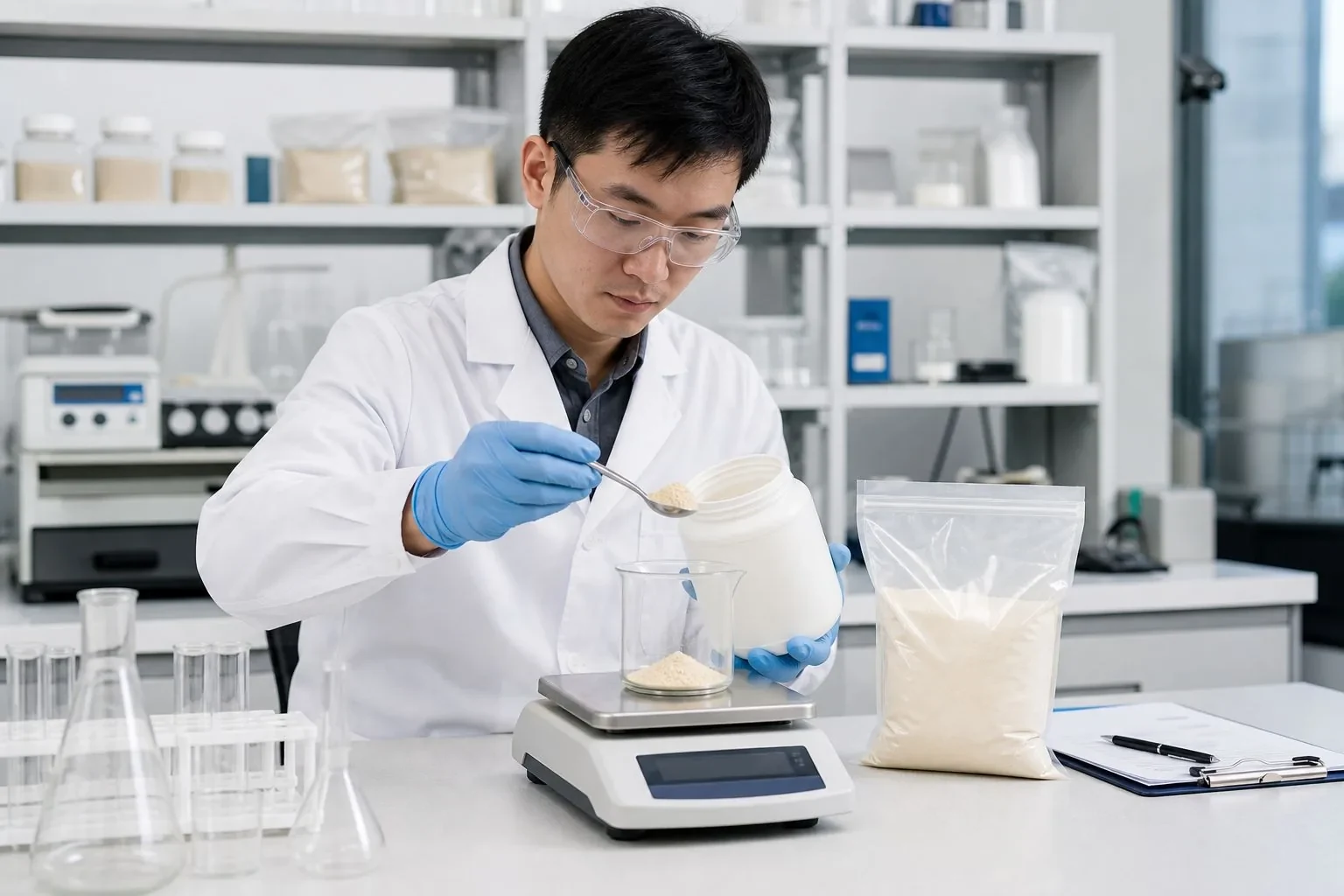
Documents to Request Before Buying Amino Acid Powder
Two powders carrying the same headline amino acid percentage are rarely technically identical, and the difference shows up in the paperwork rather than in the sales offer. This guide sets out the documents to request at each stage of a purchase, from first quotation to shipment, so you can compare suppliers on the same basis and decide which parameters must be written into the order specification.
Why a Document Checklist Changes the Comparison
Before buying compound amino acid powder, request at least a current product specification or TDS, a representative COA, an SDS, packaging information, and a clear written statement of the agreed order specification. For an actual shipment, add the batch COA, label details, traceability information and the commercial or export documents required by the destination market.
The exact set depends on the product, the intended use, the contract and local regulations. What the checklist does is force every supplier onto the same footing: instead of comparing marketing pages, you compare declared parameters, test methods and the form in which results are reported. It also removes a common sourcing risk, which is assuming that the number in a product name tells you what is in the bag.
Treat what follows as a procurement framework rather than a universal regulatory list. Confirm the documents actually required with your customs broker, local authority, formulator and end-use compliance team.
What to Check in the TDS or Product Specification
The TDS is the starting point for understanding what is being offered. A usable specification identifies the product grade and defines the parameters that will form the commercial agreement. Depending on the product and application, that may include amino acid content, nitrogen-related values, moisture, solubility, pH, appearance and any other agreed indicator.
Do not compare only the large number in a product name, such as 35, 45 or 80. Ask what that percentage represents, which test method produced it, and whether the figure is a guaranteed minimum, a typical result or another form of declaration. A supplier who cannot answer those three questions has not yet given you a specification.
- Which parameters are guaranteed in the purchase specification?
- Which methods or standards are used for testing?
- Are the published values guaranteed limits or typical values?
- Can the supplier offer a grade that matches the buyer's formulation target?
- What storage conditions and shelf-life statement apply to the ordered product?
Representative COA Versus Batch COA
A representative COA shows how a supplier normally reports results. It is useful during early evaluation, but it is not evidence about a future shipment and should not be filed as though it were. A batch COA is tied to the lot supplied against an actual order and should carry the relevant batch or lot number.
When reviewing either document, check that the product name, grade, batch identification, test items, results, units, limits and issue information are all legible and unambiguous, and that the content is consistent with the agreed specification. If a purchasing requirement that matters to you does not appear on the COA at all, settle before the order how it will be controlled and documented.
Everwell Bio supplies a batch-specific COA with every shipment, and TDS and SDS documents are available on request. Third-party data can also form part of the file: Eurofins in Chengdu, a CNAS-accredited laboratory, tested free amino acids by GB/T 18246-2019 with reports issued 29 April 2026, returning 41.93% on AA45 under certificate AR-26-Y3-008790-02, 48.22% on AA50 under AR-26-Y3-008792-02 and 75.37% on AA80 under AR-26-Y3-008791-02.
Why the SDS Matters for Fertilizer Raw Materials
The SDS supports workplace handling, storage, emergency planning and logistics review. It answers a different question from the TDS and the COA and does not substitute for either. Check that the version you hold corresponds to the product actually being evaluated, and that the language and format are acceptable in the market where the material will be handled.
Transport classification and destination requirements should never be inferred from a generic document. Confirm them for the actual product, shipment route, packaging, carrier and applicable regulations before the first booking.
Reducing Sample-to-Shipment Risk
A laboratory sample is only worth as much as its identity. Record the sample code, product grade, date and any available batch reference when it arrives, so that later results can be linked back to something a supplier can reproduce. Everwell Bio supplies free samples of 200 to 500 g with a batch COA, which makes that link straightforward.
During evaluation, test the properties that matter to the intended formulation rather than judging on appearance. For foliar, fertigation, water-soluble fertilizer or blended products, compatibility depends on water quality, pH, concentration, the other ingredients present, the processing sequence and storage conditions. Run a small-scale compatibility and stability trial before committing to commercial production, and keep final use aligned with the ordered specification, the product label, local regulations and your own technical validation.
- Sample identification and supplier reference
- Dissolution or dispersion observations under your actual water conditions
- Compatibility with the other planned formulation components
- Appearance, odor, sediment, foaming or storage observations relevant to the process
- Independent laboratory results where your quality system requires them
Packaging and Label Details to Agree in Writing
Packaging is part of both product quality and logistics planning. Confirm net weight, inner and outer packaging materials, bag closure, pallet requirements, shipping marks, label language, batch marking and any OEM artwork process. Agree who approves the final label and which party carries responsibility for destination-market compliance.
OEM packaging should never be signed off from a visual mock-up alone. The product name, claims, directions, warnings, responsible company information and any legally required statements all need review against the target market before printing, because a reprint after production is the most avoidable delay in the whole process.
Export Documents to Settle Before Ordering
The required document set varies by country, product classification, payment method and shipping terms. Depending on the route, you may need commercial documents such as an invoice and packing list, transport documents, origin-related documents, insurance documents or other certificates demanded by the destination or the contract. Agree the list before order confirmation rather than after the goods are ready to load.
Ask the supplier to review the proposed product description, HS classification discussion, consignee information, label and document wording with you. Final classification and import eligibility remain the buyer's responsibility, confirmed with qualified customs or regulatory advisers. Everwell Bio quotes FOB Shanghai or Qingdao and works on T/T, L/C, D/P and O/A terms, with a 30-day lead time on regular orders.
- Define the intended use and target product grade.
- Compare the TDS against your formulation and quality requirements.
- Review a representative COA and identify which parameters must be guaranteed.
- Obtain the applicable SDS and complete internal handling review.
- Evaluate an identified sample under realistic formulation conditions.
- Agree the order specification, test methods, acceptance rules and batch COA timing.
- Approve packaging, labels, OEM artwork and traceability information.
- Confirm commercial, customs and destination documents before production starts.
- Record any pre-shipment inspection or independent testing requirement in the contract.
Which documents to request, and at which stage
| Document or record | What it helps verify | When to request it |
|---|---|---|
| Product specification or TDS | Declared parameters, appearance, intended applications, storage guidance and test basis | Before sample selection and quotation comparison |
| Representative COA | How results are reported for a typical or recent batch | During supplier qualification |
| Batch COA | Test results for the lot assigned to the order | Before shipment, or as set out in the purchase contract |
| SDS | Handling, storage, transport, exposure and emergency information | Before internal handling and logistics review |
| Sample identification | Whether the tested sample links to a product grade or production batch | Before laboratory or formulation trials |
| Packaging and label specification | Bag material, net weight, marks, language, palletization and OEM requirements | Before order confirmation |
| Commercial and export documents | Whether the shipment can meet customs, banking and destination requirements | Before signing the sales contract |
Conclusion
Work through the checklist in order: define the use and grade, compare the TDS, review a representative COA, obtain the SDS, evaluate an identified sample, then write the guaranteed parameters, test methods and batch COA timing into the contract before production begins. To start that file for a specific grade, email [email protected] with your intended use, target specification and destination market, and request the TDS, a representative COA, the SDS and a 200 to 500 g sample with its batch COA.
Products Discussed In This Article
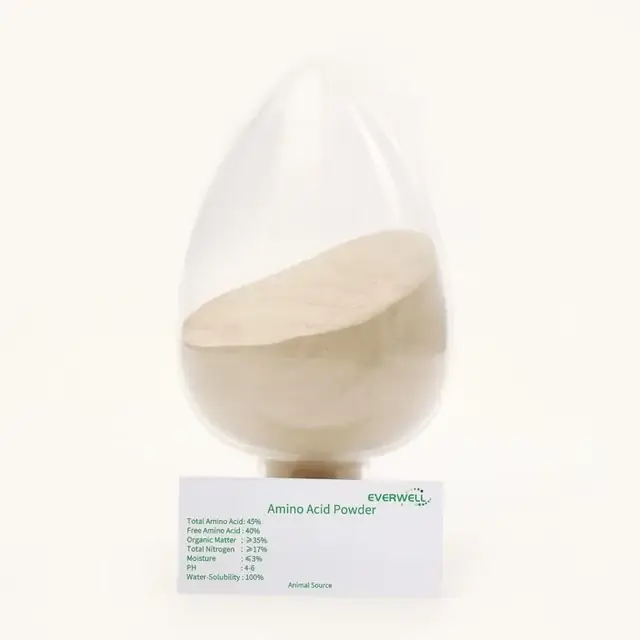
Amino Acids 45
The benchmark grade: ≥ 45% total amino acids, ≥ 60% organic matter, and 41.93% free amino acids measured by Eurofins under GB/T 18246-2019. The grade
View specification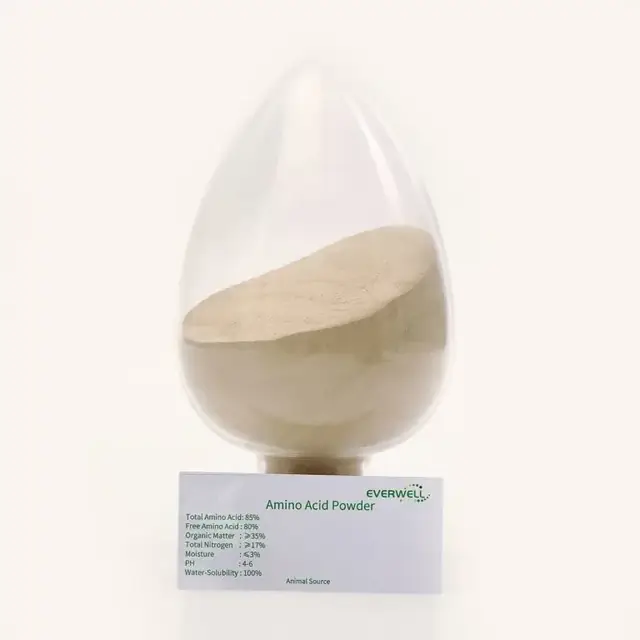
Amino Acids 80
The density grade: ≥ 80% total amino acids, ≥ 80% organic matter, and 75.37% free amino acids measured by Eurofins. Glycine and proline rich, for conc
View specification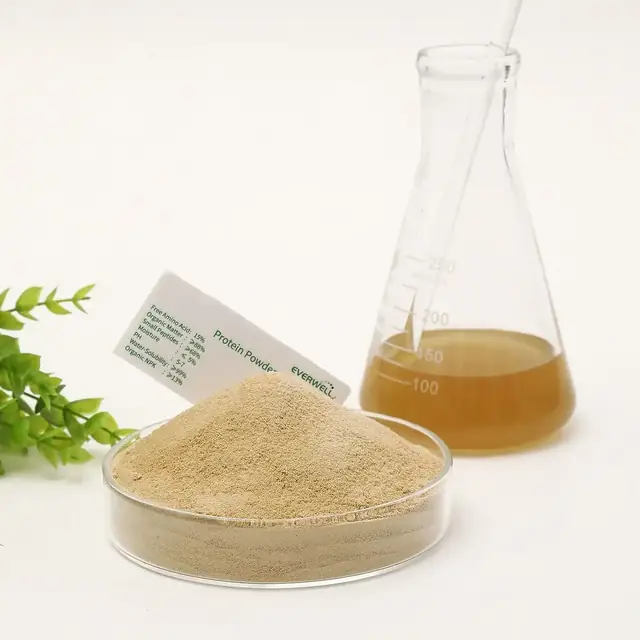
Protein Powder
A collagen-derived protein input at ≥ 90% crude protein and ≥ 80% total amino acids, glycine and proline rich, dissolving at 99% for animal feed, pet
View specificationRelated Articles

Environmental Considerations for Amino Acid Powder Use
How to account for nitrogen loading, runoff, salts and manufacturing footprint before making an environmental claim about amino acid powder.
Read more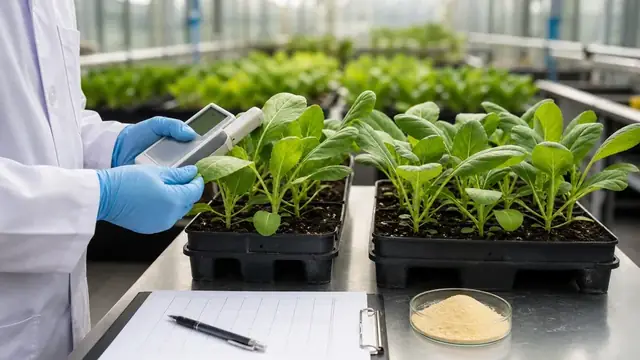
How Long Does Amino Acid Fertilizer Take to Work?
A staged monitoring timeline for judging whether an amino acid fertilizer has delivered a useful response, from application day to harvest.
Read more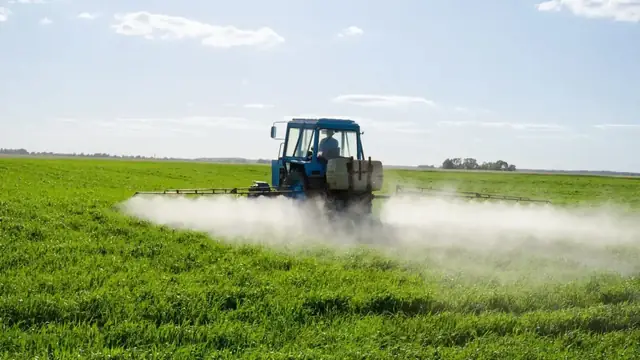
How to Apply Compound Amino Acid Powder Safely
A trial-based framework for foliar, fertigation and root-zone use, including jar testing, crop safety checks and dosage priority.
Read moreQuestions On This Topic
Is a representative COA enough to qualify a supplier?
It is enough to show how results are reported and to support early evaluation, but it says nothing about a future lot. Ask for the batch COA tied to the material actually shipped against your order.
What does the 35, 45 or 80 in a product name refer to?
It refers to the declared total amino acid content of the grade, for example a minimum of 35% total amino acids for Amino Acids 35. Always ask which test method produced the figure and whether it is a guaranteed minimum or a typical value.
Can I rely on a generic SDS for transport classification?
No. Transport classification and destination requirements must be confirmed for the actual product, route, packaging, carrier and applicable regulations rather than assumed from a generic document.
Does Everwell Bio provide samples for evaluation?
Yes. Free samples of 200 to 500 g are supplied with a batch COA so that laboratory results can be traced back to an identified production batch.
Who decides the HS classification and import eligibility?
The buyer, with qualified customs or regulatory advisers. The supplier can review the proposed product description, consignee information, label and document wording with you, but final classification rests with the importer.
What commercial terms apply to a first order?
Everwell Bio quotes FOB Shanghai or Qingdao and works on T/T, L/C, D/P and O/A terms, with a 30-day lead time on regular orders.
Ask Us About This Directly
Technical questions are answered by the export and production team, normally within 24 hours.