
Glaze Colours and How They Are Mixed
Six base glazes, more than four hundred colours, and what that means for colour matching
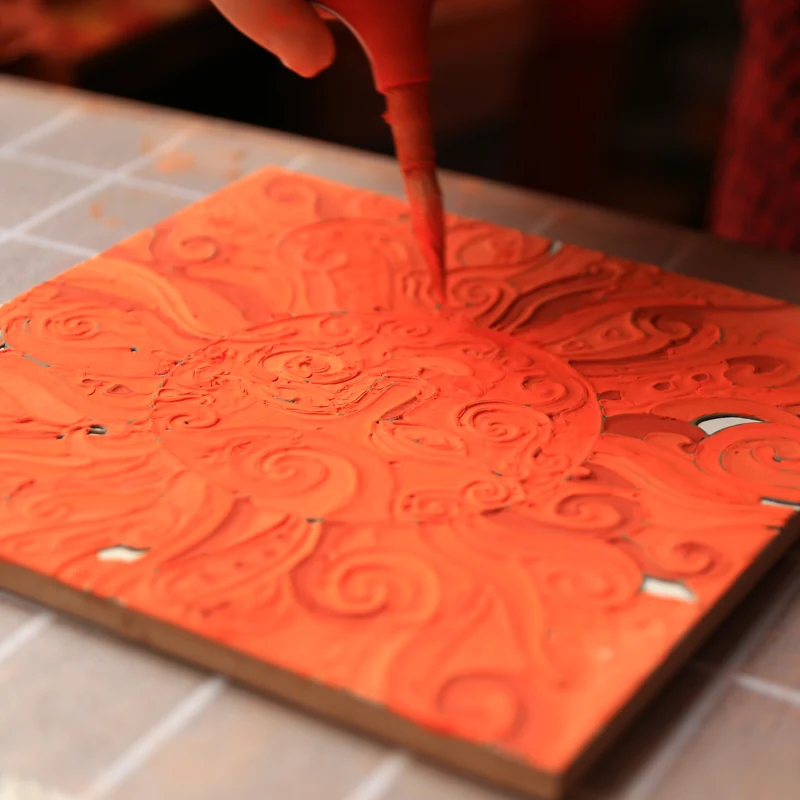
The six base glazes
More than four hundred types of glaze are used in porcelain print work, and all of them are made from six basic glazes: white, brown, black, red, green and blue. The base glazes cannot be bought ready made, they are mixed in the workshop.
How a base glaze is prepared
Raw materials are weighed into a porcelain altar with grinding stones, water is added at roughly one to one against the dry materials, and the altar goes onto a ball mill. After about 24 hours the base glaze is ready to use.
For the blue base glaze the raw materials are lead frit, red Dan, quartz, feldspar and cobalt oxide. The published reference proportions are 8 to 20 percent lead frit, 40 to 65 percent red Dan, 18 to 25 percent quartz, 1 to 5 percent feldspar and 0.5 to 1.5 percent cobalt oxide. Those figures are a starting point only, because kiln temperature affects the result and every workshop tests against its own conditions.
Where the colour actually comes from
Every base glaze shares the same four raw materials: lead frit, red Dan, quartz and feldspar, in proportions that change very little. The colour is driven by the metal oxides added on top, iron oxide red, manganese dioxide, copper oxide and cobalt oxide. White needs only the four base materials, red adds iron oxide red, and black needs iron oxide red with manganese dioxide and cobalt oxide.
Why glaze colour must be test fired
Finished glaze colours do not look like the fired result before firing. Judging colour from the wet glaze is unreliable, which is why a colour match is confirmed on a fired chip rather than on the bucket.
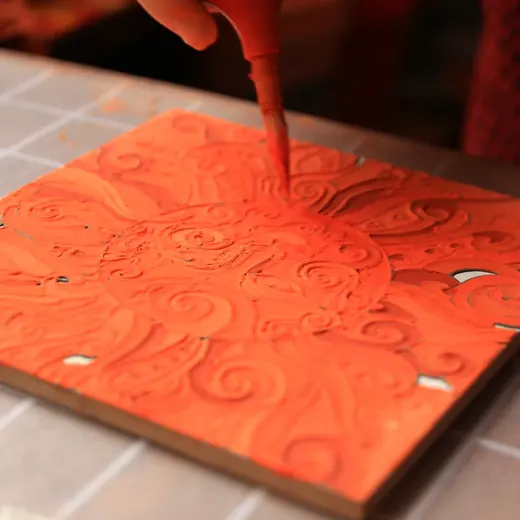

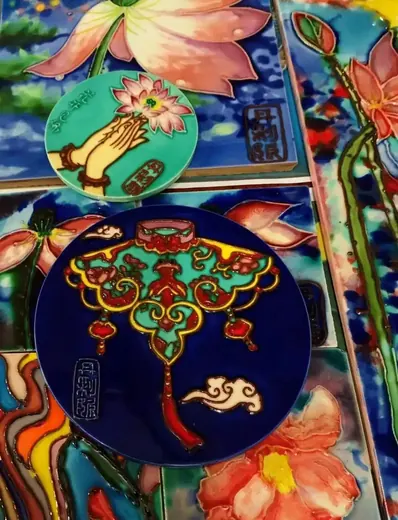
Tiles Made This Way

Hand Painted Glazed Ceramic Tiles
Glaze first decoration where colour depth comes from the glaze layer itself
View details
Painted Ceramic Tile
Our core painted tile, fired above one thousand degrees so the colour stays put
View details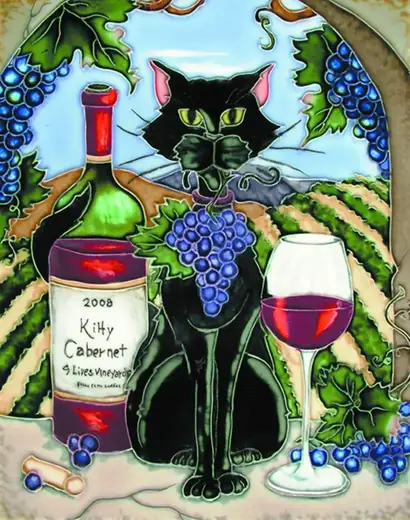
Glazed Ceramic Hand Painted Tile
Tall format glazed panel work for narrow walls and framed display
View detailsMore articles
Reader Questions
Can you match any colour we send?
How many colours are available?
Why does fired colour differ from the wet glaze?
Ask Us About the Process
If something in this article matters for your project, email the workshop and we will answer it directly.