A Challenge Test Belongs to a Formulation
Preservative efficacy testing such as ISO 11930 is run on a finished product in its pack, not on a raw material. When a supplier says a system passes at a dosage, that result came from a specific formulation and is an indication for yours, not a substitute for testing it.
Read the Dosage With the Regulatory Ceiling
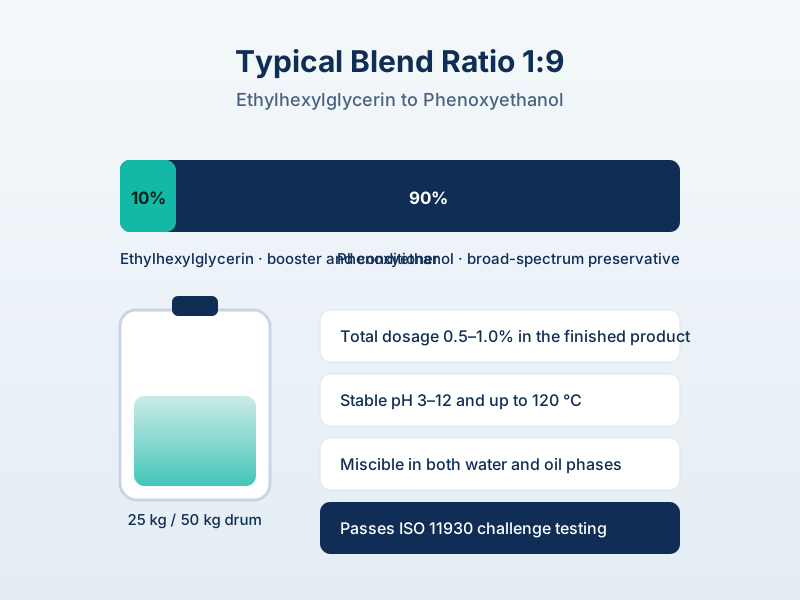
Our blend passes preservative challenge tests such as ISO 11930 at 0.5 to 1.0 percent total dosage. Because the ratio is typically 1:9 ethylhexylglycerin to phenoxyethanol, that total keeps the phenoxyethanol contribution within its own 1.0 percent limit.
Check the Base Before You Blame the Preservative
High-surfactant and high-salt systems break weaker preservative systems. A blend that is stable across pH 3 to 12 and up to 120 degrees Celsius removes the process window as a variable, leaving the formulation itself to explain any failure.
Retest After Any Meaningful Change
A change of emulsifier, pack material, fragrance or water source changes microbial behaviour. Re-run the test rather than assuming the previous pass still applies.
Keep the Batch Evidence
Each shipment carries its own Certificate of Analysis. Filing the CoA with the challenge test report is what lets you show an auditor that the validated system and the delivered material are the same thing.
Every figure quoted here comes from the documentation of the products we supply. Confirm each limit against the regulation in force in your destination market before it enters a specification.