Start From the Format Not the Ingredient
The water content and the way a consumer touches the product decide the microbial risk. Wet wipes, cleansers and high-water emulsions need broad-spectrum protection. A product with little free water needs far less. Choose the spectrum first and the ingredient second.
Know the Ceiling Before You Choose the Dose
Phenoxyethanol is limited to 1.0 percent of the finished product in the EU, the US and China, and to 0.4 percent or lower for products intended for children under three years where it is essential at all. 1,2-Hexanediol has a practical optimum of 0.5 to 5 percent, above which you gain nothing and risk dryness. Ethylhexylglycerin sits at 0.3 to 1.0 percent in leave-on products.
Use a Booster Instead of More Preservative
Ethylhexylglycerin significantly amplifies efficacy against bacteria, yeast and fungi. Combining it with phenoxyethanol, or using glycols such as caprylyl glycol, gives the same protection at a lower preservative level, which is usually what the marketing brief is really asking for.
Decide Between Separate Dosing and a Blend
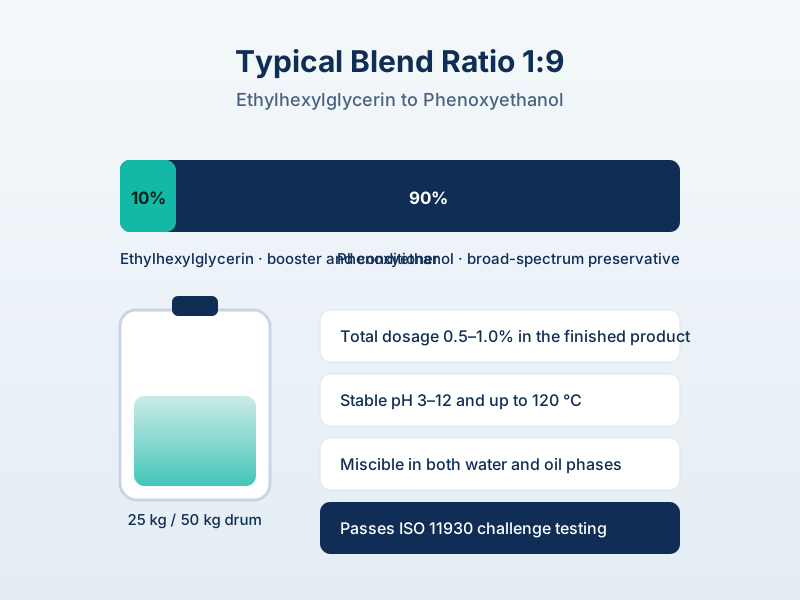
A pre-made blend at a typical 1:9 ratio removes one weighing step and the ratio error that goes with it, and it is validated to pass challenge tests such as ISO 11930 at 0.5 to 1.0 percent total dosage. Dose the components separately only when you need to vary the ratio between products.
Validate on the Finished Formulation
Challenge test results belong to a formulation, not to an ingredient. Run the test on the finished product in its actual pack before you commit to production.
Every figure quoted here comes from the documentation of the products we supply. Confirm each limit against the regulation in force in your destination market before it enters a specification.