
Why Large Particles Remain After Ball Milling and How to Solve It
This article explains the main reasons behind incomplete size reduction in ball milling and provides practical solutions to improve grinding efficiency.
- GrindingBall Mill Grinding EfficiencyBall millingcrusher vs ball milllarge particles after ball milling2026-01-14
Table of Contents
Ball milling is widely used in laboratories and industrial applications for particle size reduction, mixing, and material homogenization. However, many users encounter a common problem: even after repeated ball milling, some large particles remain and cannot be effectively removed.
Why does this happen, and how can it be solved? This article explains the main reasons behind incomplete size reduction in ball milling and provides practical solutions to improve grinding efficiency.
Understanding the Limitations of Ball Milling
A ball mill works by using grinding media to generate impact, shear, and friction forces that break down materials. While ball mills are highly effective for fine grinding, they are not designed to efficiently handle very large feed materials.
Ball milling is a grinding process, not a primary crushing process. When large lumps are fed directly into a ball mill, the grinding mechanism becomes inefficient.
Feed Material Is Too Large
One of the most common reasons is that the initial particle size exceeds the effective grinding range of the ball mill. Large chunks reduce the frequency of effective ball–material collisions, resulting in incomplete breakage.
Insufficient Impact Energy
If the grinding balls are too small or the ball-to-powder ratio is too low, the impact energy may be insufficient to fracture large or hard particles. In such cases, repeated milling only leads to surface abrasion rather than size reduction.
Inappropriate Grinding Media Size Distribution
Using a single grinding ball size limits the milling efficiency. Large particles require high impact energy from larger balls, while fine particles require smaller balls for refinement. Improper grinding media selection often leads to residual coarse particles.
Material Properties
Hard, tough, or ductile materials are more resistant to fracture. Some materials deform instead of breaking under impact, making them difficult to grind using ball milling alone.
Agglomeration and Coating Effects
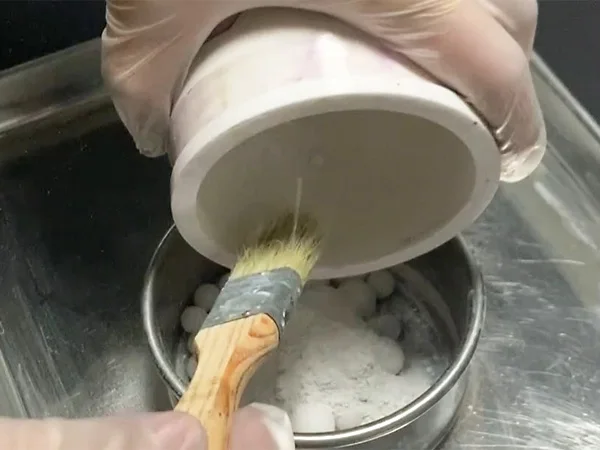
Fine particles may coat the surface of grinding balls or agglomerate around large particles, reducing effective contact and preventing further size reduction.
Crushing Vs Grinding
Crushing and grinding serve different purposes:
Crushers are designed for breaking large lumps into smaller fragments.
Ball mills are optimized for fine grinding and particle refinement.
Using a crusher before ball milling significantly improves overall size reduction efficiency.
Benefits of Pre-Crushing
Pre-crushing large materials before ball milling offers several advantages:
Reduces feed particle size to a suitable range
Increases effective collision frequency
Shortens ball milling time
Improves final particle size uniformity
Use a Crusher for Large Feed Materials
For large or hard materials, first use a suitable crusher to reduce particle size before ball milling. This step is essential for efficient downstream grinding.
Optimize Grinding Media Size Distribution
Use a combination of large, medium, and small grinding balls to cover different stages of size reduction. Mixed grinding media improves both impact energy and fine grinding efficiency.
Adjust Ball-to-Powder Ratio and Milling Parameters
Optimizing parameters such as:
Ball-to-powder ratio
Milling speed
Milling time
can significantly improve grinding performance.
Consider Wet Milling or Process Aids
In some cases, wet milling or adding suitable dispersants can reduce agglomeration and improve particle breakage efficiency.
Typical Applications Where Pre-Crushing Is Essential
Pre-crushing before ball milling is especially important in applications such as:
Ceramic raw material processing
Mineral and ore preparation
Battery material research
Metallurgical powder processing
Hard or brittle materials
Conclusion
Large particles remain after ball milling because ball mills are not designed to handle very large feed materials efficiently. Factors such as excessive feed size, insufficient impact energy, improper grinding media selection, and material properties all contribute to incomplete size reduction.
The most effective solution is to use a crusher for pre-crushing before ball milling, combined with optimized grinding media size distribution and milling parameters. By following the correct size reduction workflow, users can achieve finer, more uniform particles with higher efficiency.
Share this entry
You might also like
Vacuum Tube Furnaces in Material Synthesis: How They Enable Advanced Research
A Comprehensive Guide to Box Furnaces
Rotary Tube Furnace vs. Horizontal Tube Furnace vs. Vertical Tube Furnace: Which One Suits Your Needs?
The Impact of Heat Treatment on Material Properties: Enhancing Hardness, Strength, and Corrosion Resistance
Related ZYLAB Products
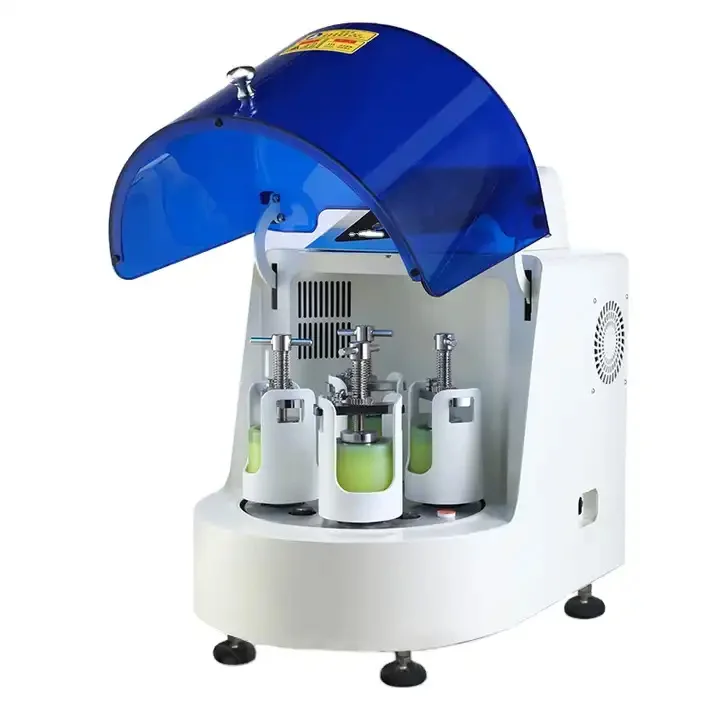
Laboratory Pulverized Ball Mill for Powder Milling and Sample Preparation
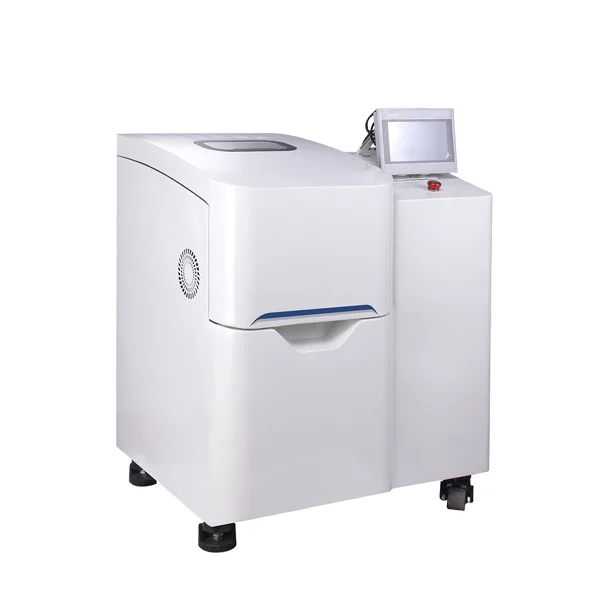
Speed 1600rpm Nano-level Grinding Ultra High Energy Ball Mill
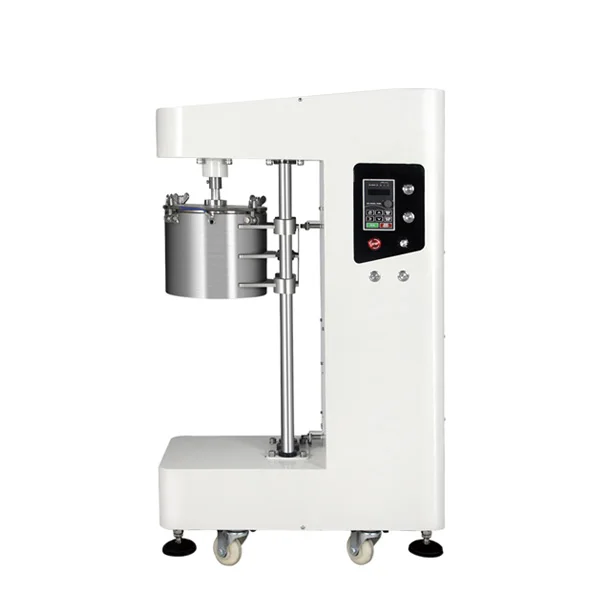
High Energy Dispersed Powder Uniform Mixing and Grinding Stirred Ball Mill
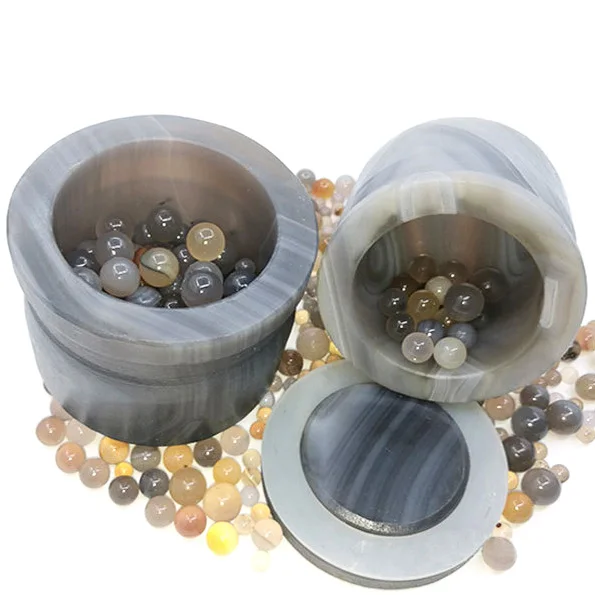
Planetary Ball Mill Accessories Agate Grinding Jar
Working With ZYLAB On A Project Like This
Can Why Large Particles Remain After Ball Milling and How to Solve It be customised for our process?
Yes. Chamber or tube size, temperature profile, atmosphere, gas path, control system and data recording can all be adapted. Send us your process conditions and sample details and our engineers work out a configuration with you.
What warranty comes with Why Large Particles Remain After Ball Milling and How to Solve It?
Most ZYLAB products carry a 2-year warranty, glass components excluded; the exact term for this model is the one printed in its specification table and repeated on the quotation. Within the warranty period any part that fails through no misuse of your own is replaced free of charge.
How can we pay for Why Large Particles Remain After Ball Milling and How to Solve It?
Bank (wire) transfer, letter of credit for larger orders, major credit and debit cards, and PayPal. Bank details are printed on the invoice; send us the transfer confirmation and we start processing straight away.
How is Why Large Particles Remain After Ball Milling and How to Solve It packed for export?
Packing is chosen for the safety of the machine against freight cost, typically a plywood or wooden crate with internal padding and vacuum-sealed accessories. Export documents such as Form A, Form E and Form F can be issued to help you save duty.
Have A Similar Requirement
Describe the material, the temperature and the throughput you need and an engineer will answer with a workable configuration.