
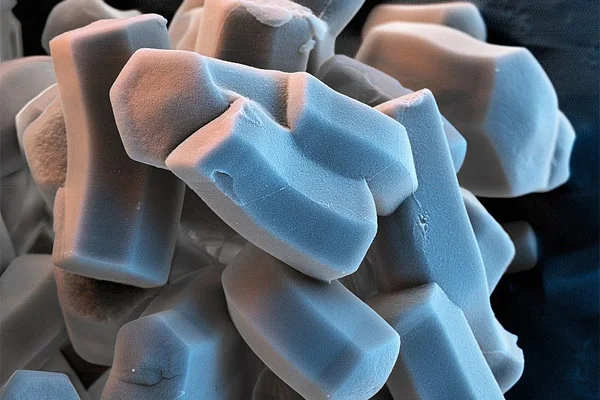
Thermal Treatment Processes for Porous Materials: How to Use Muffle Furnace, Tube Furnace, and CVD Furnace for MOFs and Silica Preparation?
Porous materials are widely used in catalysis, gas storage, separation technologies, and energy storage due to their high surface area, tunable pore structures, and excellent chemical stability. Among them, Metal-Organic Frameworks (MOFs) and silica (SiO₂) are two of the most prominent representativ
- LaboratoryThermal ProcessingControlled atmosphereCVD FurnaceEnergy storage materials2025-02-27
Introduction
Porous materials are widely used in catalysis, gas storage, separation technologies, and energy storage due to their high surface area, tunable pore structures, and excellent chemical stability.
Among them, Metal-Organic Frameworks (MOFs) and silica (SiO₂) are two of the most prominent representatives. Thermal treatment plays a crucial role in optimizing their structural and functional properties.
In both research and industrial applications, Muffle Furnaces, Tube Furnaces, and CVD (Chemical Vapor Deposition) Furnaces are the primary equipment used for processing MOFs and silica. This article explores their applications in the synthesis of these materials and provides guidance on selecting the most suitable thermal treatment equipment.
1. MOFs Synthesis and Thermal Processing Requirements
MOFs are typically synthesized by assembling metal ions with organic ligands. The process includes:
- Solvothermal Synthesis: Promoting MOFs crystallization under high temperature in a closed reaction vessel.
- Thermal Activation: Removing solvents and unreacted organic materials to improve porosity.
Carbonization (for conductive - MOFs-based materials): Partially decomposing organic ligands at high temperatures to form carbon-based composites.
Since MOFs are highly temperature-sensitive, selecting the right thermal treatment equipment is essential.
2. Silica Synthesis and Thermal Processing Requirements
Silica can be prepared using the Sol-Gel Method or Chemical Vapor Deposition (CVD). Thermal treatment is used to:
- Remove residual organic compounds and solvents to enhance purity.
- Control pore size and surface area for better performance.
- Improve structural stability for high-temperature applications.
1. Muffle Furnace
Best for: MOFs activation, silica calcination
Advantages:
- Provides precise temperature control, stable operation between 300-1600°C.
- Suitable for batch processing of MOFs and silica powder.
- Enclosed heating chamber reduces contamination risk.
Limitations:
- Heat uniformity is slightly lower compared to tube furnaces.
2. Tube Furnace
Best for: MOFs pyrolysis under inert gas, silica sintering with controlled atmospheres
Advantages:
- Offers precise temperature control and atmosphere regulation (e.g., nitrogen, argon, oxygen, etc.).
- Suitable for continuous thermal processing, such as converting MOFs into porous carbon materials.
- Provides excellent heat uniformity for consistent material treatment.
Limitations:
- Smaller batch size, making it ideal for research-scale applications.
3. CVD Furnace
Best for: MOFs structural modification, silica coating deposition
Advantages:
- Allows precise control of nano-scale deposition processes.
- Can create functional coatings on MOFs, enhancing catalytic and energy storage properties.
- Ideal for high-end applications, such as battery electrode materials.
Limitations:
- Higher equipment cost, mostly used for research or advanced manufacturing.
How to Choose the Right Furnace?
| Furnace Type | Temperature Range | Suitable Materials | Key Advantages | Main Limitations |
|---|---|---|---|---|
| Muffle Furnace | 300-1600°C | MOFs, Silica | Easy operation, ideal for batch calcination | Thermal uniformity is slightly lower |
| Tube Furnace | 300-1600°C | MOFs, Silica | Excellent temperature uniformity, atmosphere control | Smaller batch size |
| CVD Furnace | 200-1700°C | MOFs, Silica coatings | Enables chemical vapor deposition, ideal for nanocoatings | High cost, complex process |
Case Study: Thermal Treatment Optimization for MOFs in Energy Storage
Recent studies show that MOFs have great potential in lithium-ion batteries, electrocatalysis, and gas adsorption. To enhance their electrical conductivity and chemical stability, researchers employ the following thermal treatment strategies:
- Using a tube furnace under an argon atmosphere at 700-900°C for low-temperature carbonization to obtain MOFs-carbon composites.
- Employing a CVD furnace to deposit metal nanoparticles, improving catalytic properties.
- Activating MOFs in a muffle furnace at 500-600°C to remove solvents and increase surface area.
Conclusion & Recommendations
For different porous material thermal processing requirements, the right equipment should be chosen:
- For batch calcination of MOFs or silica → Use a muffle furnace.
- For pyrolysis under inert atmospheres or controlled sintering → Use a tube furnace.
- For nano-scale coatings and structural modifications → Use a CVD furnace.
Share this entry
You might also like
MOFs Fabrication via Chemical Vapor Deposition (CVD): A Breakthrough in Advanced Material Synthesis
Solvothermal Synthesis of MOF Powder Materials: Process, Equipment, and Optimal Conditions
Molten Salt Electroplating Furnace: Advantages in Critical Metal Extraction
Understanding the Sintering Process of Porous Materials: From Laboratory to Industrial Applications
Related ZYLAB Products
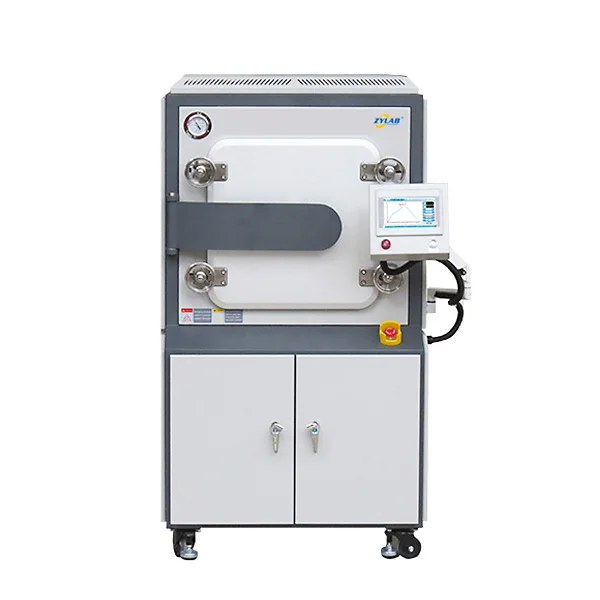
1200°C 27L Vacuum Atmosphere Muffle Furnace for Heat Treatment
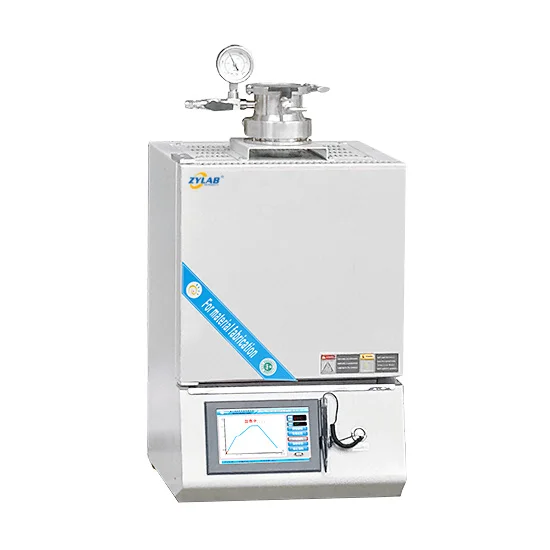
Vacuum Atmosphere Hybrid Box/Tube Furnace for Precision Heat Treatment
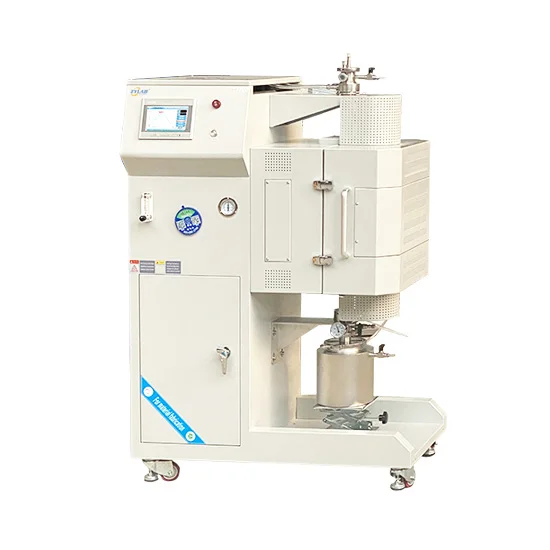
1700°C Vertical Atmosphere Controlled Quenching Furnace for High-Performance Heat Treatment
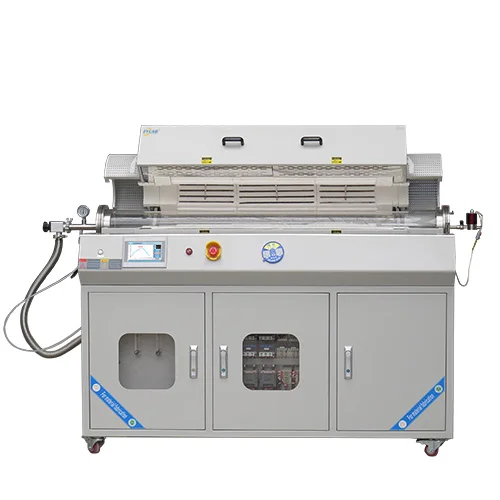
Large-Diameter Multi-Zone Tube Furnace – Precision Heat Treatment for Large Samples and Batch Processing
Working With ZYLAB On A Project Like This
Can Thermal Treatment Processes for Porous Materials: How to Use Muffle Fu be customised for our process?
Yes. Chamber or tube size, temperature profile, atmosphere, gas path, control system and data recording can all be adapted. Send us your process conditions and sample details and our engineers work out a configuration with you.
What warranty comes with Thermal Treatment Processes for Porous Materials: How to Use Muffle Fu?
Most ZYLAB products carry a 2-year warranty, glass components excluded; the exact term for this model is the one printed in its specification table and repeated on the quotation. Within the warranty period any part that fails through no misuse of your own is replaced free of charge.
How can we pay for Thermal Treatment Processes for Porous Materials: How to Use Muffle Fu?
Bank (wire) transfer, letter of credit for larger orders, major credit and debit cards, and PayPal. Bank details are printed on the invoice; send us the transfer confirmation and we start processing straight away.
How is Thermal Treatment Processes for Porous Materials: How to Use Muffle Fu packed for export?
Packing is chosen for the safety of the machine against freight cost, typically a plywood or wooden crate with internal padding and vacuum-sealed accessories. Export documents such as Form A, Form E and Form F can be issued to help you save duty.
Have A Similar Requirement
Describe the material, the temperature and the throughput you need and an engineer will answer with a workable configuration.