
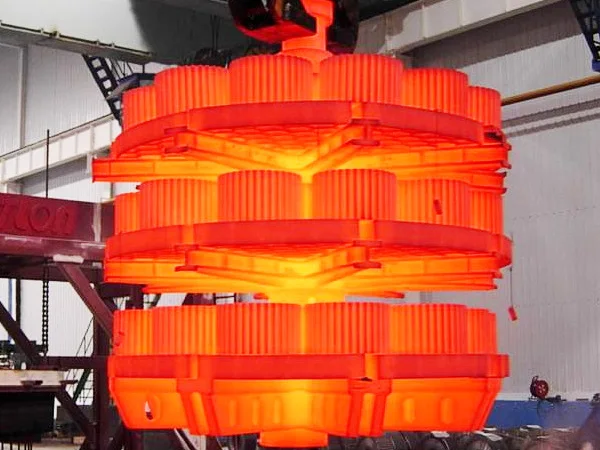
Heat Treatment Part 4: Tempering — The Gentle Care After Quenching
Tempering is the essential follow-up step after quenching, ensuring metals are not only strong but also reliable in daily use. By carefully selecting the tempering temperature and furnace type, engineers can fine-tune hardness, toughness, and ductility to match specific applications.
- Heat TreatmentKnowledge Sharing SeriesBox furnace for temperingHeat TreatmentHeat treatment applications2025-09-22
What Is Tempering?
Tempering is a heat treatment process applied to steel and other alloys after quenching. During quenching, metals become very hard but also brittle, which can lead to cracks or sudden failure. Tempering provides a “gentle recovery” by reheating the quenched metal to a lower temperature, then cooling it at a controlled rate.
Typical Tempering Temperature Range: 150°C – 650°C (300°F – 1200°F)
Heating Mediums: air, oil, molten salt, or protective gas atmosphere
Cooling Mediums: usually still air, sometimes oil or water depending on the steel grade
Purpose of Tempering
The main goal of tempering is to balance hardness and toughness. While quenching maximizes hardness, tempering adjusts mechanical properties for real-world applications.
Key Purposes:
Reduce internal stresses caused by rapid quenching
Improve toughness and resistance to impact loading
Enhance ductility so the material is less likely to crack
Adjust hardness to match engineering requirements
Stabilize microstructure for dimensional accuracy during service
Types of Tempering
Tempering can be divided into categories based on the temperature range and final application:
Low-Temperature Tempering (150–250°C)
-
Retains high hardness
Used for tools requiring wear resistance
Example: knives, cutting blades
Medium-Temperature Tempering (250–500°C)
-
Balances hardness and toughness
Used for springs, shafts, and gears
High-Temperature Tempering (500–650°C)
-
Produces high toughness with reduced hardness
Common for structural steels, automotive components
Applications of Tempering
Tempering is used across multiple industries to fine-tune the properties of steels:
Automotive: crankshafts, gears, and springs require both strength and shock resistance.
Cutting Tools: drills, knives, and dies need hardness but must avoid brittleness.
Construction: structural steels for bridges and buildings are tempered for safety.
Aerospace: turbine components and landing gear must withstand cyclic stresses.
Real-World Example:
A quenched gear at 62 HRC is too brittle for automotive use. After tempering at 400°C, its hardness reduces to about 50 HRC, while toughness increases, making it durable under repeated loads.Tempering Furnaces
Box Furnaces (Muffle Furnaces)
Enclosed chamber isolates samples from direct heating.
Temperature Range: Typically up to 1650°C.
Use: Small batches of tools, gears, and lab samples.
Tube Furnaces
Cylindrical tube allows placement of rods or long parts.
Temperature Range: Up to 1700°C for standard models.
Use: Tempering rods, wires, shafts, and research materials; can use protective atmospheres.
Vacuum Furnaces
Sealed, low-pressure chamber prevents oxidation.
Temperature Range: Typically 200–650°C for tempering applications.
Use: Aerospace components, precision tools, and high-quality steels.
Conclusion
Tempering is the essential follow-up step after quenching, ensuring metals are not only strong but also reliable in daily use. By carefully selecting the tempering temperature and furnace type, engineers can fine-tune hardness, toughness, and ductility to match specific applications.
Whether it’s a precision gear, a cutting tool, or a structural beam, tempering ensures that quenched metals don’t remain brittle but instead gain the resilience needed for real-world performance.
Share this entry
You might also like
-
-
-
Related ZYLAB Products
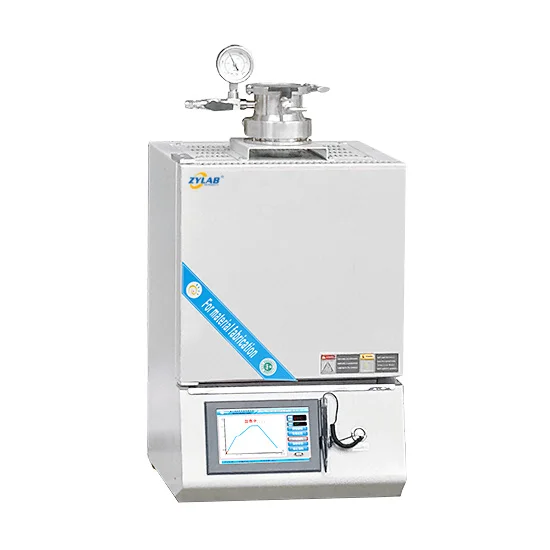
Vacuum Atmosphere Hybrid Box/Tube Furnace for Precision Heat Treatment
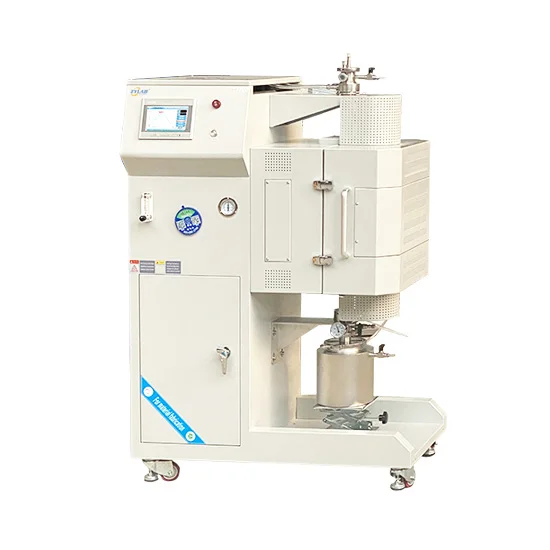
1700°C Vertical Atmosphere Controlled Quenching Furnace for High-Performance Heat Treatment
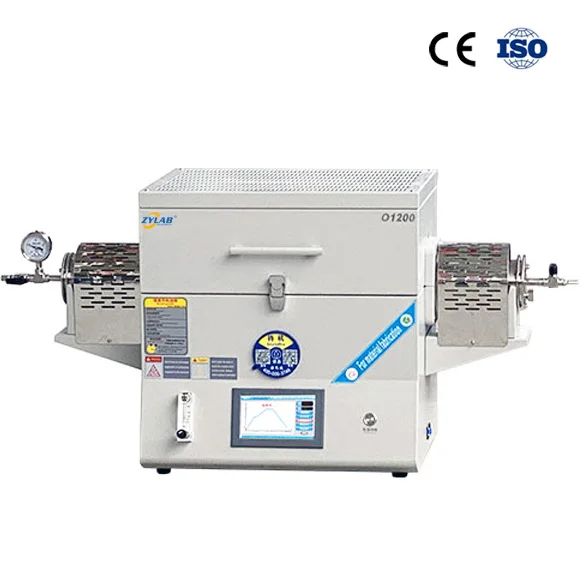
Horizontal Tube Furnace Range – Precision Heat Treatment up to 1700°C
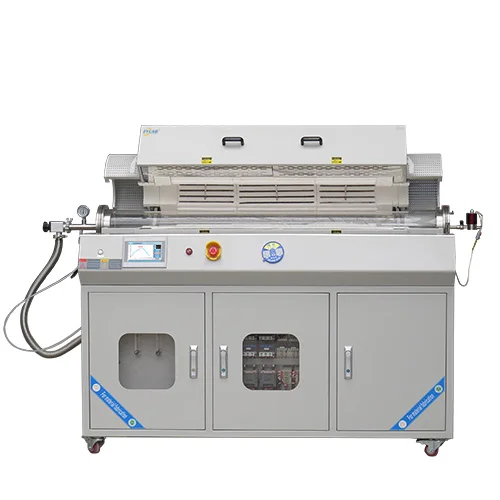
Large-Diameter Multi-Zone Tube Furnace – Precision Heat Treatment for Large Samples and Batch Processing
Working With ZYLAB On A Project Like This
What warranty comes with Heat Treatment Part 4: Tempering — The Gentle Care After Quenching?
Most ZYLAB products carry a 2-year warranty, glass components excluded; the exact term for this model is the one printed in its specification table and repeated on the quotation. Within the warranty period any part that fails through no misuse of your own is replaced free of charge.
Can we get technical help before ordering Heat Treatment Part 4: Tempering — The Gentle Care After Quenching?
Yes, and it is free. Our technical staff help with model selection, troubleshooting, manuals and application questions whether or not you have ordered from us before. Write to [email protected] or message us on WhatsApp.
Which shipping methods do you use?
Sea freight for consignments over about 60 kg (11-30 days to North America, 25-33 days to Europe, 7-20 days to Southeast Asia), air freight to airport in roughly 7-10 days, and DHL, FedEx or UPS door to door in about 5-7 days for small urgent items.
How can we pay for Heat Treatment Part 4: Tempering — The Gentle Care After Quenching?
Bank (wire) transfer, letter of credit for larger orders, major credit and debit cards, and PayPal. Bank details are printed on the invoice; send us the transfer confirmation and we start processing straight away.
Have A Similar Requirement
Describe the material, the temperature and the throughput you need and an engineer will answer with a workable configuration.