
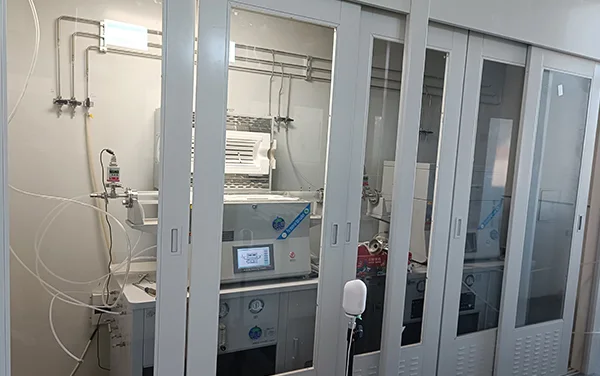
Rotary Tube Furnace vs. Horizontal Tube Furnace vs. Vertical Tube Furnace: Which One Suits Your Needs?
Each type offers unique advantages based on heating uniformity, material processing capabilities, and specific research or production requirements. In this article, we compare these three types of furnaces to help you determine which one best suits your needs.
- LaboratoryThermal ProcessingBest Furnace for Heat TreatmentBest Tube Furnace for Laboratory UseContinuous processing tube furnace2025-02-20
Introduction
When selecting a tube furnace for laboratory or industrial applications, understanding the differences between rotary tube furnaces, horizontal tube furnaces, and vertical tube furnaces is crucial. Each type offers unique advantages based on heating uniformity, material processing capabilities, and specific research or production requirements.
In this article, we compare these three types of furnaces to help you determine which one best suits your needs.
1. Rotary Tube Furnace
Rotary tube furnaces feature a rotating tube that ensures continuous mixing and uniform heating of materials. This design is particularly useful for powder processing, catalyst preparation, and material synthesis where high homogeneity is required.
Key Features:
- Continuous material movement for even heating.
- Ideal for processes requiring uniform mixing, such as calcination and pyrolysis.
- Often used in industrial production and large-scale research applications.
2. Horizontal Tube Furnace
A horizontal tube furnace is the most commonly used type for laboratory applications. It consists of a stationary, horizontally aligned tube through which materials are processed under controlled temperature conditions.
Key Features:
- Stable heating environment with excellent temperature control.
- Suitable for heat treatment, annealing, sintering, and material synthesis.
- Compatible with gas flow atmospheres and vacuum processing.
3. Vertical Tube Furnace
Vertical tube furnaces are designed with a vertically aligned heating chamber, often used for processes where gravity-assisted sample placement is beneficial.
Key Features:
- Ideal for applications requiring free-fall material processing or vapor deposition.
- Reduced contamination risk compared to horizontal setups.
- Suitable for chemical vapor deposition (CVD), crystal growth, and high-purity material synthesis.
Comparative Analysis
To help you choose the right tube furnace, we have summarized the key differences in the table below:
| Feature | Rotary Tube Furnace | Horizontal Tube Furnace | Vertical Tube Furnace |
|---|---|---|---|
| Heating Uniformity | Excellent (continuous mixing) | Very good (static heating) | Good (dependent on sample placement) |
| Material Handling | Continuous feeding & processing | Batch processing | Batch processing (gravity-assisted) |
| Application Areas | Powder synthesis, catalyst preparation, calcination | Heat treatment, sintering, annealing | Crystal growth, vapor deposition, CVD |
| Atmosphere Control | Gas flow compatible | Gas flow & vacuum compatible | Gas flow & vacuum compatible |
| Scalability | Industrial & research applications | Research & small-scale production | Specialized research applications |
How to Choose the Right Tube Furnace
Choose a rotary tube furnace if you need continuous processing with high mixing efficiency, such as in powder calcination or catalyst preparation.
Opt for a horizontal tube furnace if you require precise temperature control for batch processing, heat treatment, or sintering applications.
Select a vertical tube furnace if you need gravity-assisted processing for materials like crystals or CVD applications.
Conclusion
Each type of tube furnace has its advantages depending on your specific application requirements. ZYLAB offers high-quality rotary, horizontal, and vertical tube furnaces designed for laboratory and industrial use.
If you have any specific requirements for custom tube furnaces, feel free to reach out to ZYLAB for expert guidance and tailored solutions.
Share this entry
You might also like
The Role of Ultra-High Pressure High-Temperature Sintering Furnace in Material Synthesis and Extreme Condition Research
Role of Large Diameter Tube Furnace in Advanced Carbon Materials Research and Production
The Role of a 1200°C Vacuum Hot Press Furnace in Metal Powder Densification and Ceramic Material Sintering
The Role of Vacuum Atmosphere Furnace in Advanced Material Research
Related ZYLAB Products
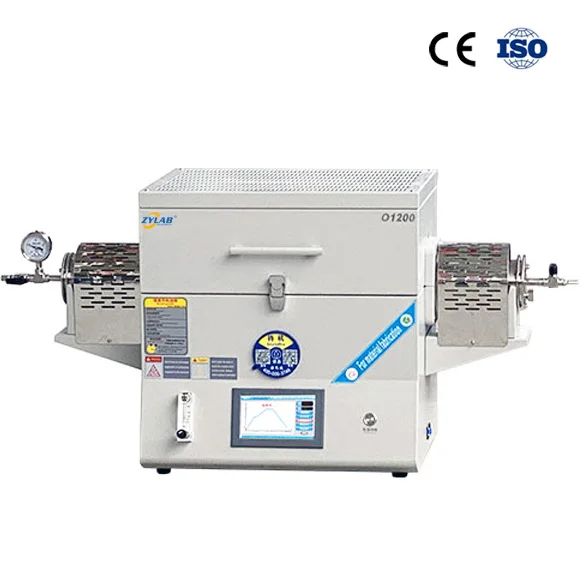
Horizontal Tube Furnace Range – Precision Heat Treatment up to 1700°C
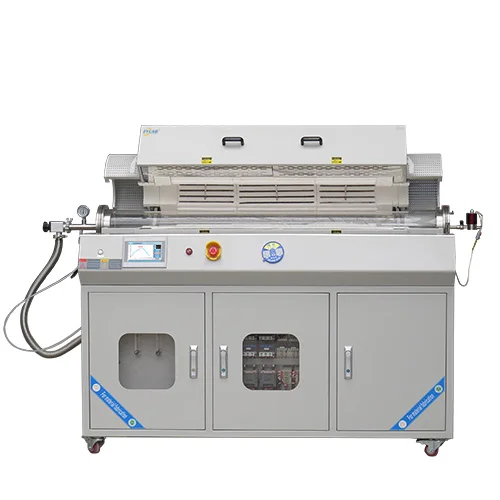
Large-Diameter Multi-Zone Tube Furnace – Precision Heat Treatment for Large Samples and Batch Processing
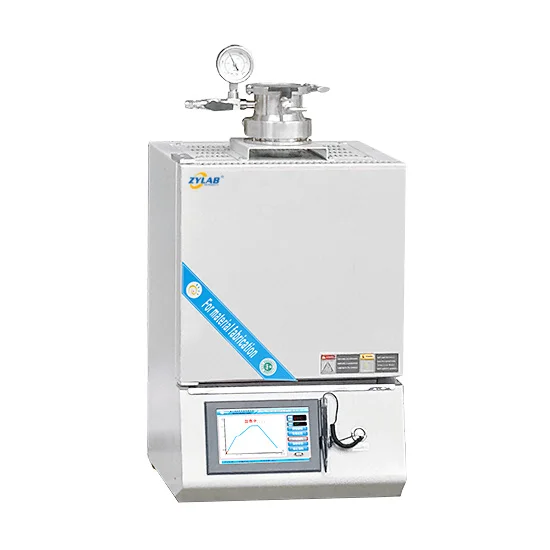
Vacuum Atmosphere Hybrid Box/Tube Furnace for Precision Heat Treatment
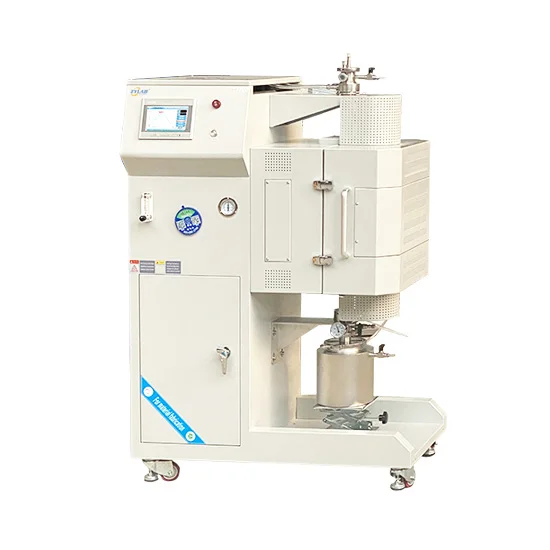
1700°C Vertical Atmosphere Controlled Quenching Furnace for High-Performance Heat Treatment
Working With ZYLAB On A Project Like This
How quickly can Rotary Tube Furnace vs. Horizontal Tube Furnace vs. Vertical Tube Furn be shipped?
Most standard ZYLAB models are held in stock. After testing and packing we normally ship Rotary Tube Furnace vs. Horizontal Tube Furnace vs. Vertical Tube Furn within 3 to 7 days. Customised builds are scheduled after the drawing is confirmed, and we give you the date in writing before the order is placed.
Is there a minimum order quantity for Rotary Tube Furnace vs. Horizontal Tube Furnace vs. Vertical Tube Furn?
No. ZYLAB has no minimum order requirement, so a single unit of Rotary Tube Furnace vs. Horizontal Tube Furnace vs. Vertical Tube Furn is a normal order. Occasionally a component supplier imposes a minimum quantity of their own, and we tell you as soon as we are notified.
Can we get technical help before ordering Rotary Tube Furnace vs. Horizontal Tube Furnace vs. Vertical Tube Furn?
Yes, and it is free. Our technical staff help with model selection, troubleshooting, manuals and application questions whether or not you have ordered from us before. Write to [email protected] or message us on WhatsApp.
What if Rotary Tube Furnace vs. Horizontal Tube Furnace vs. Vertical Tube Furn is damaged in transit?
Contact your ZYLAB sales engineer immediately with photographs. We arrange a substitute delivery promptly and handle the claim with the carrier.
Have A Similar Requirement
Describe the material, the temperature and the throughput you need and an engineer will answer with a workable configuration.