How to Choose Laboratory Powder-Milling Equipment: Ball Mills vs Jet Mills and Other Options
This guide explains how the most commonly used lab mills work, which powder types each is best suited for, and practical tradeoffs lab researchers should consider.
- GrindingBall millBench-Top Ball MillFine Grinding TechnologyLab Milling Solutions2025-09-16
Introduction
Choosing the right milling technology in a laboratory setting affects particle-size distribution (PSD), reproducibility, material purity, downstream processing, and scale-up. This guide explains how the most commonly used lab mills work, which powder types each is best suited for, and practical tradeoffs lab researchers should consider.
Key Selection Criteria (what to Consider)
Material properties: hardness, brittleness, ductility, abrasiveness, hygroscopicity, thermal sensitivity, chemical reactivity.
Target particle size & PSD: coarse (tens–hundreds µm), fine (1–10 µm), submicron (<1 µm), or nanoscale.
Throughput / sample size: single-gram screening vs tens of grams per hour.
Contamination tolerance / purity requirements: whether metallic/ceramic contamination is acceptable.
Wet or dry processing: some materials perform better/worse in wet media.
Heat sensitivity: will the material alter/decompose from local heating?
Cleaning / cross-contamination: how easy is the mill to clean between samples?
Scale-up path: does lab method represent industrial processing for later scale-up?
Budget & maintenance: capital cost, operating cost (gas, energy, media), and spare parts.
Ball Mills (bench, Planetary, Tumbling)
How they work: grind by tumbling a container with grinding media and powder.
ZYLAB options:
ZYLAB Planetary Ball Mill: high-energy, ideal for nanoscale particle size, mechanical alloying, and research requiring precise reproducibility.
Best for: hard/brittle materials, metals/alloys, pigments, catalysts, ceramics.
Limitations: contamination risk from media/jar wear, local heating, poor performance on ductile/sticky powders.
Particle size: tens of µm → submicron/nanometer scale (planetary).
Pros: versatile, cost-effective, good for mechanical alloying.
Cons: not ideal for ultra-pure or heat-sensitive materials.
Lab-scale Jet Mills
How they work: high-velocity gas jets accelerate particles, which collide and fracture; no media contact.
ZYLAB options:
ZYLAB Laboratory Jet Mill: suitable for high-purity powders, advanced ceramics, and pharmaceutical APIs, capable of producing narrow submicron PSD without contamination.
Best for: hard/brittle, high-purity powders.
Limitations: difficult for ductile/fibrous materials, energy/gas intensive, heat generation possible.
Particle size: D50 ~0.2–5 µm.
Pros: minimal contamination, narrow PSD, excellent for pharma and high-purity research.
Cons: higher capital & operational cost, lower throughput for coarse feed.
Other Lab Milling Methods
Attritor / stirred media mill: wet, fine grinding, slurries, inks.
Mortar & pestle: small samples, low contamination (agate/alumina).
Cryogenic milling: embrittles polymers/elastomers; avoids smearing/thermal damage.
Ultrasonic mills: break agglomerates, dispersions.
Hammer/roller mills: coarse grinding.
Quick Comparison Table
| Method | Principle | Best for | Final size | Contam. risk | Throughput | Heat gen. | Cost |
|---|---|---|---|---|---|---|---|
| Ball (tumbling) | Media impact & shear | Hard/brittle, blending | µm→sub-µm | Med-High | Low–Med | Med-High | Low |
| Planetary ball | High-energy impact | Nanoscale, alloying | sub-µm→nm | Med-High | Low | High | Med |
| Lab jet mill | Particle–particle collisions in gas jet | High-purity brittle powders | 0.2–5 µm | Low | Low–Med | Med | Med-High |
| Attritor / bead | Stirred beads, wet grinding | Slurries, inks, ceramics | sub-µm | Med | Med | Med | Med |
| Cryogenic mill | Embrittlement + impact | Polymers, sticky materials | µm→sub-µm | Low | Low | Low | Med-High |
| Mortar & pestle | Manual grinding | Tiny samples, low contamination | 10s µm | Low | Very low | Low |
Practical Selection Checklist
Define target PSD.
Check brittleness/hardness.
Evaluate contamination tolerance.
Decide wet vs dry.
Consider throughput & utilities.
Plan cleaning strategy.
Run small pilot trials.
Example Selection Scenarios
Alumina → 1 µm: jet mill with N₂ classifier.
Battery cathode slurry: attritor or wet ball mill.
Polymer powders: cryogenic milling.
API for inhalation: jet mill with classifier.
Best Practices & Contamination Control
Match media/jar to purity needs (zirconia, agate).
Use inert atmospheres for sensitive powders.
Pre-dry hygroscopic materials.
Control temperature (jackets, cryo).
Document cleaning procedures.
Track process parameters (BPR, rpm, atmosphere).
FAQs
- Can I jet mill polymers?
Usually difficult; cryo pre-cooling helps.
- Which media avoids Fe contamination?
Zirconia, agate, alumina.
- Wet vs dry milling?
Wet = better heat control, narrower PSD; dry = simpler, solvent-free.
- Sample size for planetary mills?
Works with gram-scale; jar/BPR dependent.
- Which gives narrowest PSD?
Jet mills with classifier.
- How to scale up?
Use same comminution principles; pilot trials recommended.
Closing
Choosing the correct lab mill depends on material properties, purity requirements, target particle size, and budget.
ZYLAB provides a full range of laboratory powder milling equipment, from ball mills to jet mills. Use the checklist to plan trials and evaluate PSD, contamination, and process stability before scaling up.
Contact us for tailored laboratory milling solutions.
Share this entry
You might also like
Related ZYLAB Products
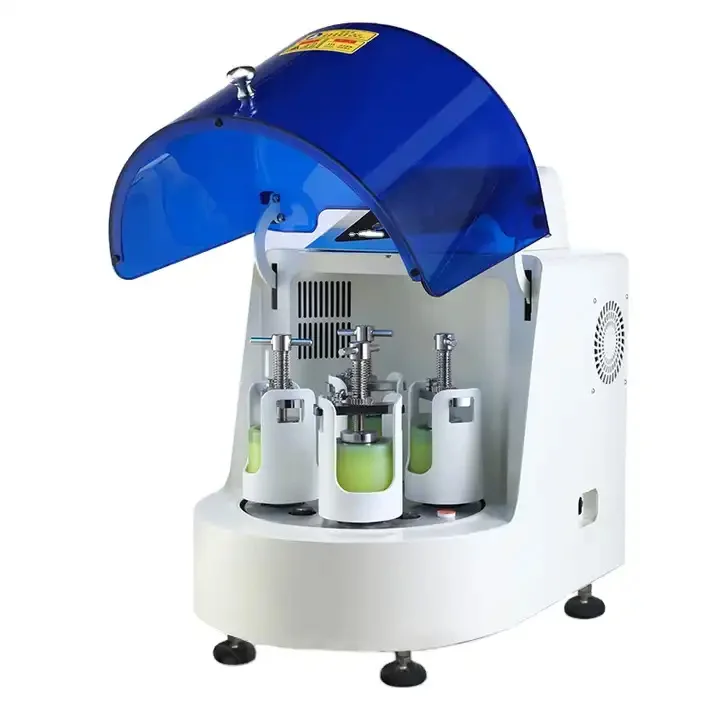
Laboratory Pulverized Ball Mill for Powder Milling and Sample Preparation
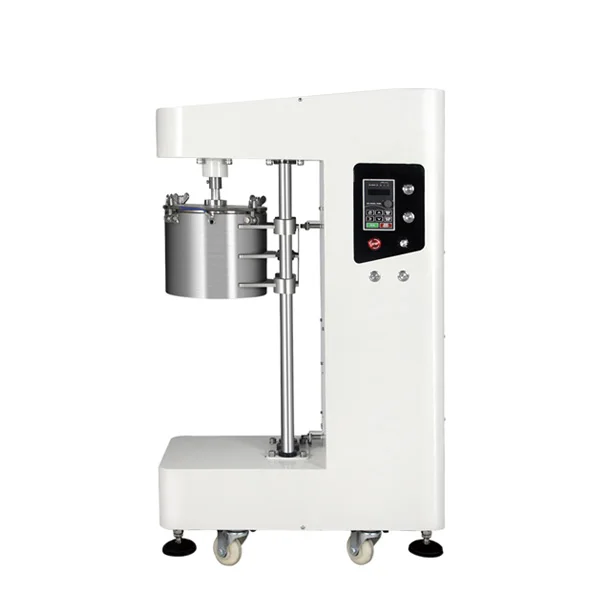
High Energy Dispersed Powder Uniform Mixing and Grinding Stirred Ball Mill
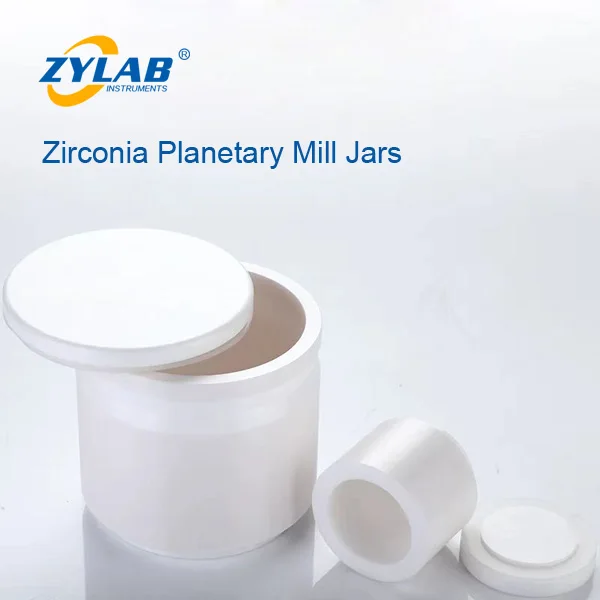
Zirconia Planetary Mill Jar | High Purity Grinding Jar for Planetary Ball Mills
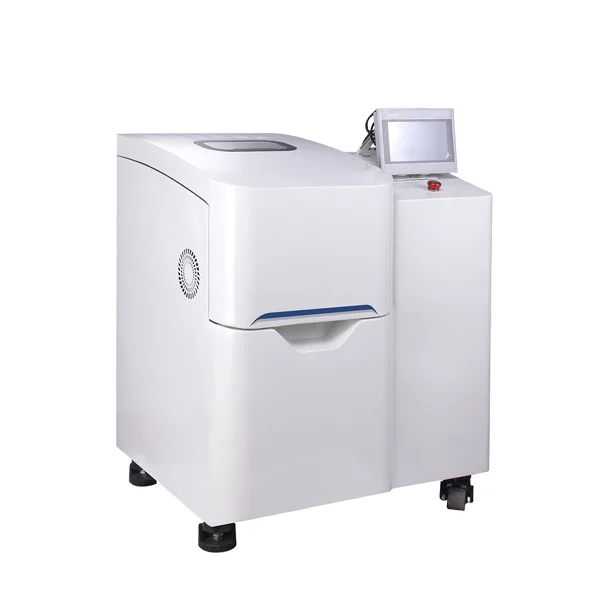
Speed 1600rpm Nano-level Grinding Ultra High Energy Ball Mill
Working With ZYLAB On A Project Like This
How quickly can How to Choose Laboratory Powder-Milling Equipment: Ball Mills vs Jet M be shipped?
Most standard ZYLAB models are held in stock. After testing and packing we normally ship How to Choose Laboratory Powder-Milling Equipment: Ball Mills vs Jet M within 3 to 7 days. Customised builds are scheduled after the drawing is confirmed, and we give you the date in writing before the order is placed.
Is there a minimum order quantity for How to Choose Laboratory Powder-Milling Equipment: Ball Mills vs Jet M?
No. ZYLAB has no minimum order requirement, so a single unit of How to Choose Laboratory Powder-Milling Equipment: Ball Mills vs Jet M is a normal order. Occasionally a component supplier imposes a minimum quantity of their own, and we tell you as soon as we are notified.
Can we get technical help before ordering How to Choose Laboratory Powder-Milling Equipment: Ball Mills vs Jet M?
Yes, and it is free. Our technical staff help with model selection, troubleshooting, manuals and application questions whether or not you have ordered from us before. Write to [email protected] or message us on WhatsApp.
What if How to Choose Laboratory Powder-Milling Equipment: Ball Mills vs Jet M is damaged in transit?
Contact your ZYLAB sales engineer immediately with photographs. We arrange a substitute delivery promptly and handle the claim with the carrier.
Have A Similar Requirement
Describe the material, the temperature and the throughput you need and an engineer will answer with a workable configuration.