
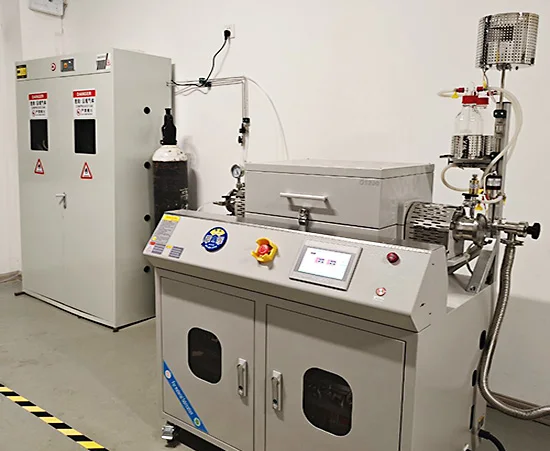
High-Temperature Sintering under Reducing Atmosphere: Principles, Advantages and Best Practices
Sintering under a reducing atmosphere (e.g., H₂, forming gas, N₂/H₂ blends) offers crucial benefits— oxide removal, improved densification, enhanced mechanical properties — for metal and ceramic powders. This article reviews the mechanism, process parameters, advantages, limitations, and application
- LaboratoryThermal Processingalloy sinteringCeramic sinteringControlled atmosphere furnace2025-11-28
Introduction: Why Atmosphere Matters in High-Temperature Sintering
Sintering transforms compacted powders into dense components through atomic diffusion, without reaching the bulk melting point of the material. Oxidation during high-temperature sintering can hinder particle bonding, reduce densification, and degrade mechanical properties.
Controlling the furnace atmosphere is therefore essential. A reducing atmosphere (low oxygen, rich in hydrogen or other reductants) can remove surface oxides and improve sintering outcomes.
What Is a Reducing Atmosphere?
A reducing atmosphere contains little or no oxygen and gases that can chemically remove oxygen. Typical gases include:
Hydrogen (H₂) – commonly used for metals and certain ceramics.
Forming gas (N₂ + H₂ blends) – cost-effective, safer alternative to pure hydrogen.
Dissociated ammonia – occasionally used for specific ceramic processing.
Inert gases with H₂ – prevent oxidation while providing mild reduction.
Selecting the appropriate atmosphere depends on material sensitivity, desired properties, cost, and safety.
1. Oxide Removal & Clean Particle Surfaces
Reducing atmospheres react with surface oxides, exposing clean particle surfaces and facilitating atomic diffusion. This improves neck formation and densification during sintering.
2. Enhanced Densification & Mechanical Strength
Controlled reducing conditions lead to higher density, lower porosity, and improved mechanical properties. This is particularly important for metals, carbides, and certain ceramics.
3. Control Over Chemical Composition & Carburization
Reducing atmospheres also enable careful control of carbon potential and chemical composition, critical for metals and metal-ceramic composites.
Process Considerations & Challenges
While reducing-atmosphere sintering provides many benefits, careful control is required:
Gas purity and dew point – ensure ppm-level oxygen and moisture.
Safety and cost – hydrogen handling requires reliable ignition and containment.
Material compatibility – not all ceramics benefit from reducing atmospheres.
Atmosphere control complexity – proper gas flow, monitoring, and purge cycles are essential.
Typical Applications & Suitable Materials
Reducing-atmosphere high-temperature sintering is widely used for:
Powder metallurgy – iron-based alloys, stainless steel, tungsten, carbides.
Refractory metals and high-temperature ceramics – sensitive to oxidation.
Metal-ceramic composites – precise control over density, phase composition, and microstructure.
It is particularly suitable for high-performance research and industrial applications where oxidation must be minimized and microstructure precisely controlled.
Recommendations for Researchers / Engineers
Select appropriate atmosphere – forming gas or pure H₂ depending on material.
Ensure low oxygen and moisture – pre-purge and high-purity gases.
Optimize sintering profile – heating rate, dwell time, and cooling.
Monitor carbon potential – control atmosphere composition when relevant.
Ensure equipment safety and reliability – proper gas handling, monitoring, and fail-safe mechanisms.
Conclusion
High-temperature sintering under a reducing atmosphere enhances densification, mechanical properties, and surface quality, particularly for metals and ceramics sensitive to oxidation.
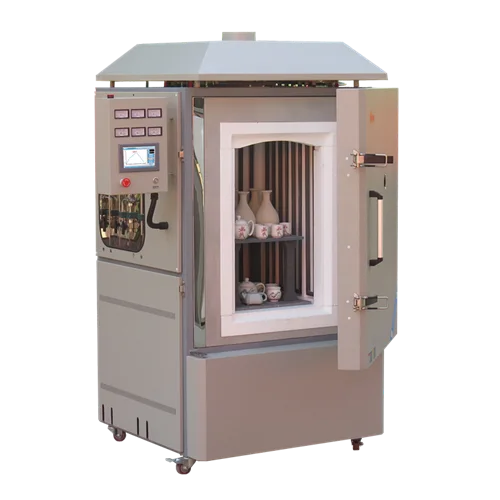
For researchers and engineers seeking precise, safe, and reproducible sintering, equipment such as the ZYLAB Hydrogen Reduction Sintering Furnace can support temperatures up to 1650°C, offer multiple pre-set and customizable sintering programs, advanced PID fuzzy temperature control, and safe hydrogen handling. This type of furnace allows high-quality, controlled reducing-atmosphere sintering for experimental and industrial applications.
Share this entry
You might also like
Applications of Hydrogen Reduction Furnace
All About Hydrogen Reduction Furnace: An Essential Tool for Advanced Material Processing
Mechanical Alloying in High-Energy Planetary Ball Mills
MAX1600 High-Energy Ball Mill Grinding Case Study
Related ZYLAB Products
Working With ZYLAB On A Project Like This
How quickly can High-Temperature Sintering under Reducing Atmosphere: Principles, Adva be shipped?
Most standard ZYLAB models are held in stock. After testing and packing we normally ship High-Temperature Sintering under Reducing Atmosphere: Principles, Adva within 3 to 7 days. Customised builds are scheduled after the drawing is confirmed, and we give you the date in writing before the order is placed.
Is there a minimum order quantity for High-Temperature Sintering under Reducing Atmosphere: Principles, Adva?
No. ZYLAB has no minimum order requirement, so a single unit of High-Temperature Sintering under Reducing Atmosphere: Principles, Adva is a normal order. Occasionally a component supplier imposes a minimum quantity of their own, and we tell you as soon as we are notified.
Can we get technical help before ordering High-Temperature Sintering under Reducing Atmosphere: Principles, Adva?
Yes, and it is free. Our technical staff help with model selection, troubleshooting, manuals and application questions whether or not you have ordered from us before. Write to [email protected] or message us on WhatsApp.
What if High-Temperature Sintering under Reducing Atmosphere: Principles, Adva is damaged in transit?
Contact your ZYLAB sales engineer immediately with photographs. We arrange a substitute delivery promptly and handle the claim with the carrier.
Have A Similar Requirement
Describe the material, the temperature and the throughput you need and an engineer will answer with a workable configuration.