
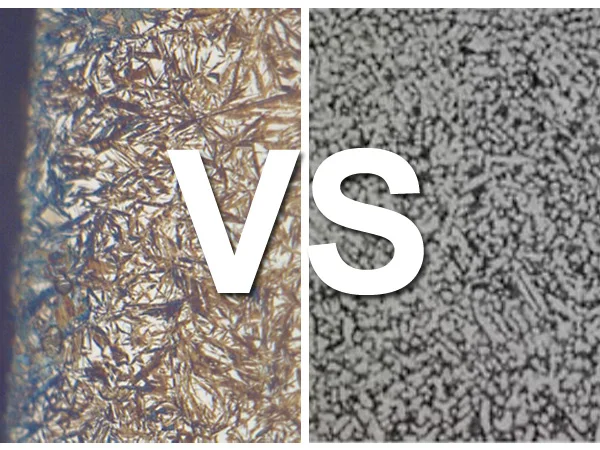
Heat Treatment Part 5: Carburizing and Nitriding
While conventional heat treatment methods like annealing, normalizing, and quenching alter the bulk properties of a material, carburizing and nitriding focus on the surface layer, creating a hard, wear-resistant shell while maintaining a tough and ductile core.
- Heat TreatmentKnowledge Sharing SeriesCarburizing processCarburizing vs nitridingControlled atmosphere furnaces2025-09-24
Introduction
Carburizing and nitriding are two important thermochemical heat treatment processes used to improve the surface properties of metals, particularly steels. While conventional heat treatment methods like annealing, normalizing, and quenching alter the bulk properties of a material, carburizing and nitriding focus on the surface layer, creating a hard, wear-resistant shell while maintaining a tough and ductile core.
What Is Carburizing?
Carburizing is the process of diffusing carbon atoms into the surface of low-carbon steel at elevated temperatures, typically between 850–950°C. The goal is to enrich the surface with carbon so that, after quenching, the steel develops a hard martensitic case with high wear resistance.
Types of Carburizing
Gas Carburizing – Performed in a furnace atmosphere enriched with gases such as methane or propane.
Liquid Carburizing – Uses molten salt baths containing carbonaceous compounds.
Vacuum Carburizing (Low-Pressure Carburizing, LPC) – A modern technique performed under vacuum with precise control of carbon potential, ideal for clean and distortion-sensitive parts.
Plasma Carburizing – Uses plasma discharge to activate carbon transfer, offering high efficiency and reduced environmental impact.
Benefits of Carburizing
Increases surface hardness and wear resistance.
Improves fatigue strength due to compressive residual stresses.
Maintains a tough, impact-resistant core, ideal for gears, bearings, and shafts.
What Is Nitriding?
Nitriding is the process of diffusing nitrogen into the surface of steel or other alloys at temperatures between 500–550°C. Unlike carburizing, nitriding does not require subsequent quenching because hard nitrides form directly during the treatment.
Types of Nitriding
Gas Nitriding – Performed in an ammonia atmosphere, where nitrogen atoms diffuse into the steel.
Plasma (Ion) Nitriding – Uses glow discharge plasma to introduce nitrogen; offers excellent control over case depth and hardness.
Salt Bath Nitriding – Employs nitrogen-rich salt baths; less common today due to environmental regulations.
Benefits of Nitriding
Produces extremely hard, wear-resistant surfaces.
Provides excellent fatigue resistance without quenching.
Offers corrosion resistance due to nitride layer formation.
Minimal distortion because of the lower processing temperature.
Key Differences Between Carburizing and Nitriding
| Aspect | Carburizing | Nitriding |
|---|
| Diffused element | Carbon | Nitrogen |
|---|
| Typical temperature | 850–950°C | 500–550°C |
|---|
| Quenching required | Yes, for hardening | No, nitrides form directly |
|---|
| Distortion risk | Higher (due to quenching) | Lower (no quenching) |
|---|
| Surface hardness | High, depending on quench and temper | Very high, due to nitride formation |
|---|
| Case depth | Deeper (typically 0.5-2.5 mm) | Shallower (typically 0.1-0.6 mm) |
|---|
| Applications | Gears, shafts, bearings | Tools, dies, aerospace components |
|---|
Applications in Research and Industry
Carburizing is widely used for automotive gears, camshafts, and bearings, where both wear resistance and core toughness are critical.
Nitriding is preferred for tool steels, aerospace parts, and precision components, where dimensional stability and surface hardness are vital.
In modern research, both processes are studied in combination with advanced furnace technologies such as vacuum furnaces, controlled atmosphere furnaces, and plasma systems. Researchers often explore the influence of alloy composition, process parameters, and post-treatments to optimize performance.
Conclusion
Carburizing and nitriding remain essential techniques in materials engineering and heat treatment research. By tailoring surface hardness, fatigue resistance, and wear properties, these processes enable steels and alloys to perform under demanding industrial conditions.
Share this entry
You might also like
Related ZYLAB Products
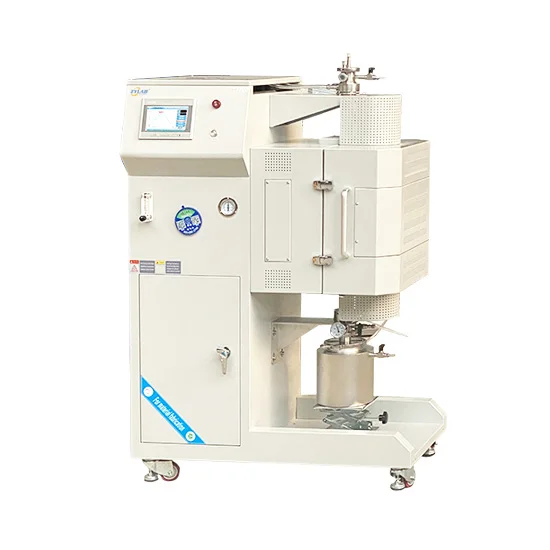
1700°C Vertical Atmosphere Controlled Quenching Furnace for High-Performance Heat Treatment
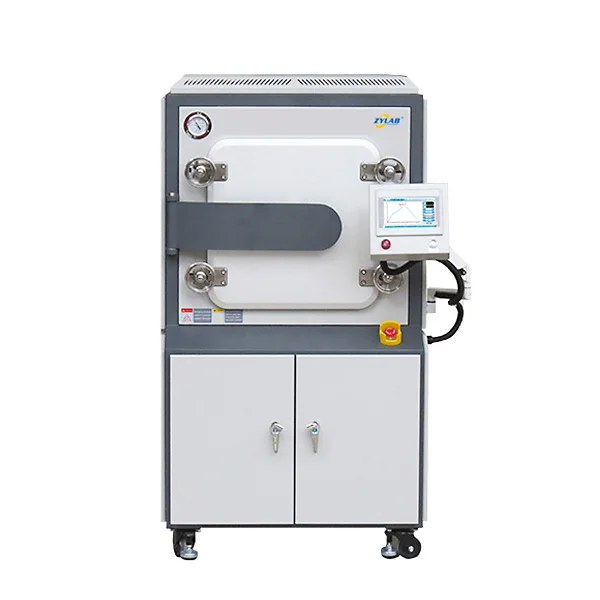
1200°C 27L Vacuum Atmosphere Muffle Furnace for Heat Treatment
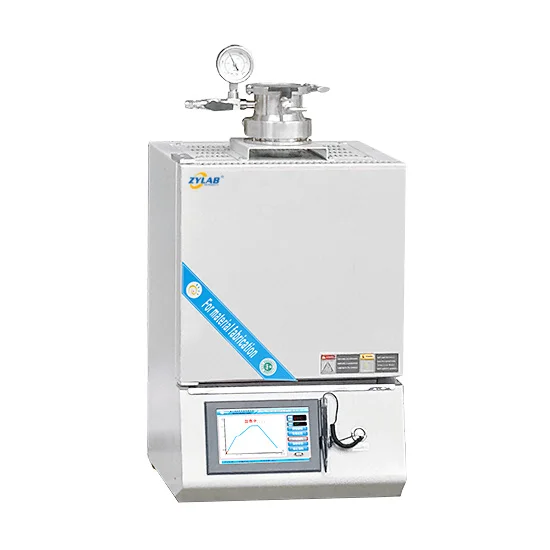
Vacuum Atmosphere Hybrid Box/Tube Furnace for Precision Heat Treatment
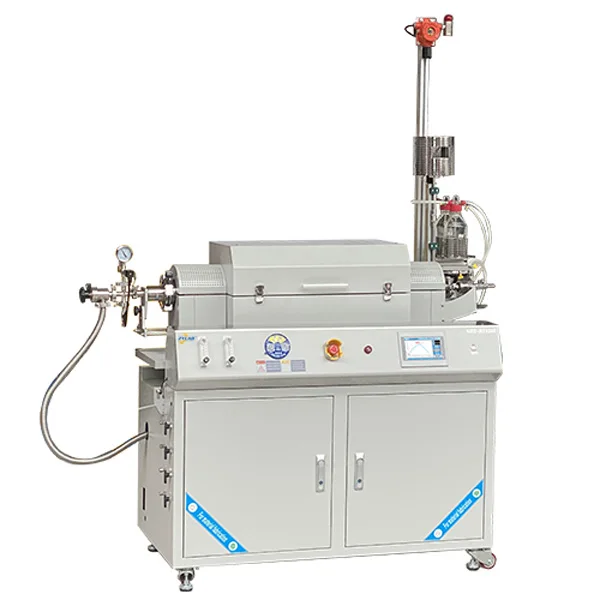
Rotary Hydrogen Atmosphere Furnace for Powder and Particle Heat Treatment
Working With ZYLAB On A Project Like This
What warranty comes with Heat Treatment Part 5: Carburizing and Nitriding?
Most ZYLAB products carry a 2-year warranty, glass components excluded; the exact term for this model is the one printed in its specification table and repeated on the quotation. Within the warranty period any part that fails through no misuse of your own is replaced free of charge.
Can we get technical help before ordering Heat Treatment Part 5: Carburizing and Nitriding?
Yes, and it is free. Our technical staff help with model selection, troubleshooting, manuals and application questions whether or not you have ordered from us before. Write to [email protected] or message us on WhatsApp.
Which shipping methods do you use?
Sea freight for consignments over about 60 kg (11-30 days to North America, 25-33 days to Europe, 7-20 days to Southeast Asia), air freight to airport in roughly 7-10 days, and DHL, FedEx or UPS door to door in about 5-7 days for small urgent items.
How can we pay for Heat Treatment Part 5: Carburizing and Nitriding?
Bank (wire) transfer, letter of credit for larger orders, major credit and debit cards, and PayPal. Bank details are printed on the invoice; send us the transfer confirmation and we start processing straight away.
Have A Similar Requirement
Describe the material, the temperature and the throughput you need and an engineer will answer with a workable configuration.