How to Choose Between Float Gas Flow Meters and Mass Flow Controllers for Tube Furnaces?
Controlling gas flow in a tube furnace is critical for processes like CVD (Chemical Vapor Deposition), heat treatment, atmosphere sintering, and annealing. Whether you’re running a research laboratory or an industrial production line, accurate gas flow control ensures process stability and repeatabi
- LaboratoryThermal ProcessingFloat Gas Flow MeterFurnace Gas Flow SolutionsFurnace Gas Flow System2025-03-18
Table of Contents
Controlling gas flow in a tube furnace is critical for processes like CVD (Chemical Vapor Deposition), heat treatment, atmosphere sintering, and annealing. Whether you’re running a research laboratory or an industrial production line, accurate gas flow control ensures process stability and repeatability.
But should you choose a Float Gas Flow Meter (Rotameter) or a Mass Flow Controller (MFC) for your tube furnace system?
In this guide, we compare the two technologies and help you decide which is better for your application.
What Is a Float Gas Flow Meter (Rotameter)?
A Float Gas Flow Meter, commonly known as a rotameter, is a simple device that measures the volumetric flow rate of gases in a tube furnace system. It operates based on gravity and the drag force of the gas, causing a float to rise within a tapered tube. The height of the float indicates the flow rate.
Advantages of Float Gas Flow Meters
- Cost-Effective: Affordable for laboratories with limited budgets.
- Simple Operation: Easy to install and adjust manually.
- No Power Required: Operates without electricity, ideal for basic setups.
- Low Maintenance: Minimal moving parts make it durable and reliable for simple gas flows.
Disadvantages of Float Gas Flow Meters
- Low Precision: Susceptible to inaccuracies due to temperature and pressure changes.
- Manual Control: Requires constant manual adjustment for stable flow.
- Limited to Single Gas: Calibrated for a specific gas type; inaccurate if used for others.
- No Feedback or Automation: Not compatible with automated control systems.
What Is a Mass Flow Controller (MFC)?
A Mass Flow Controller (MFC) is a sophisticated electronic device that measures and controls the mass flow rate of gases in a tube furnace system. It uses thermal sensors and control valves to precisely regulate gas flow, regardless of temperature or pressure fluctuations.
Advantages of Mass Flow Controllers
- High Precision: Maintains highly accurate gas flow rates, essential for sensitive processes.
- Automated Control: Integrates easily with programmable logic controllers (PLC) and computer systems for automated operation.
- Multi-Gas Capability: Can be calibrated for different gases or gas mixtures.
- Stable and Repeatable: Provides consistent flow rates, improving process reproducibility.
Disadvantages of Mass Flow Controllers
- Higher Cost: More expensive upfront compared to rotameters.
- Requires Power Supply: Needs electrical input and communication interfaces.
Comparison: Float Gas Flow Meter Vs. Mass Flow Controller for Tube Furnaces
| Feature | Float Gas Flow Meter | Mass Flow Controller |
|---|---|---|
| Accuracy | Low to Moderate | High Precision |
| Control Method | Manual | Automatic / Computer-Controlled |
| Response to Pressure/Temperature Changes | Sensitive | Compensated and Stable |
| Cost | Low | Higher Investment |
| Applications | Simple Gas Purging, Basic Protection Atmospheres | Advanced CVD, Precise Atmosphere Sintering |
| Automation | Not Available | Fully Automated |
How to Choose the Right Gas Flow Controller for Your Tube Furnace?
When selecting a gas flow control system for your tube furnace, consider the following factors:
1. Precision Requirements
- For high-precision processes like CVD, SiC coating, or 2D materials synthesis, a Mass Flow Controller is the best choice.
- For simple applications such as basic protective gas flow or inert gas purging, a Float Gas Flow Meter can be sufficient.
2. Budget Considerations
- Float Meters are budget-friendly and ideal for smaller laboratories with limited funding.
- MFCs offer long-term benefits in accuracy and automation, which can save costs in high-value production or research.
3. Process Automation
- If your furnace is integrated into an automated control system, MFCs are necessary for real-time adjustments and data logging.
- Manual control is feasible with float meters but requires operator intervention.
4. Gas Type and Mixtures
- If your tube furnace uses mixed gases or requires switching between different gases, MFCs with multi-gas calibration ensure accuracy and flexibility.
Why Choose ZYLAB’s Gas Flow Control Solutions?
At ZYLAB, we offer high-quality tube furnaces paired with reliable gas flow control systems, including both Float Gas Flow Meters and Mass Flow Controllers.
Whether you need manual control for simple experiments or automated gas mixing systems for complex sintering processes, we can provide customized solutions to meet your research or production requirements.
1. Why Choose a Mass Flow Controller for Tube Furnaces?
Mass flow controllers provide precise and automated gas flow management. They are essential in applications where consistent gas flow rates, repeatability, and control over multiple gases are required—common in advanced material synthesis, semiconductor manufacturing, and 2D material research.
2. When Should I Choose a Float Gas Flow Meter for My Tube Furnace?
Float gas flow meters are suitable for simple, low-cost applications where basic visual monitoring of gas flow is sufficient. They are ideal for non-critical laboratory processes or when budget constraints exist.
3. Can I Upgrade My Tube Furnace System with a Mass Flow Controller Later?
Yes, most modern tube furnace systems can be upgraded with mass flow controllers. ZYLAB, for example, offers customizable tube furnaces that support both float flow meters and high-precision MFCs, allowing you to scale your setup as your process requirements evolve.
Conclusion
Choosing between a Float Gas Flow Meter and a Mass Flow Controller depends on your accuracy needs, budget, and process complexity.
- For basic gas flow control, a float meter works well.
- For high-precision, automated, or multi-gas processes, a mass flow controller is essential.
Need help deciding? Contact ZYLAB today to discuss your tube furnace gas flow control needs!
Share this entry
You might also like
Low-Temperature (≤400°C) Deposition of High-Quality Dielectric and Passivation Films Using a 1200°C Dual-Zone PECVD System
Comprehensive Guide to Graphene Thin-Layer Material Preparation Methods
Efficient Methods for Grinding Chemical Fibrous Materials into Powder
Case Study: Supplying Half Round Boat Crucibles with Covers to the University of Eastern Piedmont (UPO), Italy
Related ZYLAB Products
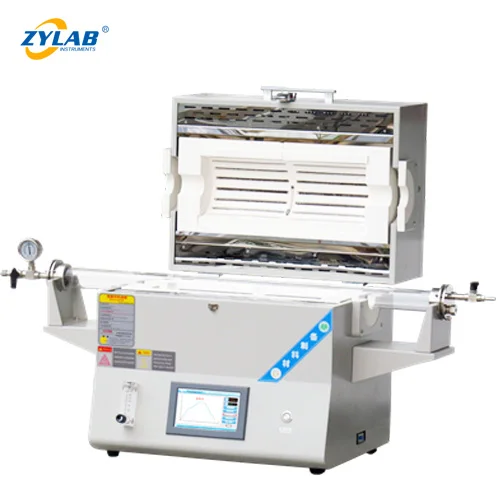
Customizable Tube Furnace with Gas Control System – Precision Atmosphere Processing
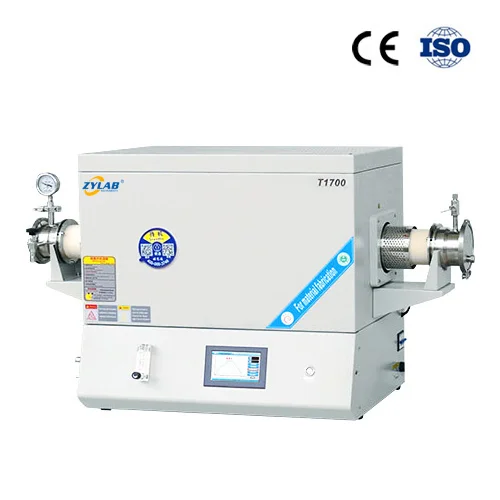
1700°C Two Zone Tube Furnace for Precision Thermal Processing
Multi-Zone High Temperature Quartz Tube Annealing Furnace for Wafer Processing
Laboratory 1200°C Rocking Tube Furnace with Vacuum and Atmosphere Control
Working With ZYLAB On A Project Like This
Can How to Choose Between Float Gas Flow Meters and Mass Flow Controllers be customised for our process?
Yes. Chamber or tube size, temperature profile, atmosphere, gas path, control system and data recording can all be adapted. Send us your process conditions and sample details and our engineers work out a configuration with you.
How quickly can How to Choose Between Float Gas Flow Meters and Mass Flow Controllers be shipped?
Most standard ZYLAB models are held in stock. After testing and packing we normally ship How to Choose Between Float Gas Flow Meters and Mass Flow Controllers within 3 to 7 days. Customised builds are scheduled after the drawing is confirmed, and we give you the date in writing before the order is placed.
How is How to Choose Between Float Gas Flow Meters and Mass Flow Controllers packed for export?
Packing is chosen for the safety of the machine against freight cost, typically a plywood or wooden crate with internal padding and vacuum-sealed accessories. Export documents such as Form A, Form E and Form F can be issued to help you save duty.
Can you supply items that are not on this page?
Yes. We have access to the complete lines of most of our suppliers and build custom equipment in our own factory, so tell us what the experiment needs and we will source or make it.
Have A Similar Requirement
Describe the material, the temperature and the throughput you need and an engineer will answer with a workable configuration.