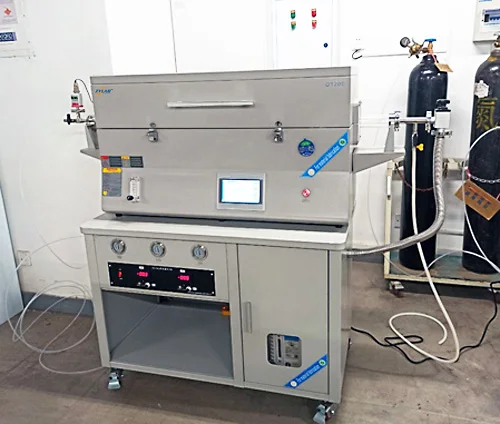
CVD Tube Furnace Sintering Systems for 2D Material Applications
CVD (Chemical Vapor Deposition) tube furnace sintering systems play a crucial role in achieving high-quality 2D material growth and structural refinement. In this blog, we explore the applications of CVD tube furnace sintering systems in 2D material synthesis and processing.
- LaboratoryThermal Processing2D Materials SinteringChemical Vapor Deposition FurnaceCustom CVD Furnace for Laboratory Applications2025-03-18
Introduction
Two-dimensional (2D) materials, such as graphene, transition metal dichalcogenides (TMDs), and hexagonal boron nitride (h-BN), are at the forefront of advanced material research. Their unique properties—including high electrical conductivity, optical transparency, mechanical flexibility, and chemical stability—make them ideal for next-generation electronic devices, energy storage systems, and sensors.
To unlock the full potential of 2D materials, precise synthesis and post-treatment are essential. CVD (Chemical Vapor Deposition) tube furnace sintering systems play a crucial role in achieving high-quality 2D material growth and structural refinement.
In this blog, we explore the applications of CVD tube furnace sintering systems in 2D material synthesis and processing.
What Are 2D Materials?
2D materials are materials consisting of a single layer or a few atomic layers. Common examples include:
- Graphene – Known for its exceptional electrical conductivity and strength.
- MoS₂ and WS₂ (TMDs) – Semiconducting properties for transistors and optoelectronics.
- h-BN – Excellent insulator with high thermal stability.
These materials are typically synthesized using CVD processes followed by high-temperature sintering treatments to improve crystallinity and optimize performance.
1. Precise Temperature Control
CVD tube furnaces offer accurate temperature management, typically ranging from 300°C to 1600°C, ensuring optimal growth and sintering conditions for different 2D materials.
2. Controlled Atmosphere
Maintaining a high-purity gas environment (vacuum, inert gas, or reducing atmosphere) is essential to avoid contamination and control material properties. CVD tube furnaces allow for precise atmosphere control during both deposition and sintering processes.
3. Uniform Heating and Temperature Zones
CVD tube furnaces feature single-zone, dual-zone, or multi-zone configurations, allowing temperature gradients and uniform heating critical for synthesizing large-area 2D films and heterostructures.
4. High Purity and Scalability
The CVD method in tube furnaces supports high-purity film deposition with excellent scalability, making it ideal for both research and industrial applications.
1. Graphene Growth and Post-Sintering
- Process: CVD growth on copper or nickel substrates, followed by high-temperature sintering to enhance crystallinity and remove defects.
- Result: High-mobility graphene films for flexible electronics and transparent conductive electrodes.
2. Transition Metal Dichalcogenides (TMDs) Synthesis
- Process: MoS₂, WS₂, and similar TMDs are grown through sulfurization or selenization of metal precursors in a CVD furnace.
- Sintering Role: Enhances layer uniformity, reduces grain boundaries, and improves semiconducting properties.
3. Hexagonal Boron Nitride (h-BN) Films
- Use: Acts as a dielectric or substrate for graphene and TMDs.
- Sintering Advantage: High-temperature treatment in a controlled atmosphere achieves excellent film quality with minimal defects.
4. 2D Heterostructures
- Process: Sequential or co-sintering different 2D materials in multi-zone tube furnaces allows for the creation of heterostructures (e.g., graphene/h-BN, MoS₂/WS₂).
- Benefit: Enables development of next-gen transistors, photodetectors, and quantum devices.
Advantages of ZYLAB CVD Tube Furnace Sintering Systems
- Wide Temperature Range: Supports up to 1600°C for advanced material processing.
- Flexible Tube Options: Quartz, alumina, and stainless steel tubes for various reaction types.
- Precision Gas Flow Control: Enables complex atmosphere configurations such as hydrogen, argon, or mixed gases.
- Vacuum Compatibility: High-vacuum or low-pressure CVD systems reduce contamination risks.
- User-Friendly Interface: Touchscreen operation with programmable temperature profiles.
Typical Industries and Research Fields
- Semiconductor Manufacturing
- Energy Storage (Li-ion batteries, Supercapacitors)
- Flexible Electronics
- Optoelectronic Devices
- Photocatalysis and Sensors
Conclusion
CVD tube furnace sintering systems are indispensable tools for the synthesis and post-processing of 2D materials. With precise temperature control, atmosphere management, and scalable design, these furnaces facilitate the production of high-quality graphene, TMDs, h-BN, and heterostructures.
As demand for advanced materials continues to grow, CVD tube furnaces will remain at the core of 2D material research and industrial production.
Share this entry
You might also like
Supplying Advanced Rotary and Rocking Furnaces to Leading UK Thermodynamics Companies: ZYLAB’s Vibrating Rotary Sintering Furnace Solution
How to Use a Rocking Hydrogen Atmosphere Furnace for Reducing Copper Powder, Iron Powder, and Other High-Purity Metal Powders
Supporting the University of Cyprus with ZYLAB Lab Ultrasonic Nebulizer for Advanced Research
Success Case: Supplying 20-Ton Automatic Powder Pellet Press to a Leading European Tech Innovation Company
Related ZYLAB Products
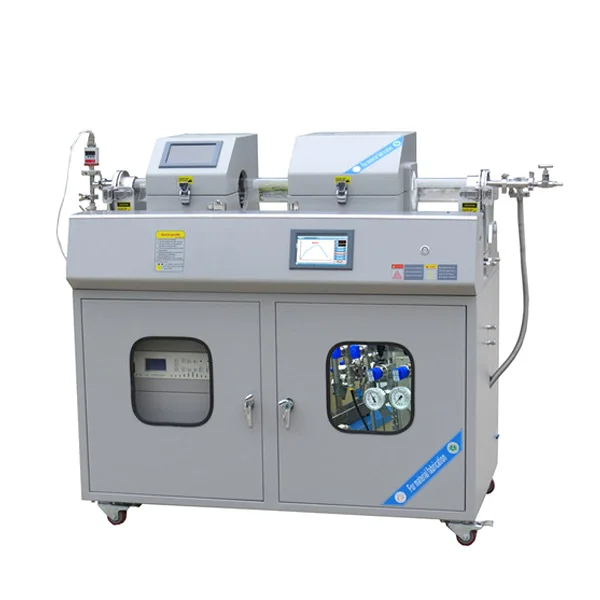
Advanced Plasma-Enhanced Chemical Vapor Deposition PECVD Furnace System
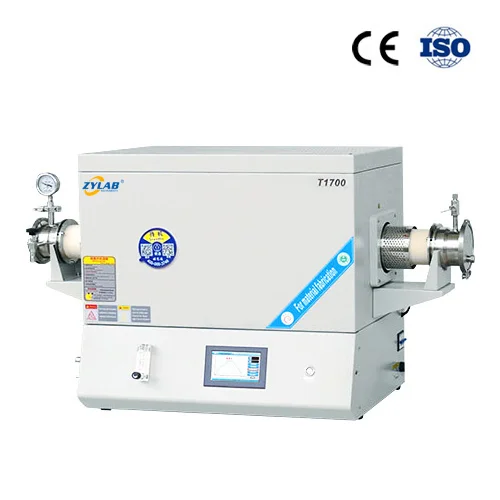
1700°C Two Zone Tube Furnace for Precision Thermal Processing
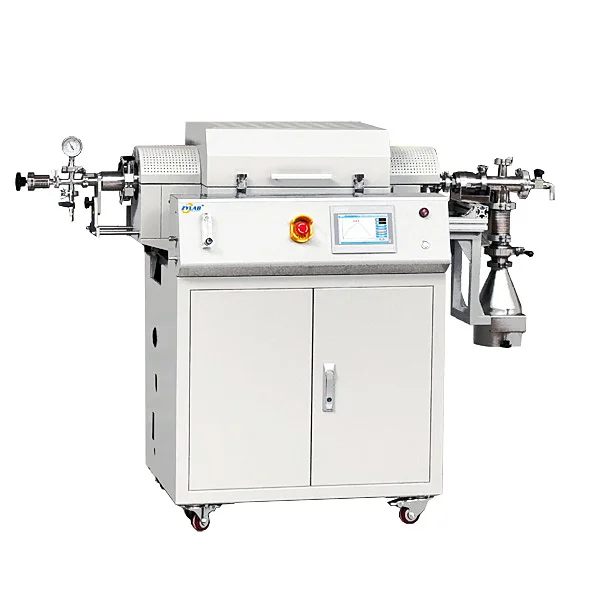
Laboratory Rotary Tilting Tube Furnace with Automatic Material Collection System
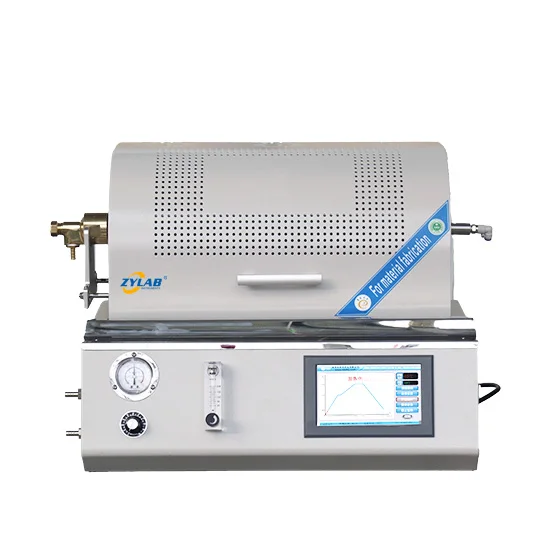
Laboratory Mini Rotary Oscillating Tube Furnace for Powder & Granular Material Calcination
Working With ZYLAB On A Project Like This
Can CVD Tube Furnace Sintering Systems for 2D Material Applications be customised for our process?
Yes. Chamber or tube size, temperature profile, atmosphere, gas path, control system and data recording can all be adapted. Send us your process conditions and sample details and our engineers work out a configuration with you.
How quickly can CVD Tube Furnace Sintering Systems for 2D Material Applications be shipped?
Most standard ZYLAB models are held in stock. After testing and packing we normally ship CVD Tube Furnace Sintering Systems for 2D Material Applications within 3 to 7 days. Customised builds are scheduled after the drawing is confirmed, and we give you the date in writing before the order is placed.
How is CVD Tube Furnace Sintering Systems for 2D Material Applications packed for export?
Packing is chosen for the safety of the machine against freight cost, typically a plywood or wooden crate with internal padding and vacuum-sealed accessories. Export documents such as Form A, Form E and Form F can be issued to help you save duty.
Can you supply items that are not on this page?
Yes. We have access to the complete lines of most of our suppliers and build custom equipment in our own factory, so tell us what the experiment needs and we will source or make it.
Have A Similar Requirement
Describe the material, the temperature and the throughput you need and an engineer will answer with a workable configuration.