
Heat Treatment Part 6: Conventional vs Vacuum Heat Treatment and Furnace Differences
While conventional heat treatment is widely applied in industries, vacuum heat treatment has become essential for high-precision and high-performance applications. This article explores the differences between conventional and vacuum heat treatment, including furnace types, process methods, and prac
- Heat TreatmentKnowledge Sharing SeriesAerospace Heat TreatmentAnnealingConventional Furnace2025-09-25
Table of Contents
Heat treatment is a critical process in metalworking and materials engineering, used to enhance hardness, toughness, and durability of metals and alloys. While conventional heat treatment is widely applied in industries, vacuum heat treatment has become essential for high-precision and high-performance applications. This article explores the differences between conventional and vacuum heat treatment, including furnace types, process methods, and practical considerations.
Overview
Conventional heat treatment is performed in furnaces with air or protective gases. It includes processes such as:
Annealing: Softens metal and relieves internal stress.
Quenching: Rapid cooling to increase hardness.
Tempering: Reduces brittleness after quenching while maintaining hardness.
Key Characteristics
Performed in air or gas furnaces.
Moderate heating and cooling rates; temperature uniformity may vary.
Surface oxidation, scaling, or decarburization can occur.
Suitable for a wide range of metals, including structural steels and general alloys.
Overview
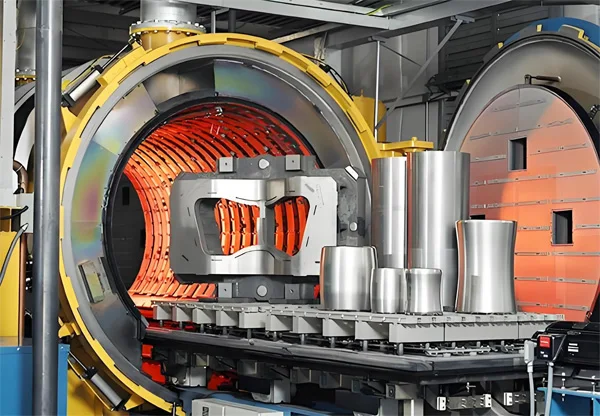
Vacuum heat treatment is conducted in a vacuum furnace where air and other gases are removed. This prevents oxidation and contamination and allows precise control over temperature and material properties.
Key Characteristics
Performed in vacuum furnaces at pressures often below 10⁻² mbar.
Eliminates surface oxidation, scaling, and decarburization.
Highly uniform heating and precise temperature control.
Ideal for high-alloy steels, aerospace components, medical instruments, and precision parts.
Differences Between Conventional and Vacuum Heat Treatment
| Aspect | Conventional Heat Treatment | Vacuum Heat Treatment |
|---|
| Atmosphere | Air or protective gas | High vacuum (low-pressure environment) |
|---|
| Surface Quality | Oxidation, scaling, decarburization possible | Clean, oxidation-free, and precise surface finish |
|---|
| Temperature Control | Moderate uniformity | High uniformity, precise control |
|---|
| Cooling Options | Air, water, oil | Gas quenching (argon, nitrogen) for uniform cooling |
|---|
| Applications | General industry, structural metals | Aerospace, high-tech, medical, precision alloys |
|---|
| Cost & Complexity | Lower cost, simpler equipment | Higher cost, advanced furnace design |
|---|
Choosing Between Conventional and Vacuum Heat Treatment
Conventional heat treatment is cost-effective for standard industrial parts where surface finish is less critical.
Vacuum heat treatment is essential for high-performance or precision components, where surface quality, uniformity, and exact mechanical properties matter.
Furnace Selection Considerations
When selecting a heat treatment furnace, consider:
Material Type: High-alloy steels and precision alloys benefit from vacuum furnaces.
Component Size: Large parts may require conventional furnaces with higher capacity.
Surface Finish Requirements: Vacuum furnaces prevent oxidation and scaling.
Production Volume and Cost: Conventional furnaces are simpler and more economical for large-scale production.
Conclusion
Conventional and vacuum heat treatment serve different industrial needs. Conventional furnaces are suitable for general-purpose applications, while vacuum furnaces provide superior control and surface quality for high-tech and precision components.
Understanding the differences between furnace types and heat treatment methods is essential for engineers, metallurgists, and industrial professionals to achieve optimal performance and reliability.
Share this entry
You might also like
Related ZYLAB Products
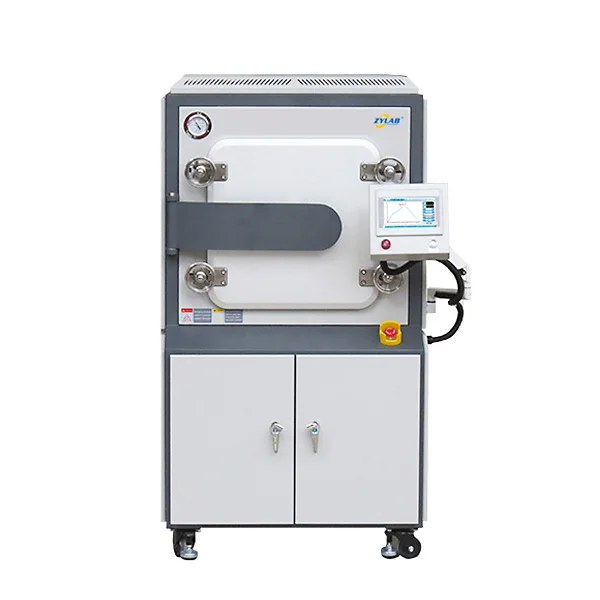
1200°C 27L Vacuum Atmosphere Muffle Furnace for Heat Treatment
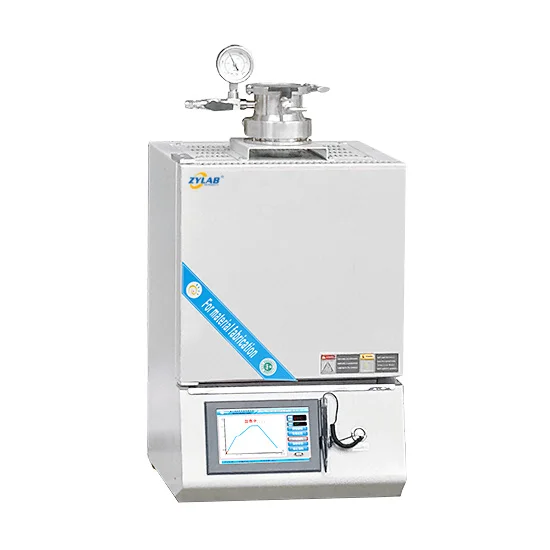
Vacuum Atmosphere Hybrid Box/Tube Furnace for Precision Heat Treatment
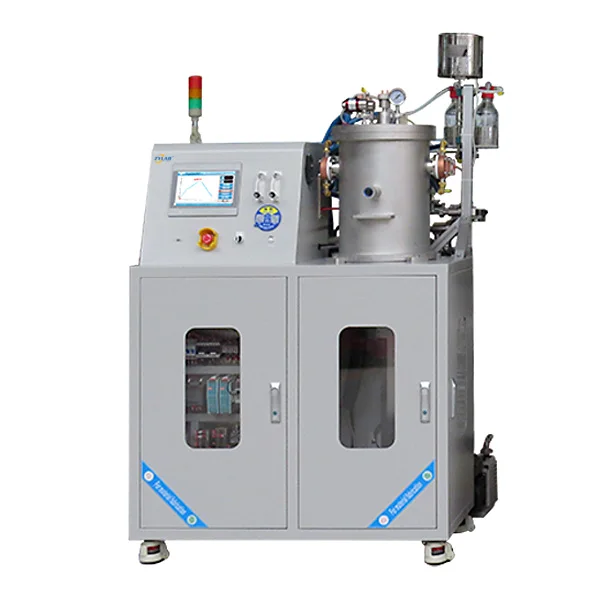
High Vacuum Tungsten Wire Furnace | Precision Heat Treatment & Sintering
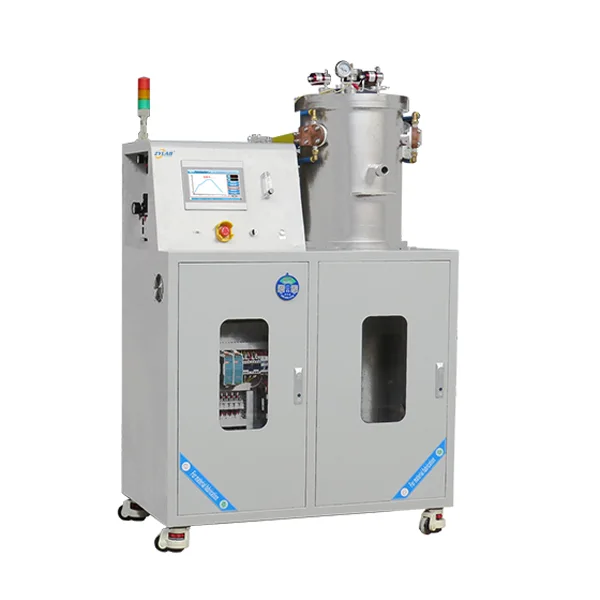
2200°C Vacuum Tungsten Sintering Furnace | Precision Heat Treatment Equipment
Working With ZYLAB On A Project Like This
Can Heat Treatment Part 6: Conventional vs Vacuum Heat Treatment and Furna be customised for our process?
Yes. Chamber or tube size, temperature profile, atmosphere, gas path, control system and data recording can all be adapted. Send us your process conditions and sample details and our engineers work out a configuration with you.
What warranty comes with Heat Treatment Part 6: Conventional vs Vacuum Heat Treatment and Furna?
Most ZYLAB products carry a 2-year warranty, glass components excluded; the exact term for this model is the one printed in its specification table and repeated on the quotation. Within the warranty period any part that fails through no misuse of your own is replaced free of charge.
How can we pay for Heat Treatment Part 6: Conventional vs Vacuum Heat Treatment and Furna?
Bank (wire) transfer, letter of credit for larger orders, major credit and debit cards, and PayPal. Bank details are printed on the invoice; send us the transfer confirmation and we start processing straight away.
How is Heat Treatment Part 6: Conventional vs Vacuum Heat Treatment and Furna packed for export?
Packing is chosen for the safety of the machine against freight cost, typically a plywood or wooden crate with internal padding and vacuum-sealed accessories. Export documents such as Form A, Form E and Form F can be issued to help you save duty.
Have A Similar Requirement
Describe the material, the temperature and the throughput you need and an engineer will answer with a workable configuration.