
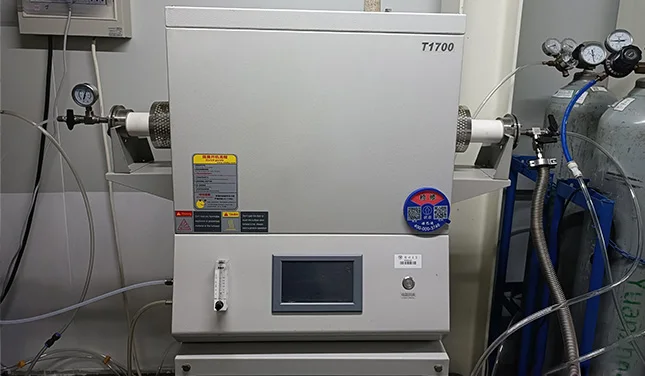
How a 1700℃ Tube Furnace Enhances High-Efficiency Catalyst Preparation Experiments
Among various laboratory heating instruments, a 1700℃ tube furnace stands out for its high-temperature capabilities, uniform heating, and versatility in catalyst synthesis. This article explores how a 1700℃ tube furnace supports high-efficiency catalyst preparation experiments, its advantages, and p
- LaboratoryThermal Processing1700℃ Tube FurnaceCatalyst Activation FurnaceCatalyst Calcination Furnace2025-09-15
Table of Contents
High-efficiency catalysts play a crucial role in modern chemical processes, energy conversion, and environmental protection. The preparation of such catalysts often requires precise thermal treatment under controlled atmospheres. Among various laboratory heating instruments, a 1700℃ tube furnace stands out for its high-temperature capabilities, uniform heating, and versatility in catalyst synthesis.
This article explores how a 1700℃ tube furnace supports high-efficiency catalyst preparation experiments, its advantages, and practical applications.
Understanding the 1700℃ Tube Furnace
A 1700℃ tube furnace is a specialized high-temperature laboratory furnace capable of reaching temperatures up to 1700℃. Unlike traditional muffle or box furnaces, tube furnaces feature a cylindrical heating chamber (often lined with high-purity alumina or quartz) and are equipped with advanced temperature controllers such as PID or fuzzy logic systems. These furnaces allow for:
Precise temperature control: Essential for achieving reproducible catalyst structures.
Controlled atmospheres: Enabling synthesis under inert, reducing, or reactive gas environments.
High-temperature stability: Critical for materials requiring sintering or calcination at ultra-high temperatures.
In catalyst preparation, the ability to maintain uniform high temperatures is crucial for forming active sites, controlling particle size, and optimizing surface area.
Role of 1700℃ Tube Furnace in Catalyst Preparation
Calcination of Catalyst Precursors
Catalyst precursors, such as metal oxides or supported metal complexes, require calcination to remove volatile components and induce phase transformations. A 1700℃ tube furnace ensures:
High thermal efficiency: Rapid and uniform heating reduces processing time.
Controlled decomposition: Prevents overheating or sintering that can reduce catalytic activity.
Atmosphere flexibility: Allows air, oxygen, nitrogen, or hydrogen atmospheres depending on the desired chemical transformation.
Sintering and Crystallization
Many catalysts require precise sintering to achieve optimal crystallinity, surface area, and pore structure. Tube furnaces provide:
High-temperature uniformity: Ensures homogeneous crystallization throughout the sample.
Reproducibility: Multiple batches can achieve consistent structural and catalytic properties.
Fine particle control: Crucial for catalysts where nano-sized particles enhance reaction rates.
Reduction and Activation
Some catalysts, particularly those based on noble metals or transition metals, require reduction under hydrogen or other reactive gases. A 1700℃ tube furnace allows:
Precise atmosphere control: Avoids oxidation and ensures selective reduction.
High-temperature activation: Facilitates the formation of highly active sites.
Safe operation: Sealed tube designs prevent leakage of reactive gases.
Applications in High-Efficiency Catalyst Research
High-temperature tube furnaces are widely used in laboratory-scale catalyst preparation for:
Heterogeneous catalysis: For refining, hydrogenation, and oxidation reactions.
Electrocatalysts: Such as those used in fuel cells and water electrolysis.
Photocatalysts: For solar-driven chemical reactions and environmental remediation.
Nano-catalyst development: Where precise thermal control is needed to regulate particle size and morphology.
In each application, the furnace’s ability to maintain ultra-high temperatures with precise control ensures the catalyst’s structure, composition, and surface characteristics are optimized for maximum activity.
Advantages of Using a 1700℃ Tube Furnace
Using a high-temperature tube furnace in catalyst experiments offers several distinct advantages:
Ultra-high temperature capability: Suitable for advanced materials requiring temperatures above 1500℃.
Uniform heating zone: Multi-zone designs provide consistent temperature along the tube length.
Customizable atmosphere: Supports inert, reducing, and reactive environments, essential for selective chemical transformations.
Automation and safety features: Modern tube furnaces often include programmable heating profiles, over-temperature protection, and gas exhaust systems.
For example, the ZYLAB 1700℃ tube furnace is designed with high-purity alumina tubes, multi-zone temperature control, and intelligent PID controllers to ensure maximum accuracy. Its modular design allows integration with gas mixing or vacuum systems, making it particularly suitable for catalyst calcination, reduction, and sintering processes in advanced laboratory research.
These features make tube furnaces indispensable for both academic research and industrial catalyst development, and ZYLAB’s solutions are tailored to meet the precise needs of scientists and engineers worldwide.
Conclusion
A 1700℃ tube furnace is an essential tool for high-efficiency catalyst preparation experiments, offering unmatched temperature control, uniform heating, and atmosphere versatility. Whether used for calcination, sintering, reduction, or activation, these furnaces enable researchers to optimize catalyst structure, activity, and reproducibility.
By selecting the right tube furnace model and utilizing its advanced features, laboratories and research institutions can achieve significant improvements in catalyst performance and experimental efficiency.
If you are looking for a reliable solution, ZYLAB’s 1700℃ tube furnace combines high-precision control, customizable atmosphere systems, and proven safety features to support cutting-edge catalyst research.
Share this entry
You might also like
Related ZYLAB Products
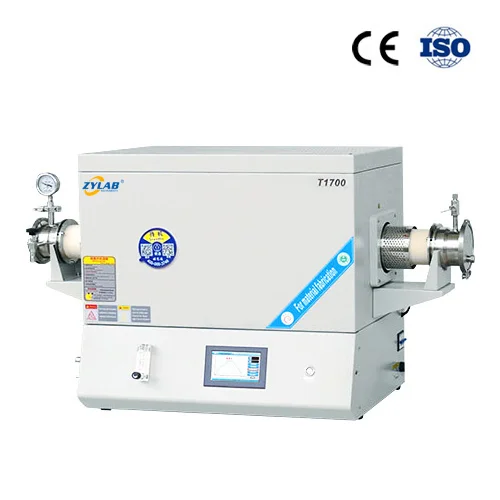
1700°C Two Zone Tube Furnace for Precision Thermal Processing
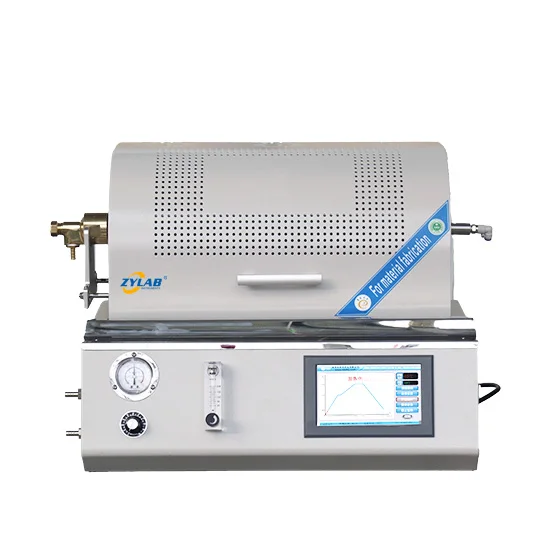
Laboratory Mini Rotary Oscillating Tube Furnace for Powder & Granular Material Calcination
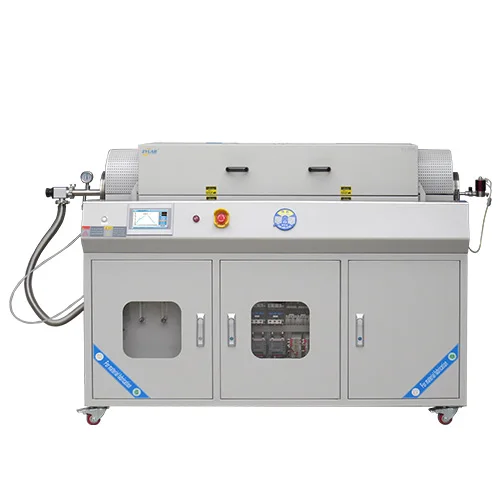
Multi-Zone High Temperature Quartz Tube Annealing Furnace for Wafer Processing
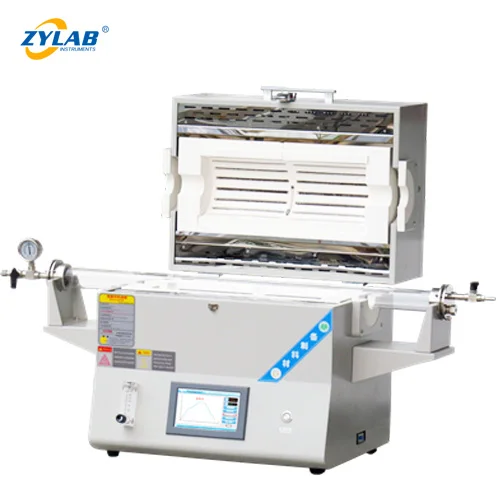
Customizable Tube Furnace with Gas Control System – Precision Atmosphere Processing
Working With ZYLAB On A Project Like This
What warranty comes with How a 1700℃ Tube Furnace Enhances High-Efficiency Catalyst Preparation?
Most ZYLAB products carry a 2-year warranty, glass components excluded; the exact term for this model is the one printed in its specification table and repeated on the quotation. Within the warranty period any part that fails through no misuse of your own is replaced free of charge.
Can we get technical help before ordering How a 1700℃ Tube Furnace Enhances High-Efficiency Catalyst Preparation?
Yes, and it is free. Our technical staff help with model selection, troubleshooting, manuals and application questions whether or not you have ordered from us before. Write to [email protected] or message us on WhatsApp.
Which shipping methods do you use?
Sea freight for consignments over about 60 kg (11-30 days to North America, 25-33 days to Europe, 7-20 days to Southeast Asia), air freight to airport in roughly 7-10 days, and DHL, FedEx or UPS door to door in about 5-7 days for small urgent items.
How can we pay for How a 1700℃ Tube Furnace Enhances High-Efficiency Catalyst Preparation?
Bank (wire) transfer, letter of credit for larger orders, major credit and debit cards, and PayPal. Bank details are printed on the invoice; send us the transfer confirmation and we start processing straight away.
Have A Similar Requirement
Describe the material, the temperature and the throughput you need and an engineer will answer with a workable configuration.