The problem
In pharmaceutical process development the final product has to meet strict purity requirements, and impurity levels usually have to fall below a defined threshold. As organometallic reagents and homogeneous catalysts are used more and more widely in drug synthesis, removing trace metal residues from the final product becomes a necessary operation.
Why it is harder than it sounds
A heterogeneous metal catalyst can be removed by simple filtration. A homogeneous catalyst dissolves well in the reaction system and is correspondingly harder to take out. The extraction and crystallisation methods normally used in production are not always successful at removing metal residues effectively, and the chromatographic purification chemists reach for in the laboratory is too expensive and too slow for process development.
The approach
Dithiocarbamates used in the water-treatment industry to remove heavy metals — NaDMDTC, NaDEDTC and APDTC — were added to the reaction system. A dark solid precipitated immediately. After filtration, the copper concentration in the organic material fell from 3600 ppm to below 100 ppm, with no decomposition products formed and no increase in by-product 4.
At scale
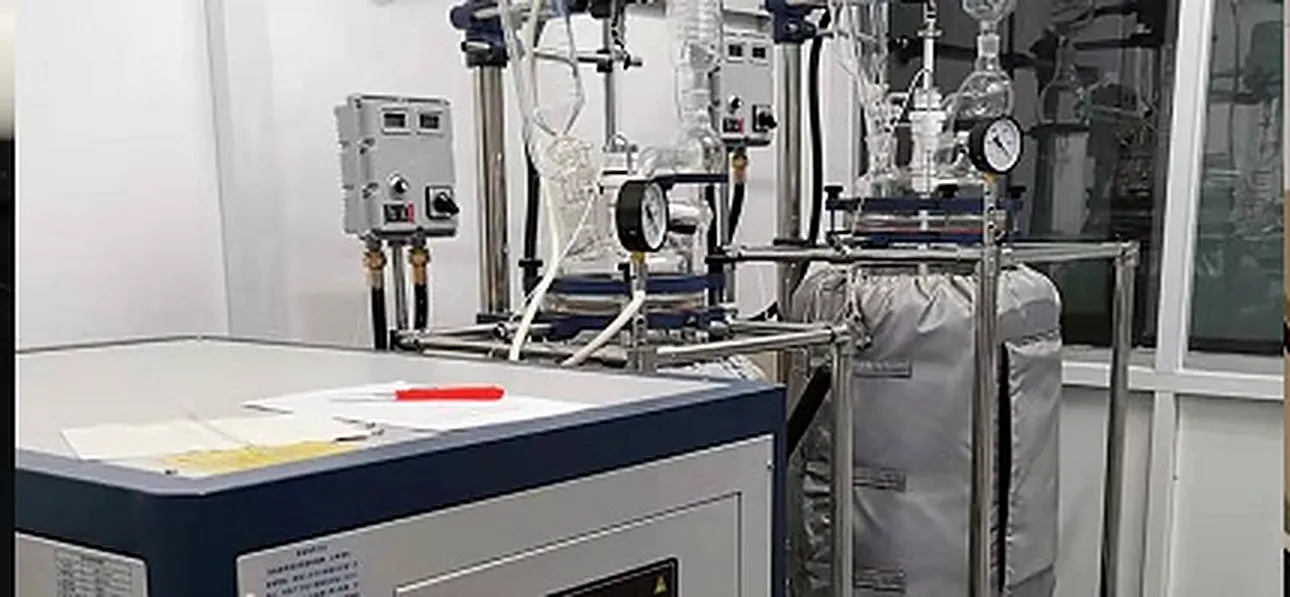
The treatment was applied to a 156 kg reaction system. Under the optimised conditions — adding APDTC solid at 2.2 equivalents relative to the copper reagent, stirring, then removing the solid at 30 °C through a 1 μm polish filter — the copper concentration in the organic phase was reduced to 3 ppm.
Source
Org. Process Res. Dev. 2015, 19, 1369−1373 — https://doi.org/10.1021/op500336h