
- Home
- Knowledge Center
- One-Piece, 1/2 And 3/4 Jointed Cues: What The Split Actually Changes
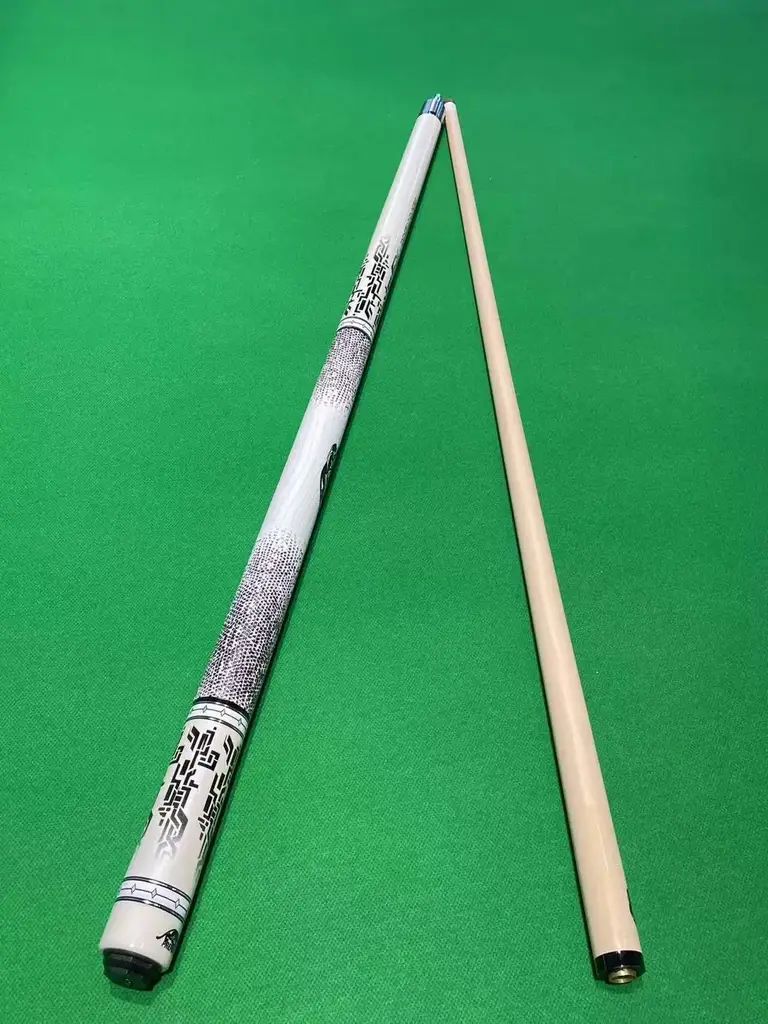
One-Piece, 1/2 And 3/4 Jointed Cues: What The Split Actually Changes
The joint format decides how a cue travels, how it plays through the stroke and whether a club can replace half of it. Three formats, three different purchases.
What the fraction means
The fraction describes where the cue separates. A 1/2 cue joins at the midpoint and is the standard American format. A 3/4 cue joins closer to the butt, leaving three quarters of the cue in one continuous piece. A one-piece cue does not separate at all. All three formats are published in this range and each product page states which it is.
One-piece: the house cue that cannot be lost in halves
One-piece cues are the traditional room cue. There is no joint to loosen, nothing to lose and no mismatch between halves in a rack of thirty. The cost is transport: a one-piece cue cannot be shortened for freight or for a car boot, which is why it stays in commercial rooms and rarely in private hands.
1/2 split: the export and retail default
Most of the pool cue family is 1/2 split, and it is the format that makes international shipping practical: half the length, a standard case, and replaceable shafts if one gets damaged. For a distributor it also means a single damaged half does not write off the cue.
3/4 split: the snooker answer to a longer shaft
A 3/4 joint sits far enough down the cue that the joint is below the bridge hand through most shots, so the player never feels it. This is why English snooker and Chinese black eight cues are commonly 3/4 or through-jointed, and why the snooker family here publishes that format separately rather than lumping it in with 1/2.
Joints have to be consistent within a model
The practical failure in cue sourcing is a batch where halves do not interchange between cues of the same model. That is a production consistency question, and it is one of the reasons a sample is approved before the run rather than after the container lands.
Cases follow the joint format
A case is bought for a joint format, not for a cue length. The double-slot cases in this range are published specifically for through-cue and large-head snooker cues, and matching a case to a cue is a question to settle by email before the order rather than after.
Products Referenced In This Guide
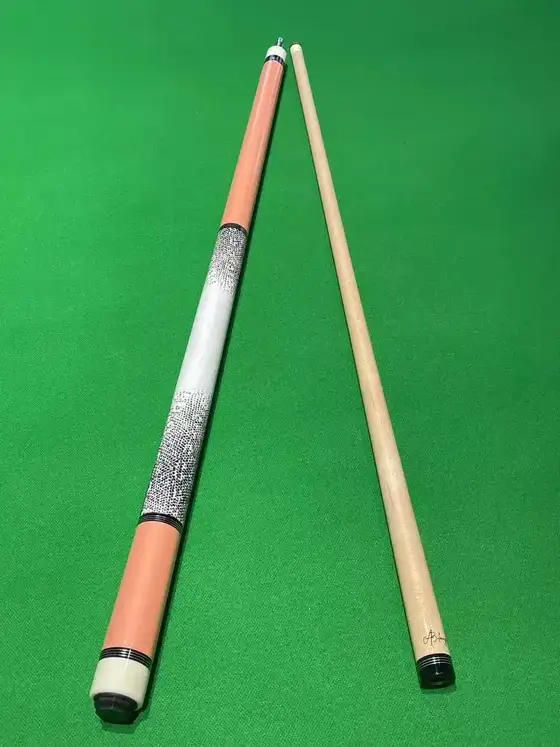
Factory direct sale 1/2 billiard cue 13mm large tip professional American pool cue
13 mm tip, 1/2 jointed, built for American pool play.
See the specification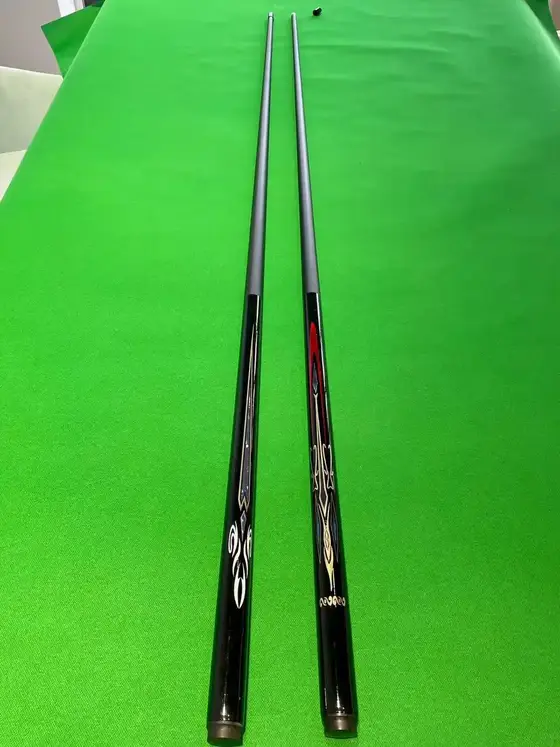
Factory Direct Sale Chinese-style Carbon Billiard Cue, American Nine-Ball Small Tip, Medium Tip, Large Tip Integrated Cue Stick
Large tip, one-piece, carbon composite construction, built for American pool play.
See the specification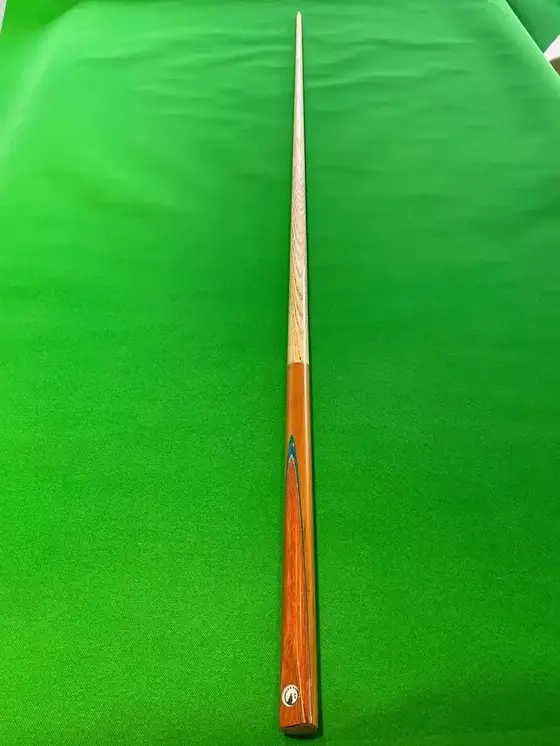
Spot factory direct sale billiard cue single integrated pool cue snooker general cue small tip cue
Small tip, one-piece, built for Snooker play.
See the specification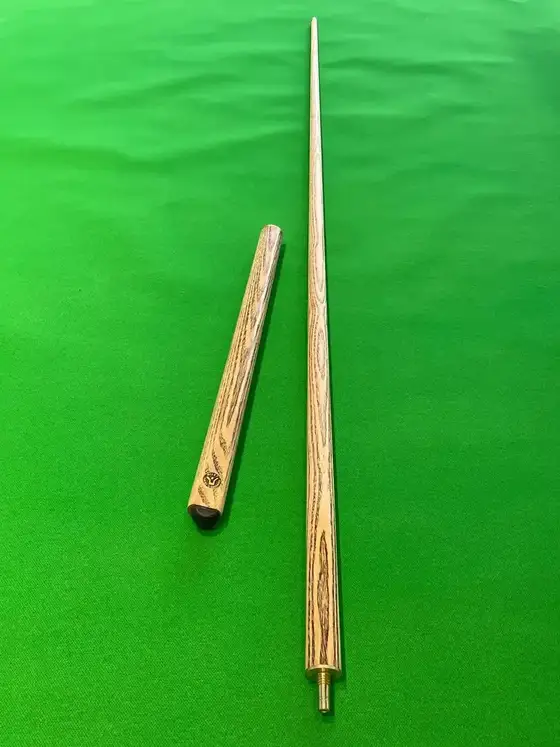
Factory Direct Sale, In-Stock Immediate Shipment, Billiard Split Four-Thirds White Waxwood Snooker Small Head Cue Stick
Small tip, 3/4 jointed, waxwood construction, built for Snooker play.
See the specification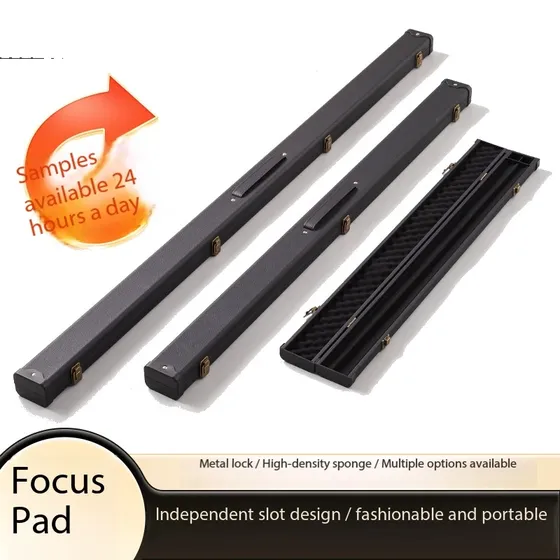
New billiard cue case with double slots, integrated through-cudgel, snooker cue with large head, 3/4 split design, plastic steel case, high-value appearance.
Plastic.
See the specification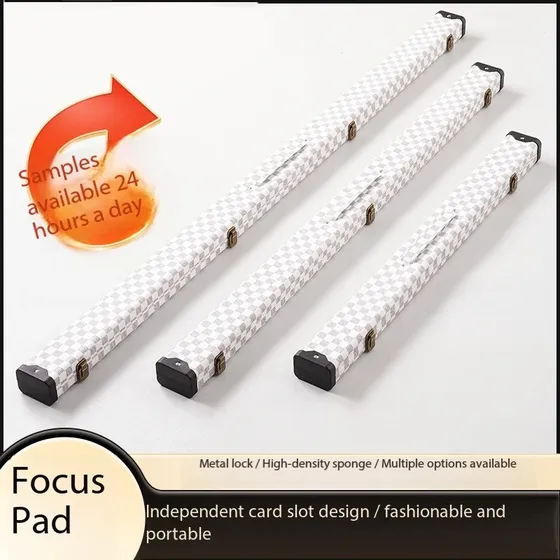
New billiard cue case with double slots, integrated through-cudgel, snooker cue with large head, 3/4 split design, plastic steel case, high-value appearance. (Listing 2)
Plastic.
See the specificationProduct Families Covered
Questions About This Guide
Which format should a club buy?
Does a joint affect how the cue plays?
Can shafts be ordered separately as spares?
Are three-section cues the same as 3/4 cues?
Put This Into Practice
Send what you are buying for and a recommendation with the matching figures comes back by email.