


The Complete Guide to Starting an Aluminum Foil Container Manufacturing Business: From Investment to Profit
Want to launch a profitable aluminum foil container business? Learn about machinery, molds, raw materials, factory setup, and ROI calculations from an experienced sourcing consultant.
Compared with many traditional packaging materials, aluminum foil containers offer several advantages:
Recyclable and environmentally friendly
Suitable for oven and freezer use
Strong barrier protection
Attractive product presentation
Excellent food safety performance
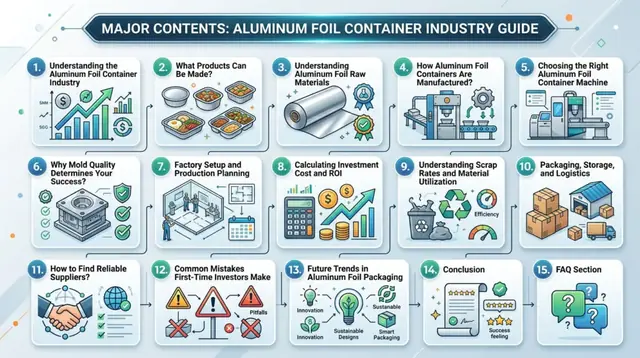
Because of these advantages, many investors are exploring opportunities in the aluminum foil container business.However, buying a machine alone does not guarantee success.
From what we've seen in many foil container projects, successful factories understand the complete production ecosystem-including raw materials, molds, machinery, production planning, packaging, and market demand.
This guide provides a complete overview of the aluminum foil container manufacturing business and serves as a starting point for entrepreneurs, machinery buyers, and food packaging companies.
1. Understanding the Aluminum Foil Container Industry
Before investing a single dollar, you need to see the full picture. The global aluminum foil container market has been expanding steadily, driven by three main forces: the rise of food delivery apps, increasing consumer preference for recyclable packaging, and the growing popularity of ready-to-eat meals that go straight from freezer to oven.
Major Importing Regions
From our experience helping factories export worldwide, these are the most active markets:
United States : The largest importer. High demand for takeout containers, BBQ trays, and catering sizes.
India : Rapidly growing domestic food delivery market. Price-sensitive but volume-driven.
Middle East (UAE, Saudi Arabia, Kuwait) : Strong demand for large family-size trays and airline catering containers.
Africa (Nigeria, Kenya, Ghana) : Emerging market. Many first-time buyers looking for complete production lines.
Europe : Strict quality standards but premium prices. High interest in smooth-wall containers and sustainable packaging.
For specific import data and country rankings, see:
Top 10 Aluminum Container Import Countries: Global Market & Export Trends
Growth Trends That Matter to You
Food delivery growth means more single-use containers.
Plastic bans are pushing restaurants and food trucks toward aluminum.
Recyclability is no longer a nice-to-have. Big brands require it.
If you are planning an aluminum foil container business , target a mix of local food distributors and export buyers. That diversifies your risk and keeps production running.
Related Reading:
Aluminum vs Plastic Food Containers: Which Is Better
?
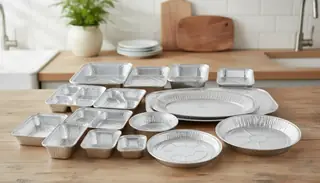
2. What Products Can Be Made from Aluminum Foil?
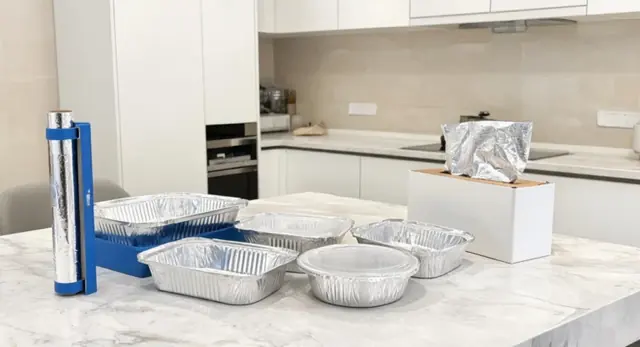
One question we hear constantly: "Can my machine make different products?" The answer is yes, but mostly with a limited height of 100mm for foil containers.
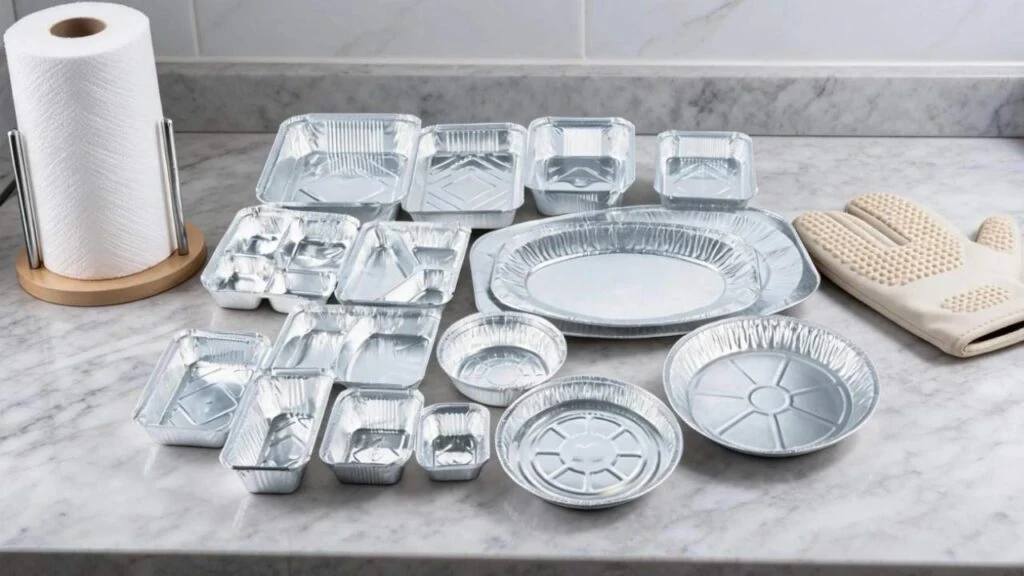
A standard foil container production line can produce dozens of shapes and sizes. Here are the major categories:
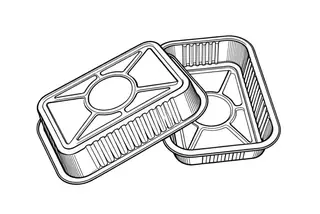
Rectangular Containers
The most common. Used for takeaway meals, lasagna, casseroles, and catering. Sizes range from india 120 containers to US full size pan.
Round Containers
Popular for pies, cakes, side dishes, and soups (with lids). Most popular round size is 6″,7″,8″,9″ foil container.
Multi-Compartment Containers
Growing fast. These have two or three sections for meals with separate sides. More complex molds, but higher profit margins.
Airline Containers
Compact, lightweight, and stackable. Airlines are replacing plastic with aluminum for in-flight meals. Volume is high, but quality requirements are strict.
Smooth Wall Containers
The premium segment. No visible ribs. Looks almost like stamped metal. Requires better raw material quality and precise molds.
Aluminum Foil Lids
Often overlooked, but lids are a consistent revenue stream. Foil lids, paper lids, and clear plastic lids can all be produced or sourced.
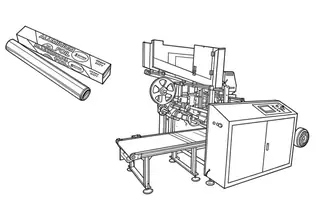
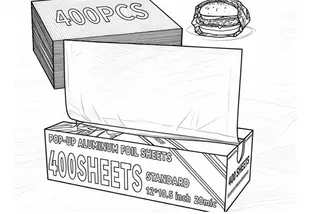
Aluminum Foil Sheets
Widely used for wrapping, cooking, baking, grilling, and food storage in homes, restaurants, and catering services. Available in different sizes and thicknesses.
Household Foil Products
Beyond food containers, you can produce foil rolls, sheets, and baking pans.
For a complete product list with images and applications, read:
What Packaging Products Can Be Made from Aluminum Foil
?
3. Understanding Aluminum Foil Raw Materials
You cannot make good containers from bad foil. This is where many new factory owners try to save money, and it backfires.
Alloy Types
The aluminum foil raw material you choose directly affects product strength, forming quality, and scrap rate.
3003 Alloy : Higher strength. Good for most containers,More expensive.
8011 Alloy : Most common for large containers like US full size pan,fish plates. Good balance of strength and formability.
8006 Alloy : high strength, good elongation, and excellent surface quality, performing particularly well in high-end food packaging.
Temper Types
Temper refers to how hard or soft the foil is.
H24 (Half-hard) : Most common for food containers. Holds shape well but still formable.
H22 : Slightly softer. Good for shallow trays and lids.
O (Soft annealed) : Fully soft. Used for household foil rolls and sheet.
From what we've seen in many foil container factories, beginners should start with 3003 H24 for small containers and 8011 H22 for large containers.
What About Price?
The reasonable price for aluminum foil raw material fluctuates with global aluminum markets. But beyond the base price, consider:
Width : choose the exact width for the mould to produce the containers.
Thickness : Thinner foil (0.030–0.050mm) for small containers, thicker (0.07–0.1mm) for large trays.
Surface quality : Oil spots, holes, or uneven thickness will increase your scrap rate significantly.
Related reading:
What is the reasonable price for aluminum foil raw material
?
Aluminum Foil Raw Materials: The Complete Guide for Packaging Manufacturers and Buyers
4. How Aluminum Foil Containers Are Manufactured?
The production process is simpler than you might think. Understanding each step helps you troubleshoot problems later.
Step 1: Raw Material Loading
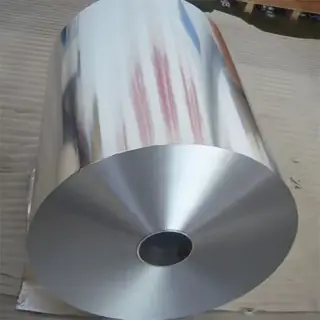
The aluminum foil jumbo roll is mounted on an feeder. Proper alignment is critical to prevent wrinkles.
Step 2: Feeding and Lubrication
The foil feeds through a series of rollers. Pre-lubricated foil is available, but many factories add a light oil to reduce friction during forming.
Step 3: Punching and Stamping
The press comes down, and the mold punches the flat foil into shape. This happens in milliseconds.
Step 4: Forming
The foil is stretched into the container shape. The mold's design determines how smoothly the material flows.
Step 5: Curling and Rim Forming
The edges are curled or hemmed to create a strong, safe rim. No sharp edges.
Step 6: Stacking and Counting
Finished containers are stacked automatically. Most modern lines count and stack without manual intervention.
Step 7: Packaging
Stacks are wrapped, boxed, or bagged depending on customer requirements.
Step 8: Cartoning and Shipping
Finished boxes are palletized and prepared for shipment.
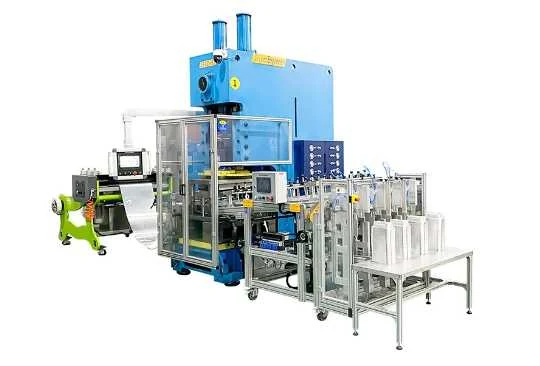
A fully automatic foil container production line can run 40–50 strokes per minute, producing thousands of containers per hour. Semi-automatic lines run slower but cost less upfront.
For more information,read
What types of Foil Containers Produced by Aluminum Foil Container Machine
5. Choosing the Right Aluminum Foil Container Machine
The machine is the heart of your factory. Choose poorly, and you will fight production problems every day. Choose well, and everything else becomes easier.
C-Frame (Open Back) Presses
Lower cost. Suitable for smaller containers and lower volumes.
Good for beginners testing the market.
Limitations on container depth and width.
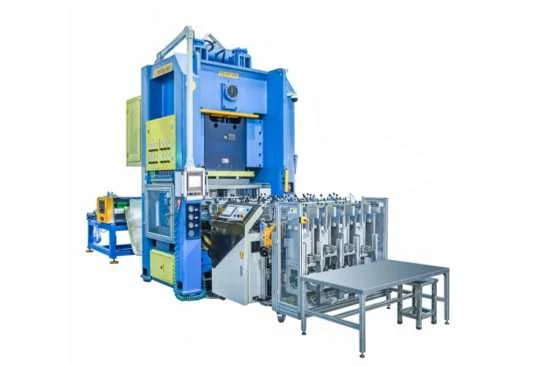
H-Frame (Straight Side) Presses
Higher cost, but much more rigid.
Better for deep-draw containers, large trays, and high-speed production.
Recommended for large capacity production.
From our experience, if you plan to run more than one shift or produce containers deeper than 80mm, invest in an H-frame press. The extra cost pays back in lower scrap rates and fewer machine breakdowns.
Key Specifications to Check
Tonnage : How much force the press delivers. 45-63 tons for small containers, 80–130 tons for large and deep containers.
Stroke length : Determines maximum container depth.
Speed (SPM) : Strokes per minute. Higher speed means more output, but mold quality must keep up.
Feeding system : Servo-driven feeders are more precise than mechanical type.
Lubrication system : Automatic lubrication saves labor and reduces wear.
New or Used?
Used machines are available, but be very careful. Foil container presses run continuously. A used machine may have worn bearings, cracked frames, or outdated controls. Unless you have an experienced technician, buy new from a reputable supplier. The warranty and
Have a project like this?
We source the machinery, audit the factory and inspect the goods before they ship.
Ask a question Email usMore on Business & Investment
Related equipment and products
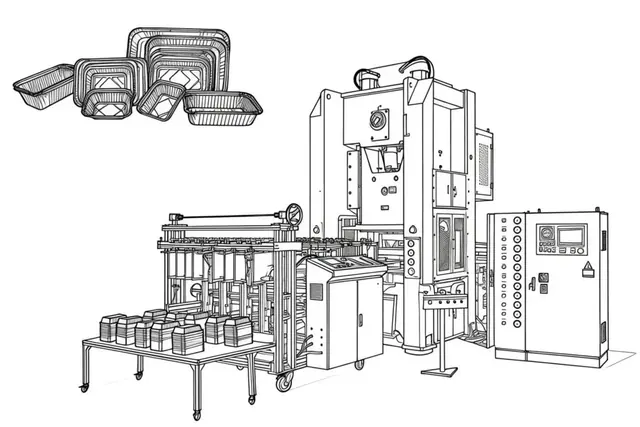
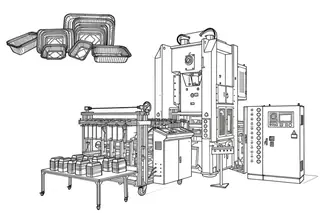
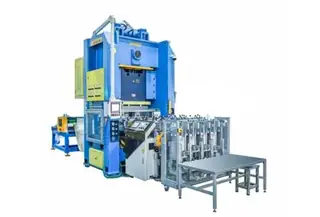
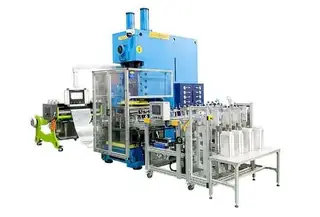
Aluminum Foil Container Making Machine
High-speed press line that converts aluminum foil jumbo rolls into finished food containers automatically.
View details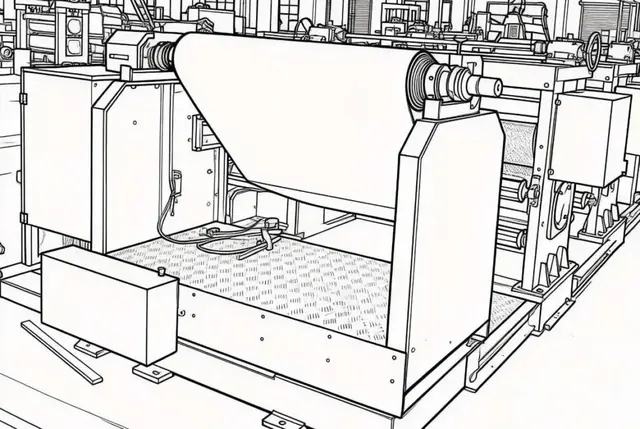
Aluminum Foil Embossing Machine
Creates textured patterns or logos on aluminum foil surfaces for appearance and function.
View details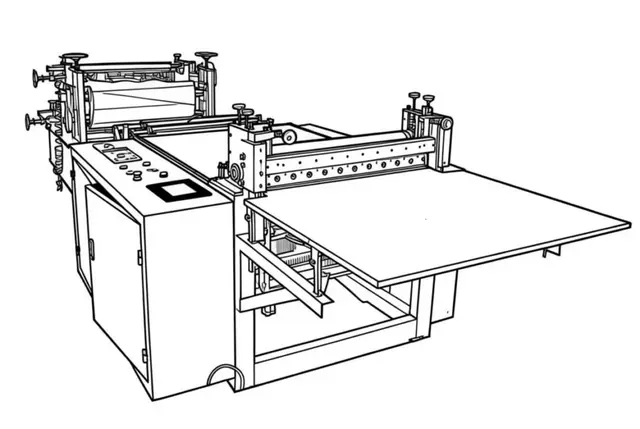
Aluminum Foil Cutting Machine
Slices large aluminum foil rolls into narrower widths or pre-cut sheets according to production requirements.
View detailsTurn this into a project
Send us your target product and market. We come back with the factory shortlist and what it costs to verify them.