
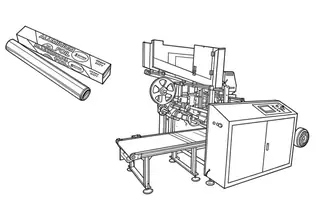
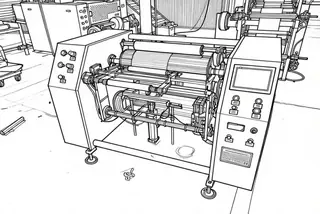
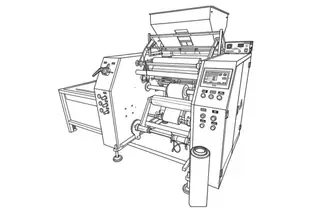
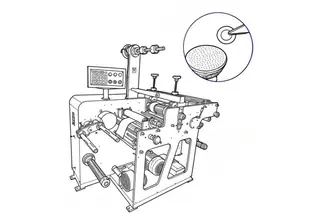
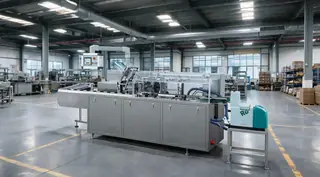
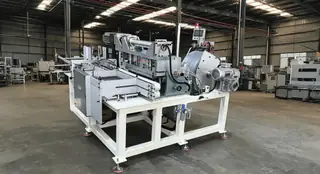
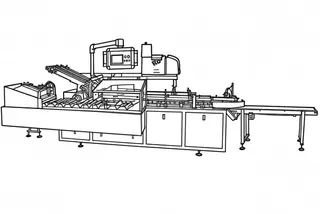
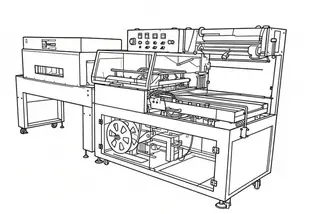
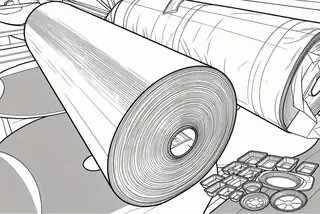
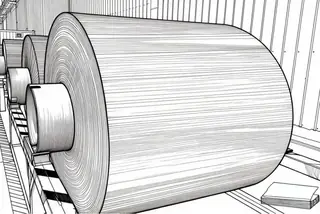
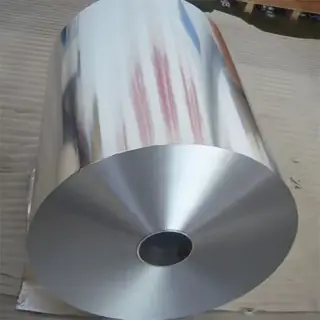
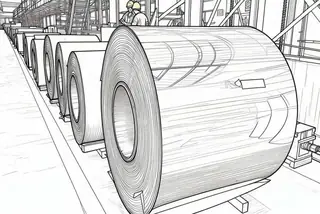

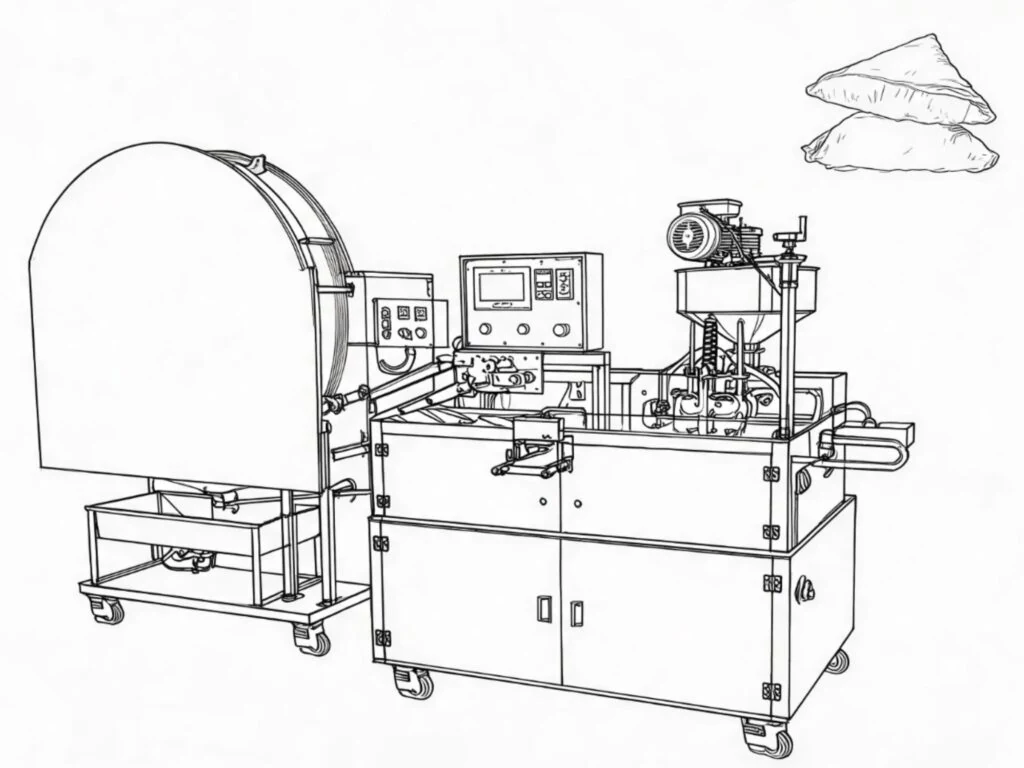

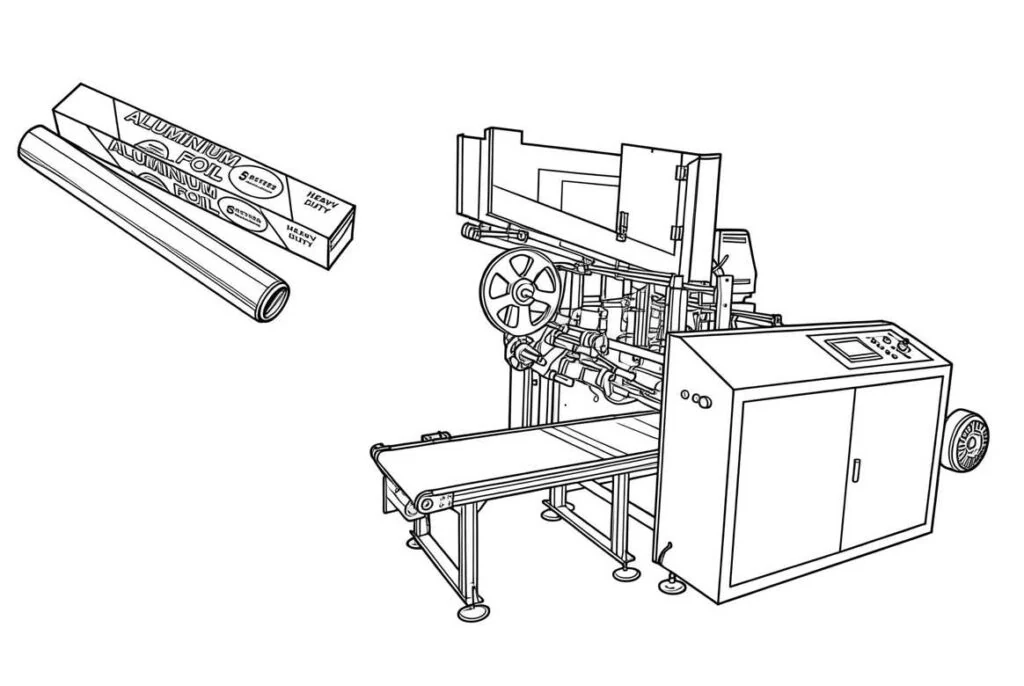
Full Automatic Rewinding Machine
Unwinds jumbo rolls, controls tension, slits, rewinds onto cores, cuts and discharges finished rolls automatically.
Foil Roll & Sheet Converting Machinery
What it is
Cling film, aluminum foil and baking paper are produced as large jumbo rolls before being converted into smaller rolls for household, catering and retail use. A fully automatic rewinding line unwinds the jumbo roll, controls material tension, slits it to the required widths, rewinds onto cores, cuts the finished rolls and discharges them for packaging.
Key points
- Rewinding with roll length or diameter control
- Automatic cutting and finished roll discharge
- Roll counting, with optional packaging
- Configuration changes with the material: foil, cling film and baking paper behave differently
- Machine design follows finished roll width, length, core diameter and jumbo roll size
Typical applications
- Household aluminum foil rolls
- Cling film rolls
- Baking paper rolls
- Catering and retail roll formats
Before you ask for a price, settle this
- Start from your finished product requirements, not from asking for the fastest machine
- Material you will run, and whether you will run more than one
- Jumbo roll dimensions available from your supplier
- Core diameter and finished roll length range
Buyer's guide
Fully Automatic Rewinding Machine for Cling Film, Aluminum Foil, and Baking Paper
fully automatic rewinding machine becomes an important part of the production process.
Instead of manually cutting and rewinding large rolls, an automatic rewinding line can unwind the jumbo roll, control the material tension, slit it into the required widths, rewind it onto cores, cut the finished rolls, and discharge them for packaging.
The basic idea sounds simple. In practice, however, the machine configuration matters quite a lot.
Aluminum foil behaves differently from cling film. Baking paper has different stiffness and tension requirements again. Finished roll width, length, core diameter, jumbo roll size, and packaging method will all affect the final machine design.
So, if you are planning to buy a rewinding machine, it is better to start with your finished product requirements rather than simply asking a supplier for the fastest or cheapest machine.
This guide explains how a fully automatic rewinding production line works, what products it can handle, the specifications buyers should pay attention to, and the common mistakes to avoid before placing an order.
What Is a Fully Automatic Rewinding Machine?
A fully automatic rewinding machine is industrial converting equipment used to turn large jumbo rolls of material into smaller finished rolls.
Depending on the configuration, the machine can perform several operations automatically:
Rewinding
Roll length or diameter control
Automatic cutting
Finished roll discharge
Roll counting
Optional packaging
For example, a manufacturer may purchase a large jumbo roll of aluminum foil and need to produce several smaller household foil rolls with different widths and lengths.
The rewinding machine takes the large roll as the input and produces smaller, controlled rolls as the output.
The same basic principle can be applied to cling film and baking paper.
One important point for buyers: a rewinding machine is not necessarily a one-size-fits-all machine. The machine needs to be matched with the actual material and final product.
A machine designed mainly for thin plastic film may require a different configuration when used for aluminum foil.
How Does a Fully Automatic Rewinding Machine Work?
A typical production process looks something like this:
Jumbo Roll Loading → Unwinding → Tension Control → Rewinding → Automatic Cutting → Roll Discharge → Packaging
Let's look at each step.
1. Jumbo Roll Loading
The production process starts with a jumbo roll.
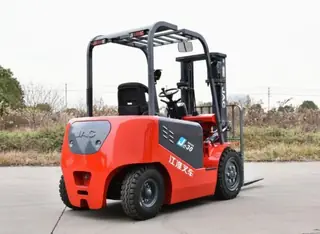
Depending on the machine design and roll weight, the jumbo roll can be loaded manually or with an assisted forklift.
For larger production lines, automatic or hydraulic loading can reduce operator workload.
2. Unwinding
The jumbo roll is installed on the unwinding section.
The machine releases the material at a controlled speed while maintaining appropriate tension.
This part is particularly important for thin materials. Excessive tension can cause stretching, wrinkles, or even material breakage.
3. Tension Control
The material then moves through the tension-control system.
The purpose is simple: keep the material stable while it is being rewound.
In real production, this is one of the areas that buyers sometimes underestimate. A machine may have a high theoretical speed, but if the tension is not well controlled, the finished rolls may have wrinkles, loose edges, telescoping, or inconsistent winding.
4. Rewinding
The slit material is wound onto cores to form the finished rolls.
The machine controls the winding process according to the required roll length, diameter, or other production parameters.
5. Automatic Cutting
Once the required roll length or diameter is reached, the machine cuts the material.
Depending on the machine configuration, this process can be fully automatic.
6. Finished Roll Discharge
The completed rolls are discharged from the rewinding section.
They can then be manually packed or transferred to an automatic packaging system.
What Products Can a Fully Automatic Rewinding Machine Produce?
The same general rewinding principle can be used for different food packaging materials, but the machine configuration may need to change according to the material.
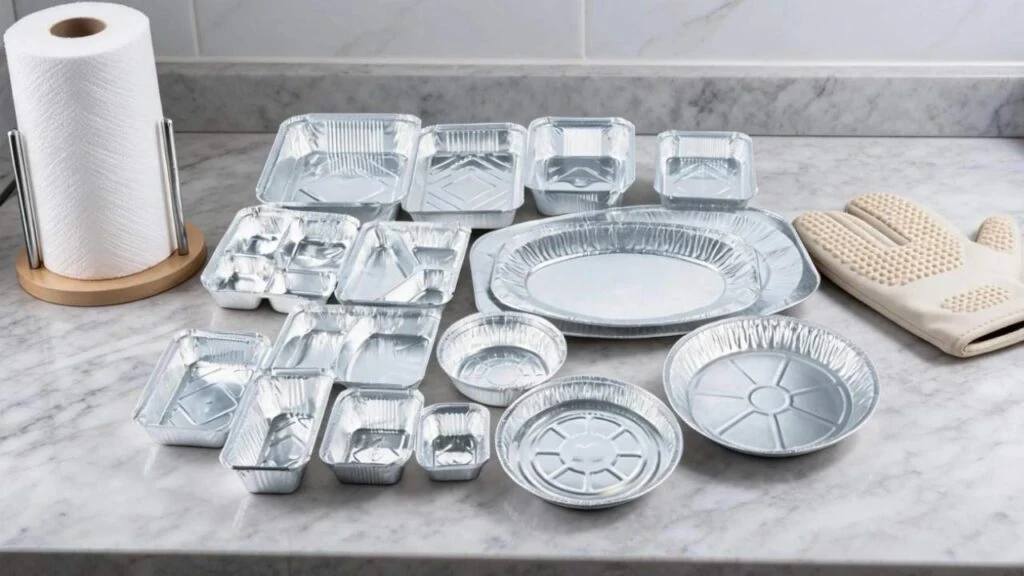
Aluminum Foil
Aluminum foil is another major application for rewinding machines.
Typical products include:
Household aluminum foil
Kitchen foil
Catering foil
Restaurant foil rolls
Commercial aluminum foil rolls
The finished product may also have very different requirements depending on the market.
Cling Film
Cling film is commonly sold in household and foodservice rolls.
Typical applications include:
Household food wrap
Catering film
Commercial foodservice rolls
Supermarket food packaging
Both PE and PVC cling film may be processed, depending on the machine design and material specifications.
Baking Paper and Parchment Paper
Baking paper is commonly sold in rolls for household kitchens, bakeries, restaurants, and foodservice applications.
Products can include:
Baking paper rolls
Parchment paper rolls
Cooking paper
Non-stick baking paper
Food preparation paper
Compared with cling film, baking paper is generally stiffer and behaves differently during rewinding.
Key Specifications Buyers Should Pay Attention To?
Before requesting a quotation, prepare as much product information as possible.
Material Type
Tell the supplier exactly what you plan to produce:
Cling film
Aluminum foil
Baking paper
Parchment paper
Other flexible packaging materials
Different materials may require different tension-control and rewinding configurations.
Material Thickness
Thickness affects how the material behaves during rewinding.
A machine designed for one thickness range may not perform the same way with a much thinner or thicker material.
Jumbo Roll Width
This determines the working width required by the machine and affects how many finished rolls can be produced from one jumbo roll.
Finished Roll Width
Prepare the actual widths you want to produce.
If you plan to manufacture several different widths, tell the supplier all of them rather than providing only one example.
Finished Roll Length
Roll length is another important parameter.
For example, a household product may require a relatively short roll, while a commercial catering product may require a much longer roll.
The machine should be configured around your actual product range.
Core Diameter
The finished roll core must match the customer's packaging design and dispensing system.
Common core sizes vary depending on the product and market, so it is better to specify the exact requirement.
Maximum Jumbo Roll Diameter
A larger jumbo roll can increase material loading efficiency, but it also increases requirements for the unwinding and loading system.
Rewinding Speed
High speed looks attractive on a quotation sheet, but maximum speed is not the only thing that matters.
Actual production speed can depend on:
Material thickness
Material properties
Roll diameter
Finished roll length
Cutting method
Machine configuration
A stable production speed is often more useful than an impressive theoretical maximum speed.
What Should You Consider Before Buying a Fully Automatic Rewinding Machine?
Here is the practical part.
Before contacting suppliers, prepare the following information.
1. What material will you produce?
Do not simply say "food packaging material."
Specify whether it is aluminum foil, PE film, PVC film, baking paper, or another material.
2. What finished roll sizes do you need?
Prepare the required:
Width
Length
Core diameter
Finished roll diameter, if applicable
3. What is your target production volume?
A factory producing a few tons per month has very different equipment requirements from a manufacturer producing continuously every day.
4. What jumbo rolls are available?
This is often overlooked.
If your local suppliers mainly provide a particular jumbo roll width and diameter, the rewinding machine should be designed around those raw materials.
5. Do you need slitting?
If the jumbo roll is wider than the finished rolls, slitting will be an important part of the production line.
6. Do you need automatic packaging?
If finished rolls need to be packed individually, shrink-wrapped, labeled, or packed into cartons, this should be considered during the project design.
7. How much labor do you want to save?
Automation should solve a real production problem.
If reducing operators is one of your main goals, ask the supplier which steps can actually be automated rather than simply choosing a machine described as "fully automatic."
8. What after-sales support is available?
Ask about:
Installation
Commissioning
Operator training
Spare parts
Remote technical support
Warranty
Troubleshooting
A machine is a long-term investment. The support after shipment can be just as important as the machine itself.
Why Material Testing Is Important Before Ordering
One of the most useful s
Questions buyers ask
Can one machine run foil, cling film and baking paper?
Not automatically. A machine designed mainly for thin plastic film may need a different configuration for aluminum foil, so tell the supplier every material you intend to run.
What should I decide first?
Your finished product: width, length, core diameter and packaging method. Every other specification follows from that.
Also in Foil Roll & Sheet Converting Machinery
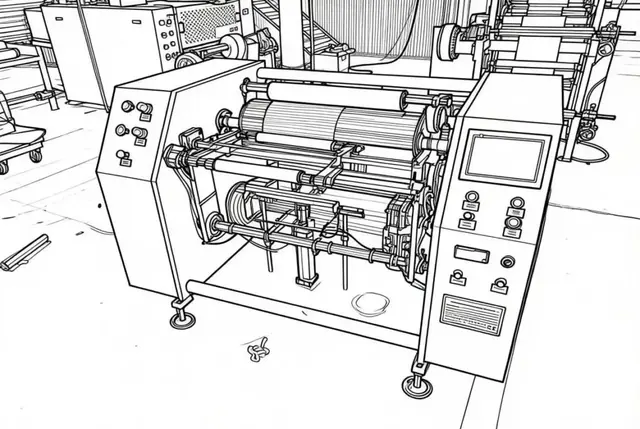
Semi Automatic Rewinding Machine
Two-spindle rewinder for aluminum foil and baking paper, 100-500 mm rewinding roll width.
View details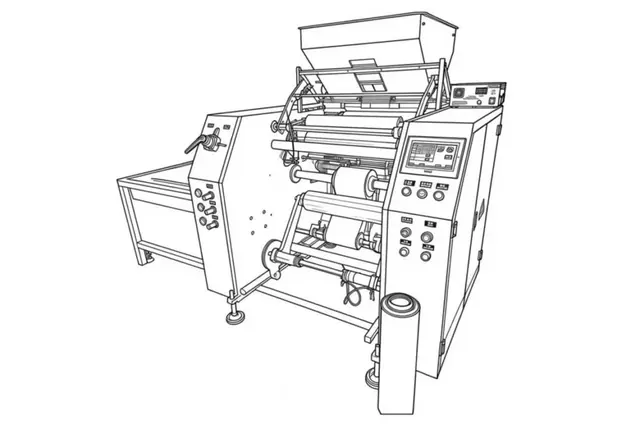
Cling Film Rewinding Machine
Converts large rolls of PVC or PE cling film into smaller, ready-to-use rolls for food wrapping and kitchen use.
View details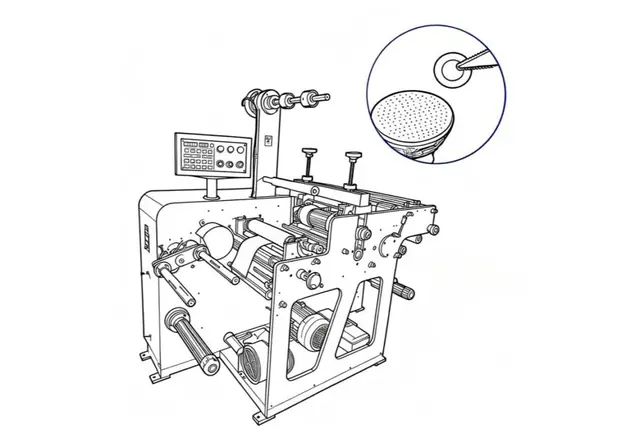
Hookah Foil Rewinding Machine
Produces aluminum foil rolls designed for hookah and shisha applications with consistent size and quality.
View detailsQuote the Full Automatic Rewinding Machine
Send your finished product details and target output. We shortlist the factories, compare the quotes and inspect before anything ships.