
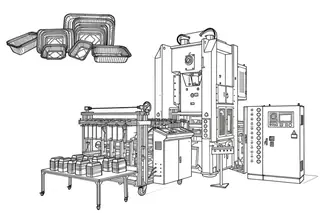
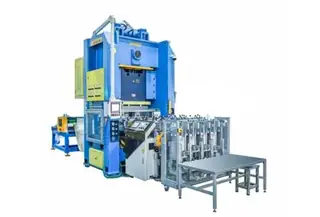
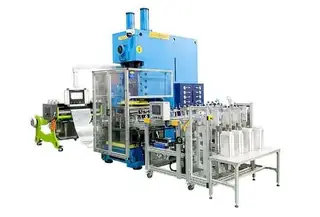
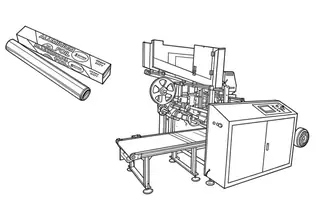
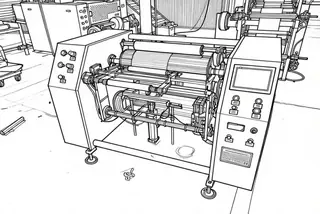
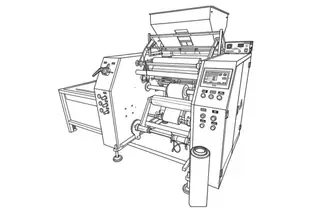
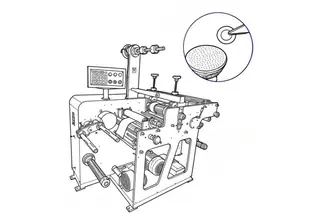
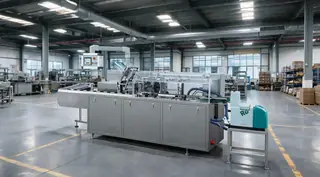
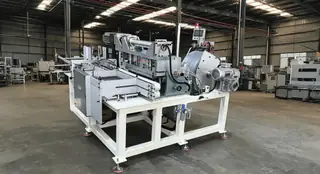
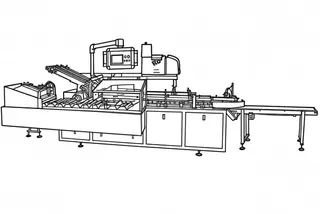
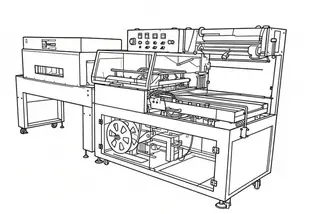




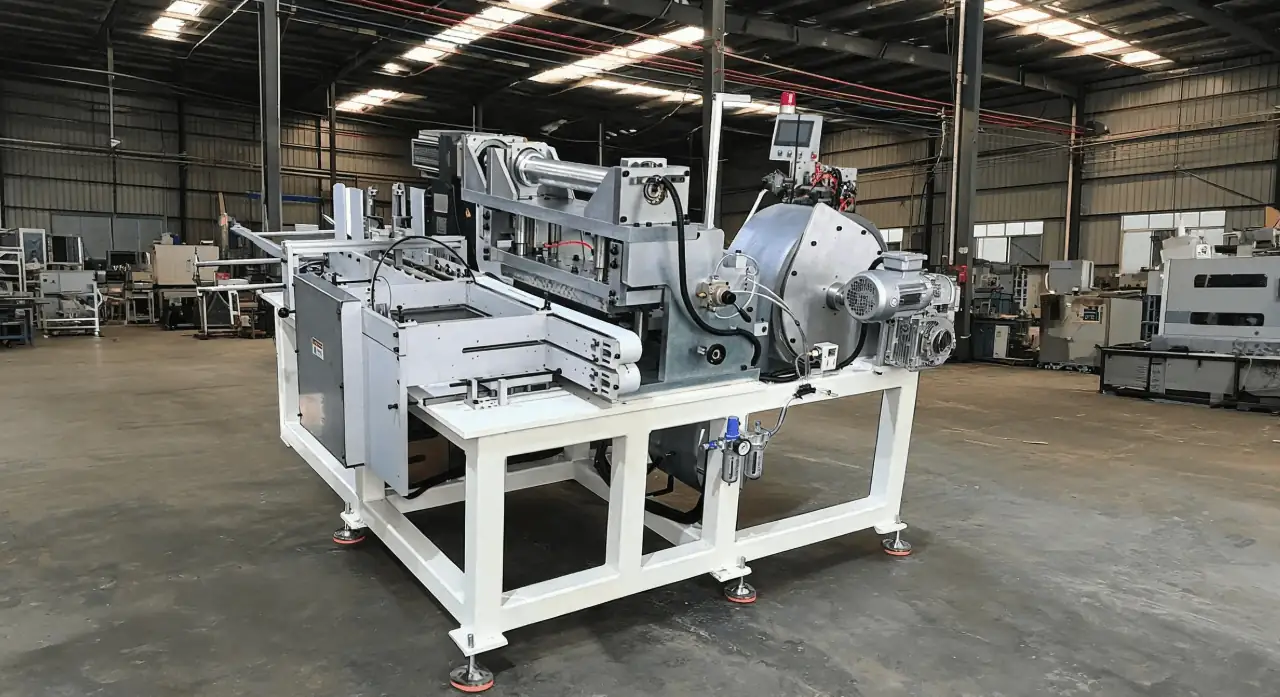
Tinplate Saw Blade Binding Machine
Punches saw blades from tinplate coil and fixes them onto color boxes for foil and cling film.
Packaging & End-of-Line Equipment
What it is
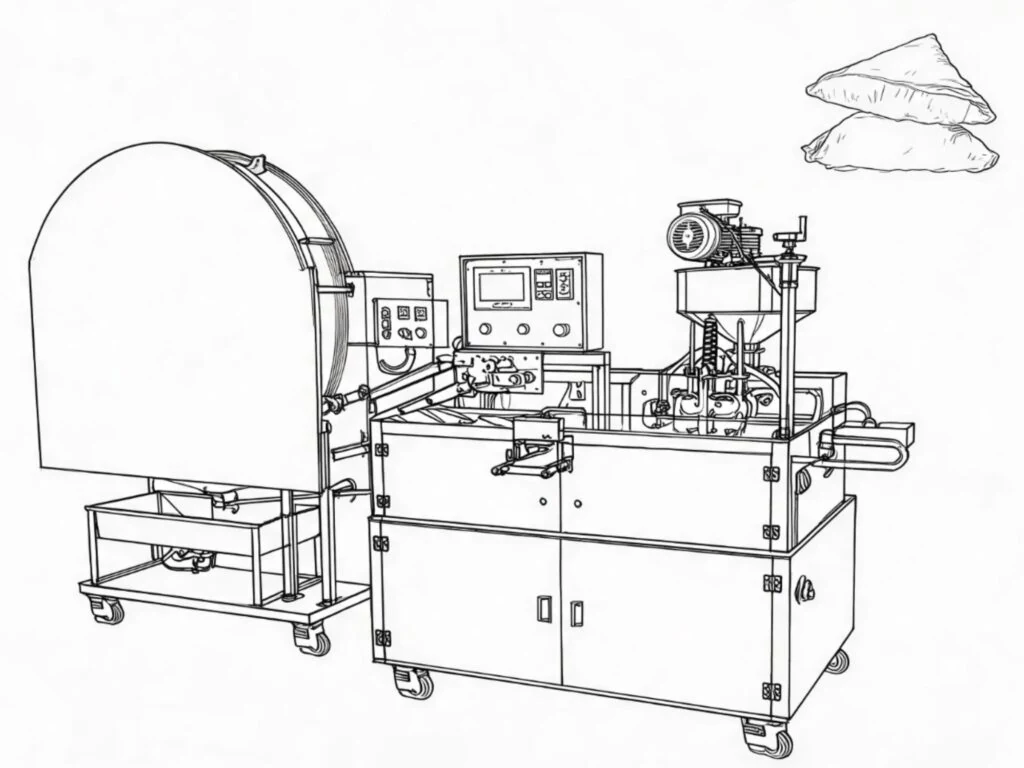
When you buy a box of household aluminum foil or cling film, there is a small metal cutting blade fixed to one edge. This machine automates both making that blade and installing it: tinplate coil is fed in, positioned and punched by a die, and the punched blade is transferred and fixed onto the color box.
Key points
- Process: tinplate coil, feeding, positioning, die punching, saw blade, transfer, box positioning, blade fixing, finished box
- Combines blade making and blade fixing in one machine
- Different from a conventional saw blade making machine, which only produces the blade
- Also sold as color box saw blade cutter fixing machine, saw blade fixing machine or paper box saw blade fixing equipment
Typical applications
- Household aluminum foil boxes
- Cling film and plastic wrap boxes
- Food wrapping film retail packs
Before you ask for a price, settle this
- Box sizes and blade position on the box
- Tinplate coil specification
- Where the machine sits relative to cartoning
Buyer's guide
Tinplate Saw Blade Binding Machine: Complete Guide for Color Box Packaging
A
Tinplate Saw Blade Binding Machine is designed to automate the production and installation of this type of blade. It uses a die or mold to punch small saw blades from tinplate coil and then transfers and fixes the blades onto a designated position on a color box. The finished box can then be used for household aluminum foil rolls, cling film, plastic wrap, food wrapping film, and similar small-roll products.
In simple terms, the machine combines two operations:
making the small tinplate saw blade and fixing it onto the packaging box
This makes it different from a conventional Saw Blade Making Machine that only produces blades.
What Is a Tinplate Saw Blade Binding Machine?
A Tinplate Saw Blade Binding Machine is packaging equipment that cuts small saw blades from continuous tinplate coil and automatically installs them onto paper or color boxes.
The basic idea is quite straightforward. A roll of tinplate is fed into the machine, positioned accurately, and punched by a specially designed mold. The punched piece becomes the cutting blade used on the consumer packaging box. The blade is then transferred to the fixing section, where it is installed at the required position on the box.
The main process can be summarized as:
Tinplate Coil → Feeding → Positioning → Die Punching → Saw Blade → Transfer → Color Box Positioning → Blade Fixing → Finished Box
This equipment is sometimes described using different names, including:
Color Box Saw Blade
Cutter Fixing Machine
Saw Blade Binding Machine
Tinplate Saw Blade Cutter
Saw Blade Fixing Machine
Paper Box Saw Blade Fixing Equipment
These names can cause some confusion when buyers search for equipment. A conventional Saw Blade Making Machine normally focuses on producing the metal blade itself. A saw blade binding machine for packaging goes one step further by integrating blade production with blade installation on the box.
How Does the Machine Work?
The working process normally consists of several stages. The exact mechanical design can vary between manufacturers, but the basic production logic remains similar.
Step 1: Tinplate Coil Feeding
The raw material is supplied in coil form. The tinplate coil is loaded onto the feeding section and gradually introduced into the punching area.
Material thickness, width, and hardness need to match the machine and mold design. These factors should be confirmed before purchasing because the tooling is designed around the actual blade requirements.
Step 2: Tinplate Positioning
Before the blade is punched, the tinplate needs to be positioned correctly.
Proper positioning is important because even a small deviation can affect the final blade shape or the distance between individual blades. The feeding and positioning system therefore works together to place the material in the correct location before each punching operation.
Step 3: Saw Blade Punching
The mold is one of the most important parts of the system.
The die punches the required saw blade shape from the tinplate. Depending on the product design, the mold determines the blade length, width, tooth pattern, tooth spacing, and overall shape.
For example, a blade designed for a household aluminum foil box may have a different tooth design from one used for another type of food wrap package. Therefore, the mold should be designed according to the customer's actual packaging requirements.
Step 4: Saw Blade Transfer
After punching, the newly produced blade is transferred from the cutting area to the fixing section.
The transfer process needs to maintain the blade's orientation and position. This is especially important when the blade has to be installed at a specific location on a printed color box.
Step 5: Color Box Positioning
The color box is positioned so that the blade can be installed at the predetermined location.
This stage depends on the dimensions and structure of the packaging box. The box may have a specific edge, slot, or area designed for the cutting blade.
For buyers, this means that the box dimensions should be confirmed before the machine and tooling are finalized.
Step 6: Saw Blade Fixing / Binding
The blade is then fixed onto the paper box.
Different machine designs may use different fixing methods, so buyers should confirm the actual mechanism with the equipment supplier. The key requirement is that the blade is positioned correctly and securely enough for the intended packaging application.
The machine therefore acts not only as a tinplate saw blade cutter , but also as a saw blade fixing machine.
Step 7: Finished Color Box Output
Once the blade has been installed, the finished color box exits the working section.
The box can then continue to the next packaging operation, such as aluminum foil roll insertion, film roll packaging, or final packing.
What Products Use This Saw Blade?
The most common applications are consumer products sold in small rolls inside printed paper or color boxes.
1. Household Aluminum Foil Boxes
Household aluminum foil is commonly sold as a small roll inside a printed color box. A small metal cutting blade is installed along the edge of the box.
When the consumer pulls out the required length of foil, the blade allows the foil to be cut from the roll.
For household foil manufacturers, the blade is therefore a small but necessary part of the overall aluminum foil roll packaging process.
If your factory already operates an aluminum foil rewinding machine , the saw blade fixing process can be considered as part of the downstream packaging operation.
2. Cling Film and Plastic Wrap Boxes
The same packaging concept is widely applicable to cling film and plastic wrap.
A roll of film is placed inside a printed box, while a small cutting blade is installed on the box edge. The user pulls out the film and cuts it using the integrated blade.
This makes a
Color Box Saw Blade Cutter Fixing Machine relevant to factories producing or packaging household food wrapping produc
3. Other Small-Roll Packaging
Other small-roll consumer products may also use a similar packaging structure.
However, the exact suitability depends on the box design, blade dimensions, material requirements, and fixing position. Buyers should provide an actual box sample or detailed drawing when discussing a machine with a manufacturer.
What Should You Consider Before Buying a Saw Blade Binding Machine?
Buying the machine should start with the product, not the machine model.
Before contacting a supplier, prepare information about your tinplate material, blade design, color box, and expected production volume.
1. Tinplate Material
Start with the raw material.
Confirm:
Tinplate material type
Material thickness
Coil width
Material hardness
The supplier needs these details to determine whether the feeding and punching system is suitable for your material.
2. Saw Blade Size and Design
The blade design directly affects the mold.
Provide the required:
Blade length
Blade width
Tooth shape
Tooth spacing
Overall blade design
If possible, provide a physical sample or technical drawing. This usually makes communication with the machine manufacturer much easier.
3. Color Box Dimensions
The fixing section must match the actual box.
The supplier should know the box length, width, thickness, folding structure, and the exact position where the blade needs to be installed.
A small change in the box design may require an adjustment to the fixing mechanism or tooling.
4. Mold Design
The mold deserves particular attention.
It determines the shape and dimensions of the punched blade and has a direct influence on cutting quality and production consistency.
If you plan to produce several blade designs, ask the supplier whether additional molds or tooling changes will be required.
5. Production Capacity
Consider how many finished boxes your factory needs to produce per day.
Do not choose a machine simply because it has a higher advertised speed. The real requirement is whether the machine can match your complete production workflow.
For example, if your aluminum foil rewinding and box packaging processes operate at a certain output level, the saw blade fixing process should not become a bottleneck.
6. Automation Level
Machines can be configured with different levels of automation, including:
Manual feeding
Semi-automatic operation
Fully automatic production
The right choice depends on production volume, available labor, and how the machine will connect with other packaging equipment.
7. Compatibility With Existing Packaging Lines
If you already have equipment for household aluminum foil production, aluminum foil small roll packaging, box forming, or final packaging, check compatibility before purchasing.
It is better to consider the entire production flow rather than treating the saw blade machine as an isolated piece of equipm
Questions buyers ask
Why do the product names vary so much?
Suppliers use several names for similar equipment. Confirm whether a quote covers blade making only, or blade making plus fixing onto the box.
Can it handle different box sizes?
Box positioning is part of the machine setup, so give the supplier your full box size list before quoting.
Also in Packaging & End-of-Line Equipment
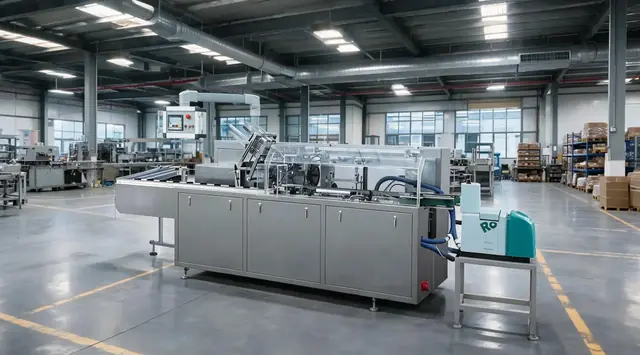
Aluminum Foil Small Roll Cartoning Machine
Automatically feeds foil rolls, opens boxes, loads product, sprays glue, seals boxes and removes waste.
View details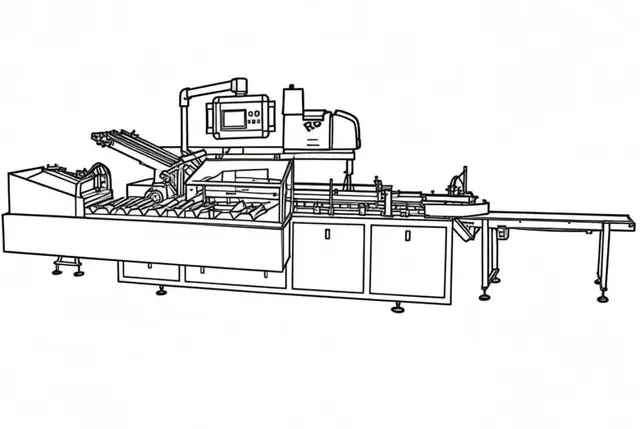
Aluminum Foil Sheet Packing Machine
Automatically stacks, counts and packs pre-cut aluminum foil sheets into boxes.
View details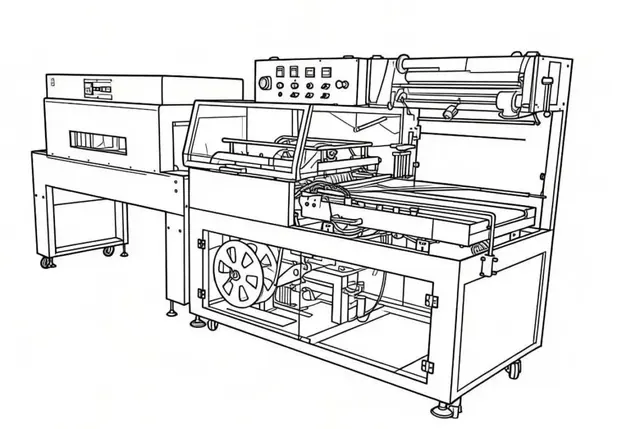
Plastic Shrink Wrap Machine
Wraps products or multi-pack aluminum foil containers in heat-shrinkable film for bundling and display.
View detailsQuote the Tinplate Saw Blade Binding Machine
Send your finished product details and target output. We shortlist the factories, compare the quotes and inspect before anything ships.