




Aluminum Foil Raw Materials: The Complete Guide for Packaging Manufacturers and Buyers
Learn everything about aluminum foil raw materials, including alloys, manufacturing, quality testing, pricing, storage, and sourcing from China.
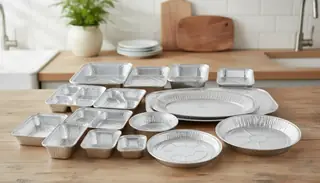
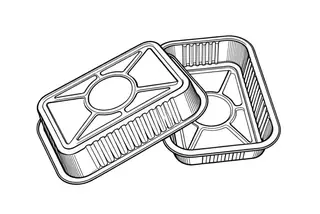
However, the performance of any finished aluminum foil product begins long before it reaches the production line. Choosing the right aluminum foil raw material directly affects product quality, production efficiency, forming performance, waste rates, and manufacturing costs. Whether you operate an aluminum foil container factory, convert jumbo rolls into household foil, or source raw materials for packaging production, understanding the characteristics of aluminum foil is essential for making informed purchasing decisions.
This comprehensive guide explains everything you need to know about aluminum foil raw materials, including:
What aluminum foil raw material is and how it is produced?
The complete manufacturing process from bauxite to jumbo rolls.
Common aluminum foil alloys and their applications.
How to evaluate material quality before purchasing?
Factors that influence aluminum foil prices.
Best practices for storage and transportation.
How to source reliable aluminum foil suppliers from China?
Throughout this guide, you'll also find links to more detailed articles covering each topic in depth, helping you build a complete understanding of the aluminum foil supply chain.
What Is Aluminum Foil Raw Material?
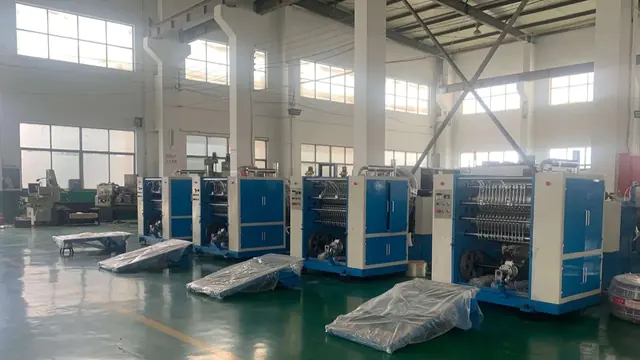
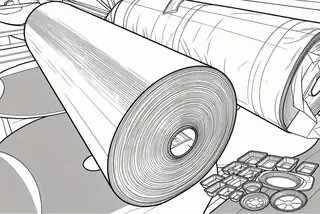
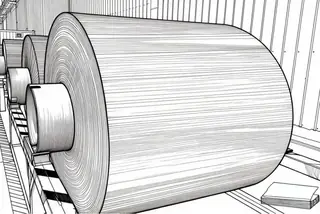
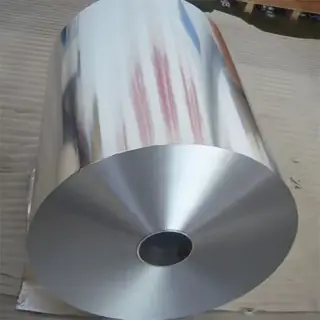
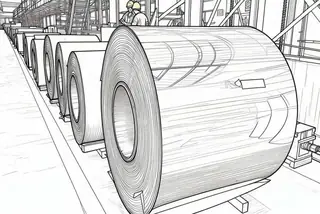
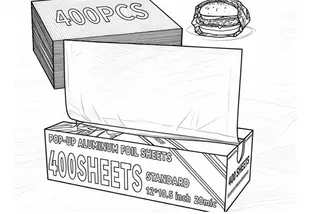
Aluminum foil raw material refers to large aluminum foil jumbo rolls produced by rolling aluminum alloy into extremely thin sheets. These jumbo rolls serve as the starting material for a wide range of downstream converting and packaging processes. Manufacturers purchase these rolls and process them into finished products through cutting, embossing, printing, laminating, rewinding, or stamping.
Unlike finished consumer products, aluminum foil jumbo rolls are semi-finished materials designed for industrial production. Their specifications-including alloy, temper, thickness, width, and surface quality-are customized according to the intended application.
For manufacturers, selecting the appropriate raw material is just as important as choosing the right production equipment. A mismatch between material properties and production requirements can lead to forming defects, higher scrap rates, inconsistent product quality, and increased operating costs.
Key Specifications of Aluminum Foil Raw Materials

When purchasing aluminum foil jumbo rolls, buyers typically evaluate several technical parameters:
Alloy:
Determines strength, formability, corrosion resistance, and end-use suitability.
Temper:
Indicates the material's hardness and ductility, such as O (soft), H22, or H24 etc..
Thickness:
Usually ranges from 0.006 mm to 0.2 mm, depending on the application.
Width:
Customized to match converting or stamping equipment.
Inner Core Diameter:
Commonly 76 mm, 152 mm, or other customer-specific sizes.
Outer Roll Diameter:
Influences production efficiency and transportation costs.
Surface Finish:
Clean, smooth, and free from oil stains, scratches, wrinkles, or oxidation.
Each of these specifications plays a critical role in production performance. For example, container manufacturers often prioritize excellent elongation and deep-drawing performance, while household foil converters may focus more on consistent thickness and rewinding efficiency.
Related Reading:
Understanding Household Aluminum Foil: the Uses and Specification.
How Aluminum Foil Raw Material Is Manufactured?
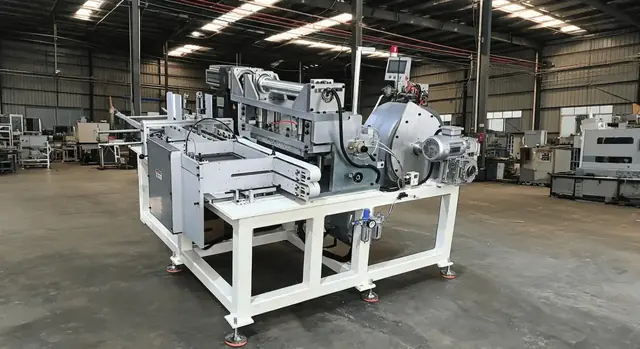
Before aluminum foil reaches a packaging factory, it undergoes a highly engineered manufacturing process involving mining, refining, casting, rolling, annealing, and quality inspection. Each stage influences the final material's strength, thickness consistency, surface quality, and forming performance.
Understanding this production process helps buyers better evaluate supplier capabilities and identify factors that affect product quality.
The Aluminum Foil Manufacturing Process
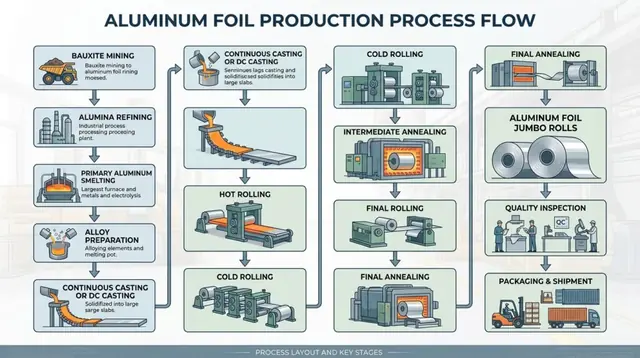
The production of aluminum foil typically follows these steps:
Each stage is carefully monitored to ensure the finished jumbo rolls meet strict specifications for thickness tolerance, mechanical strength, surface cleanliness, and dimensional accuracy.
Step 1: Bauxite Mining
Everything begins with bauxite, the world's primary source of aluminum. Bauxite ore is extracted from open-pit mines and transported to refineries, where impurities such as iron oxide and silica are removed.
The quality of the raw ore influences the purity of the aluminum produced later in the manufacturing process.
Step 2: Alumina Refining
Using the Bayer Process, bauxite is refined into high-purity alumina (Al₂O₃).
During this stage, unwanted minerals are separated, leaving a white powder that serves as the feedstock for aluminum production.
Step 3: Primary Aluminum Smelting
Alumina is converted into molten aluminum through electrolytic reduction in large smelting facilities.
Manufacturers may also incorporate recycled aluminum depending on customer requirements, alloy specifications, and sustainability goals. Modern aluminum production increasingly combines primary and recycled materials to reduce environmental impact while maintaining product performance.
Step 4: Alloy Preparation
Pure aluminum is rarely used directly for packaging applications. Instead, alloying elements such as manganese, iron, and silicon are added to achieve specific mechanical properties.
Different alloy compositions determine characteristics such as:
Strength
Elongation
Corrosion resistance
Deep-drawing performance
Surface finish
Heat resistance
This is why selecting the appropriate alloy is one of the most important decisions when purchasing aluminum foil raw materials.
Step 5: Rolling and Annealing
Large aluminum slabs are gradually rolled into thinner gauges through multiple rolling stages.
During rolling:
Thickness is progressively reduced.
Surface quality is improved.
Mechanical properties are carefully controlled.
Between rolling stages, the material undergoes annealing , a controlled heat treatment that relieves internal stresses and restores ductility.
The final annealing process determines the temper of the aluminum foil, such as O (soft), H22, or H24.
Step 6: Quality Inspection and Jumbo Roll Packaging
Before shipment, every jumbo roll should undergo rigorous quality inspection, including checks for:
Thickness tolerance
Width accuracy
Tensile strength
Elongation
Surface cleanliness
Pinholes
Roll winding quality
Edge alignment
Only after passing these inspections are the jumbo rolls packaged for export or delivery to downstream converters.
Related Reading:
The Aluminum Foil Supply Chain Explained: From Bauxite Mining to Jumbo Roll Production
Common Aluminum Foil Alloys and Their Applications
Selecting the right aluminum alloy is one of the most important decisions when purchasing aluminum foil raw materials. Although many aluminum foil grades are available, only a few alloys dominate the food packaging industry because they offer the right balance of strength, formability, corrosion resistance, and cost.
Different applications require different mechanical properties. For example, household aluminum foil prioritizes flexibility and ease of use, while food container manufacturers need materials that can withstand deep drawing without cracking. Choosing an unsuitable alloy may result in poor forming performance, excessive wrinkles, or higher production scrap rates.
The following are the most commonly used aluminum foil alloys in the packaging industry.
Comparison of Common Aluminum Foil Alloys
Alloy
Typical Temper
Main Features
Common Thickness
Typical Applications
8011
O, H22
Excellent flexibility, food-safe, economical
0.009–0.08 mm
Household foil, food packaging, foil lids
3003
H24
Good strength and formability
0.05–0.12 mm
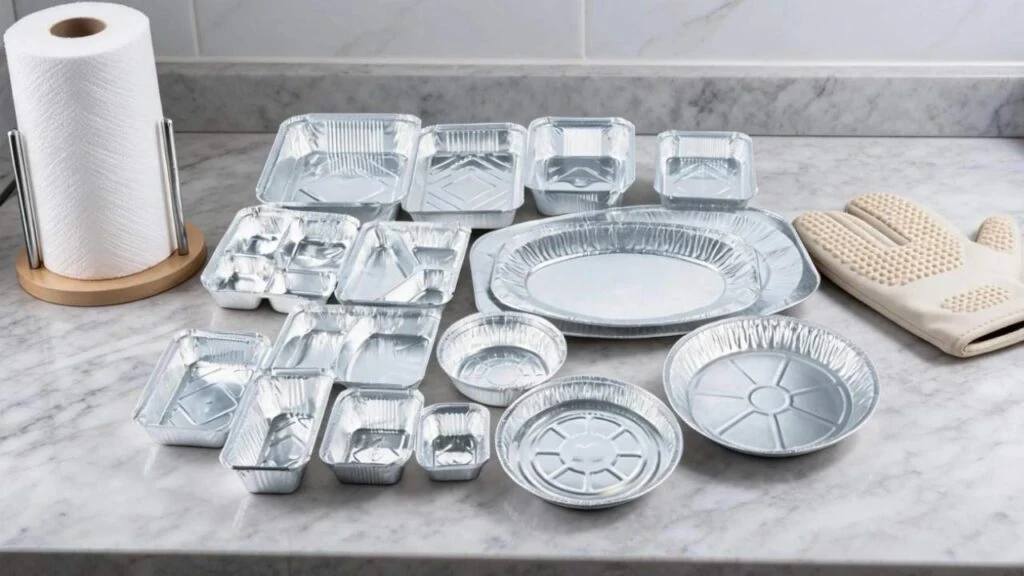
Standard aluminum foil containers
8006
O
High elongation, wrinkle-free forming
0.06–0.12 mm
Premium wrinkle-free food containers
3004
H24
Recycled aluminum foil scrap
0.06–0.12 mm
Heavy-duty containers and specialty packaging
Each alloy has unique characteristics, making it suitable for specific manufacturing processes and end products.
3003 Aluminum Foil
3003 aluminum foil offers good formability, weldability, corrosion resistance, and excellent anti-rust performance
making it suitable for containers that hold liquids or require stacking
Common applications include aluminum foil containers, food packaging, aluminum honeycomb cores.
8011 Aluminum Foil
8011 aluminum foil is a food-contact-grade packaging material that is non-toxic and safe
It offers excellent ductility, corrosion resistance, and lightweight properties
With superior formability and elongation (up to 15%), it is ideal for deep-drawn containers
Household foil produced from 8011 alloy typically has an O temper (fully annealed), providing ma
Have a project like this?
We source the machinery, audit the factory and inspect the goods before they ship.
Ask a question Email usMore on Materials & Alloys
- 3003 H24 vs 8011 H22: Choosing the Right Aluminum Foil for Container Manufacturing
- 8006 O Aluminum Foil: The Best Choice for Wrinkle-Free Aluminum Foil Containers
- 8011 O Aluminum Foil Jumbo Rolls: Features, Thickness, Width and Common Applications
- How to Source Aluminum Foil Jumbo Rolls for Household Foil Production?
Related equipment and products
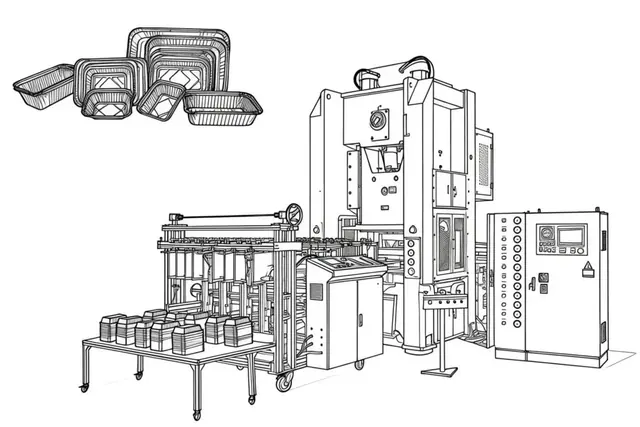
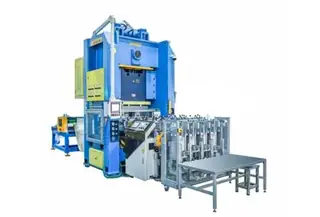
Aluminum Foil Container Making Machine
High-speed press line that converts aluminum foil jumbo rolls into finished food containers automatically.
View details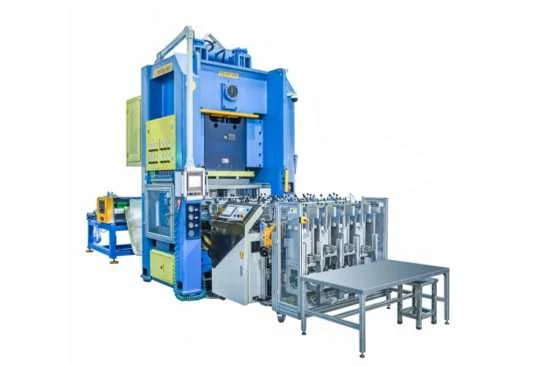
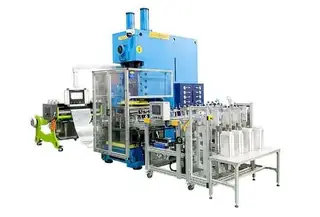
C-Frame Foil Container Machine
C-frame press configuration for aluminum foil container forming, with open access on three sides.
View details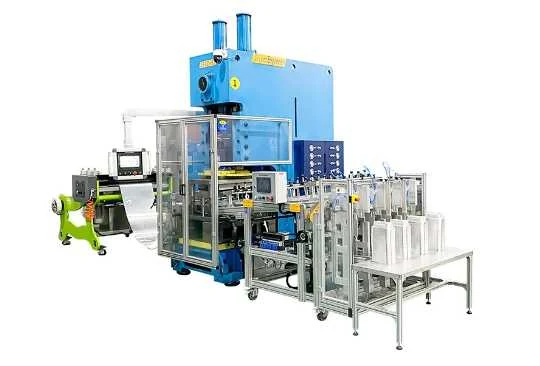
H-Frame Foil Container Press
Closed H-frame press built for heavier, higher-tonnage aluminum foil container forming.
View detailsTurn this into a project
Send us your target product and market. We come back with the factory shortlist and what it costs to verify them.