



"What is a reasonable price for aluminum foil raw material?"
Whether you're planning to launch an aluminum foil container factory, source aluminum foil jumbo rolls, or expand your packaging business, understanding raw material costs is critical. After all, aluminum foil accounts for the largest portion of production costs, and even small price changes can significantly impact profitability.
The challenge is that aluminum foil prices vary from supplier to supplier. One manufacturer may quote $3,800 per ton, while another offers $4,200 per ton for what appears to be the same material. Many buyers naturally choose the lower price, only to discover quality issues, higher scrap rates, or production problems later.
The truth is that there is no single "correct" price for aluminum foil raw material. A reasonable price depends on several factors, including aluminum market prices, alloy grades, foil thickness, processing fees, order quantity, and quality requirements.
This guide will explain how aluminum foil pricing works, provide practical examples, and help you determine whether a supplier's quotation is truly competitive.
What Determines the Price of Aluminum Foil Raw Material?
Understanding Aluminum Foil Processing Fees
What Is a Reasonable Price for Aluminum Foil Container Raw Material in 2026?
Why Aluminum Prices Are So High in 2026?
Why Two Suppliers Can Quote Very Different Prices?
How Experienced Buyers Evaluate Aluminum Foil Suppliers?
What Determines the Price of Aluminum Foil Raw Material?
Aluminum ingots typically account for approximately
60% to 70% of the total cost of aluminum foil production.
Because aluminum is traded globally as a commodity, its price changes daily based on:
Global supply and demand
Economic conditions
Energy prices
Trade policies
Industrial demand from sectors such as automotive, aerospace, and construction
Most aluminum foil suppliers monitor major aluminum exchanges, particularly the London Metal Exchange (LME), when determining their selling prices.
Aluminum foil pricing begins with the London Metal Exchange (LME) primary aluminum price. This benchmark is set by global supply and demand, and it changes daily. In early 2026, LME aluminum prices have surged to historically high levels, trading between approximately $3,200 and $3,700 per metric ton, with the market reaching four-year highs
For Chinese suppliers-who produce roughly 75% of the world's aluminum foil
domestic aluminum ingot prices often follow the Shanghai Futures Exchange, which has seen spot aluminum prices range from 24,190 yuan/ton to 24,460 yuan/ton in early June 2026.
This is why aluminum foil quotations can change even when the supplier, specification, and quantity remain the same.
Many first-time buyers mistakenly assume that suppliers are increasing prices arbitrarily. In reality, changes in aluminum market prices often explain a large portion of the fluctuation.
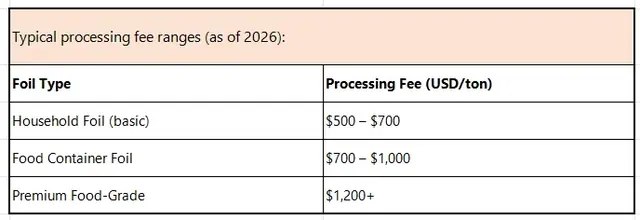
Understanding Aluminum Foil Processing Fees
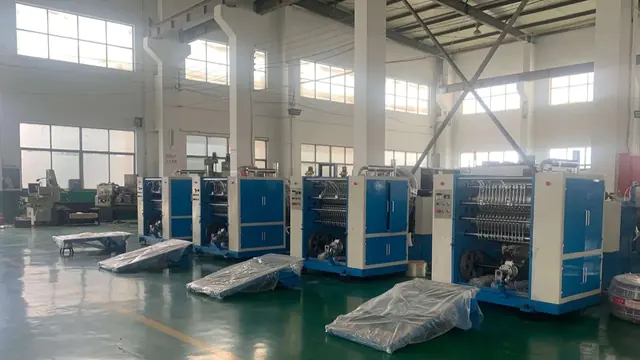
The processing fee covers everything the foil mill adds to the raw aluminum ingot: rolling, annealing, slitting to width, surface treatment, quality inspection, and packaging. This fee varies substantially based on product specifications.
For high-end pharmaceutical or ultra-thin battery foils (below 10 microns), processing fees can exceed $1,200/ton, but for standard container foil, $700–1,000/ton is the normal range.
What Is a Reasonable Price for Aluminum Foil Container Raw Material in 2026?

Let us put the formula into practice. With LME aluminum prices fluctuating significantly, here are realistic calculations for food-grade container foil (8011 or 3003 alloy, 30–60 micron thickness) in 2026:
Example Calculation (FOB China, current market rates):
LME aluminum price: $3,500/ton (reference)
Processing fee: $700/ton
Estimated foil price: $4,200/ton
Market sources indicate that China's aluminum foil export prices in 2026 are expected to fluctuate between $4,100 and $4,400 per ton, with significantly increased quarterly volatility compared to previous years
The wide range of supplier quotes-from $2,900/ton to $4,500/ton on B2B platforms
reflects differences in alloy grade, thickness tolerances, quality standards, and supplier credibility.
These figures should be used as a framework for comparison, not as fixed market quotations. Always verify current LME prices before negotiating.
Why Aluminum Prices Are So High in 2026?
Several structural factors are driving aluminum prices higher this year:
Supply disruptions : Middle East conflicts have removed approximately 3% of global aluminum supply from the market, with over 3 million tons of annual capacity offline and recovery expected to take 6–12 months
Capacity constraints : China's electrolytic aluminum capacity is capped at 45 million tons/year, with utilization rates at 98–99%, leaving virtually no room for expansion
Low inventories : Global aluminum stockpiles are at 55-year lows
Strong demand : New energy vehicles, AI data centers, and green infrastructure are driving unprecedented demand for aluminum
This is not a short-term spike. Analysts expect aluminum prices to remain elevated throughout 2026, with full-year LME averages projected around $3,200/ton
Why Two Suppliers Can Quote Very Different Prices?
Price differences often seem suspicious, but legitimate factors explain much of the variation.
Alloy Differences
The three main alloys for aluminum foil containers have distinct properties and price points:
8011 alloy : The most common and generally the lowest-priced container foil. Its iron-silicon composition uses abundant, inexpensive alloying elements, which reduces processing costs
3003 alloy : Contains manganese (1.0–1.5%), a costlier addition that also demands more processing energy. Priced approximately $2.5–3.0/kg, typically higher than 8011
8006 alloy : Sits at a premium above 3003 but offers superior elongation retention at harder tempers, making it the preferred choice for smoothwall and deep-draw containers
8079 alloy : Used for ultra-thin battery foil and high-end packaging, significantly more expensive due to higher purity requirements and lower production yields
Thickness Differences and Gauge Precision
Container foil thickness typically ranges from 30 to 80 microns. Thinner gauges require more precise rolling and stricter quality control, raising both production costs and rejection rates. Below 10 microns, manufacturing difficulty increases exponentially.
Surface Quality and Compliance Requirements
Food-grade aluminum foil must meet specific cleanliness standards: no oil stains, low pinhole density (ideally under 50 pinholes/m²), and consistent surface finish
Suppliers who cut corners on quality inspection can quote lower prices, but the risk of contamination and customer complaints is real.
How Experienced Buyers Evaluate Aluminum Foil Suppliers?
Here is what professional procurement managers actually look at, beyond the price per ton.
Cost per Finished Container, Not Per Ton
The most sophisticated buyers calculate the true unit cost including waste, downtime, and quality issues. A slightly higher priced foil that runs consistently and produces lower scrap often delivers a lower per-container cost.
Yield Rate and Thickness Consistency
Ask suppliers about their thickness tolerance. Premium mills hold tolerance within ±3–5% of specified thickness. Lower-quality suppliers may allow ±10% or more, meaning some portions of your coil are too thin (higher reject risk) or too thick (higher material consumption).
Delivery Reliability and Long-Term Stability
During market volatility, stable supply becomes as important as price. Suppliers who purchase raw materials hand-to-mouth may disappear or delay shipments when LME prices spike suddenly
Established mills with inventory buffers and long-term ingot contracts offer predictable delivery schedules.
Technical Capability
For food-contact applications, confirm that the supplier uses industry-standard alloys (8011-O or 1235-O) with thicknesses appropriate for your end use. Request mill test reports verifying alloy composition, tensile strength, and elongation rates
Production Scale Match
Suppliers with in-house annealing, slitting, and embossing capabilities offer better quality control and shorter lead times than those outsourcing key processes. Lead times of 15–30 days for 500+ metric ton monthly volumes indicate robust production capacity
Conclusion
There is no universal answer to the question:
"What is a reasonable price for aluminum foil raw material?"
A fair price depends on:
Aluminum ingot prices
Processing fees
Alloy selection
Thickness requirements
Quality standards
Order volume
Rather than focusing solely on the lowest quotation, buyers should evaluate the total value offered by a supplier.
In the aluminum foil container industry , the cheapest material is not always the m
Have a project like this?
We source the machinery, audit the factory and inspect the goods before they ship.
Ask a question Email usMore on Materials & Alloys
- 3003 H24 vs 8011 H22: Choosing the Right Aluminum Foil for Container Manufacturing
- 8006 O Aluminum Foil: The Best Choice for Wrinkle-Free Aluminum Foil Containers
- 8011 O Aluminum Foil Jumbo Rolls: Features, Thickness, Width and Common Applications
- How to Source Aluminum Foil Jumbo Rolls for Household Foil Production?
Related equipment and products
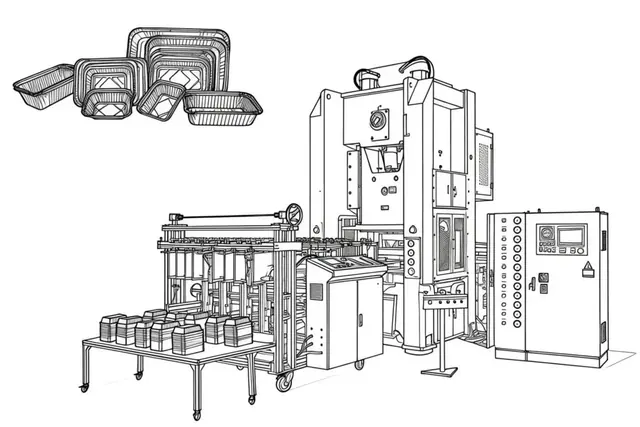
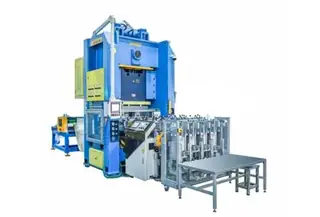
Aluminum Foil Container Making Machine
High-speed press line that converts aluminum foil jumbo rolls into finished food containers automatically.
View details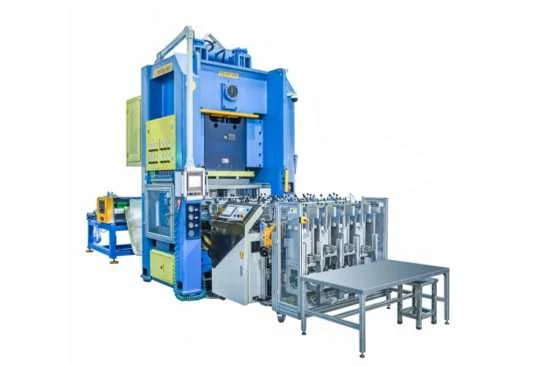
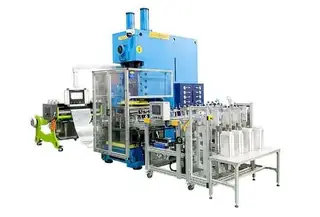
C-Frame Foil Container Machine
C-frame press configuration for aluminum foil container forming, with open access on three sides.
View details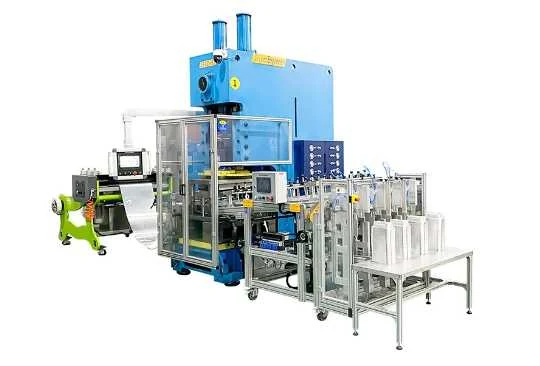
H-Frame Foil Container Press
Closed H-frame press built for heavier, higher-tonnage aluminum foil container forming.
View detailsTurn this into a project
Send us your target product and market. We come back with the factory shortlist and what it costs to verify them.