
Home/Applications
Four scenarios, four different specifications.
The same 20 W number means four different fixtures depending on where it is mounted. This page sets out what changes — housing, optic and control — in each case.
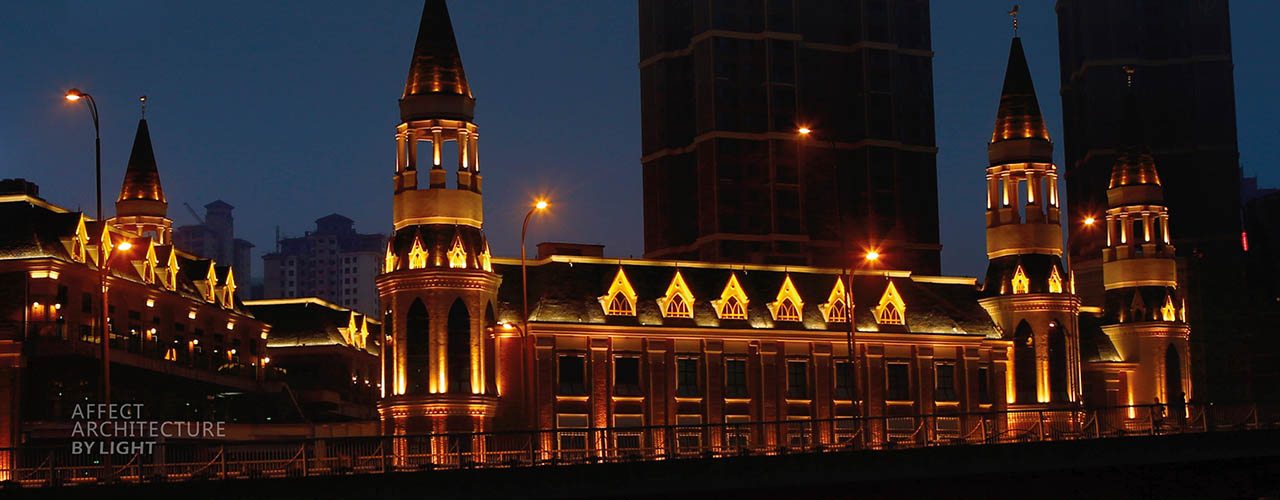
01 — Building facades
Hotels, towers and heritage elevations
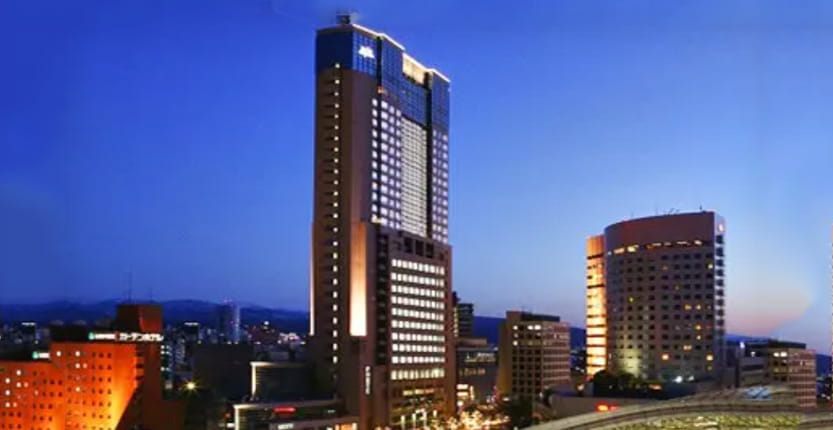
Facade work is decided by throw distance and uniformity, not by wattage. Tall elevations need narrow-beam optics from a short offset; textured heritage stone needs grazing, which shows every millimetre of aiming error.
- Typical fixtures: architectural and narrow-beam floodlights, linear wall washers, up-down wall lights for the rhythm at street level.
- Control: DMX512 with RDM where colour scenes or festival modes are wanted; static white where the building should simply read cleanly.
- Watch for: colour consistency across a run — bin verification at incoming inspection matters more here than anywhere else.
02 — Landscape & garden
Parks, resorts and private residences
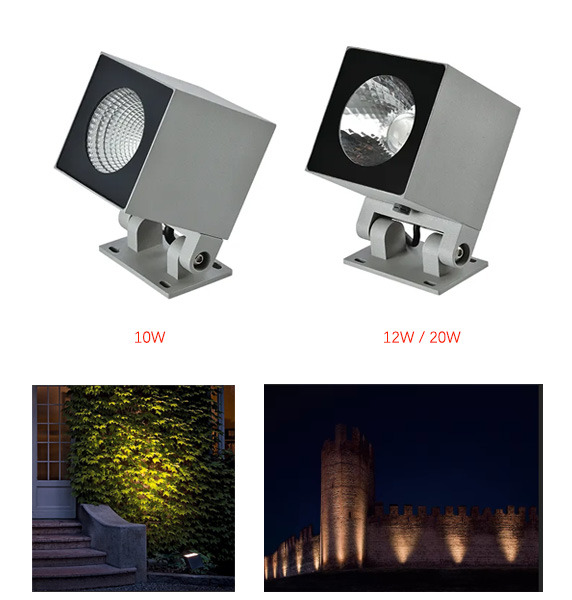
Landscape schemes fail on glare and on maintenance access, not on lumens. Fixtures sit at eye level, get hit by irrigation, and are buried by planting within two seasons.
- Typical fixtures: CREE COB garden spots on spikes, in-ground uplights, step lights and low-level wall markers.
- Control: constant-voltage dimming or RF groups; DMX only where the scheme has scenes worth commissioning.
- Watch for: drive-over rating on in-ground units near paths, and glare shields where a spot faces a seating area.
 1000 hSALT SPRAY VERIFIED
03 — Coastal & marine
Marinas, promenades and island resorts
This is the application we built the quality programme around. Salt-laden air attacks the fastener and the gasket face long before the LED gives up, and a fixture that fails here fails in a place with scaffolding costs and tide windows.
- Typical fixtures: floodlights, wall lights and in-ground units on the coastal housing and finish specification.
- Control: keep data runs short and use RDM — commissioning access is the expensive part on a seafront site.
- Watch for: stainless grade at the mounting bracket, and whether rain actually rinses the fixture or a soffit keeps salt on it.
04 — Retail & signage
Stores, displays and billboards
Interiors are about beam control and re-aiming after the shop layout changes; signage is about even brightness across a face with no visible dots or hot spots.
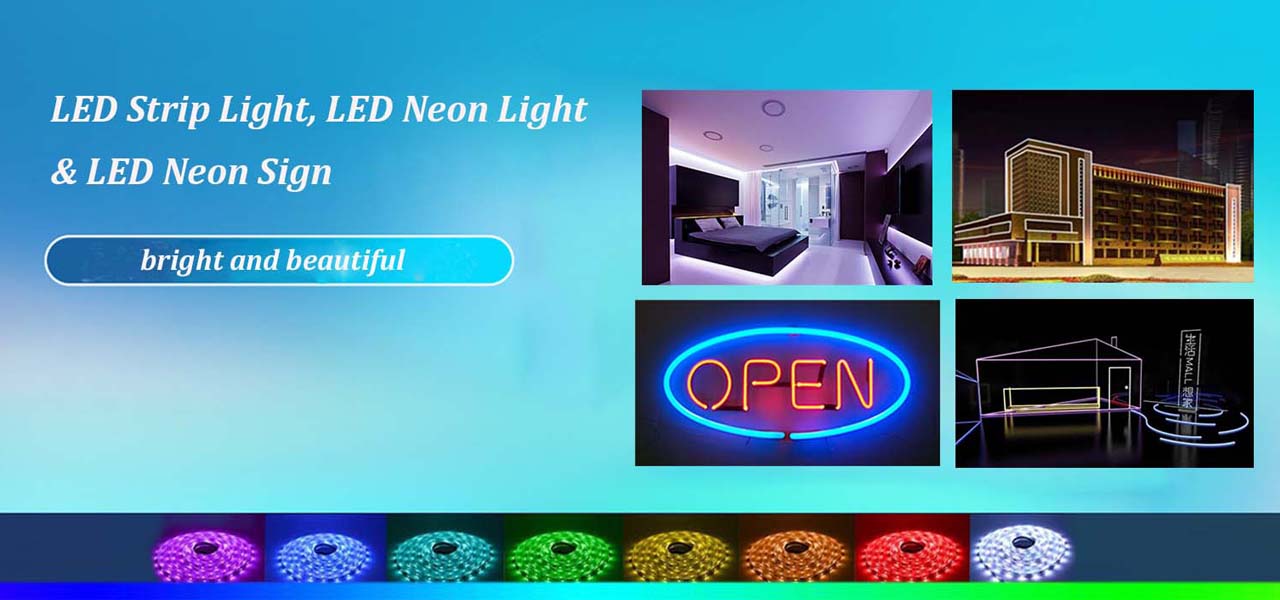
- Typical fixtures: 3-phase and 48 V magnetic track spots, motorised-zoom heads, track wall washers, LED modules for channel letters and light boxes.
- Control: Casambi for phased fit-outs where no one wants to pull data cable; Tuya for smaller sites.
- Watch for: tunable white consistency between batches when a store rolls out over months.
Selection shortcut
What changes between the four
| Scenario | Housing priority | Optic | Usual control |
|---|---|---|---|
| Building facade | IP65–IP66, thermal stability | Narrow to medium, asymmetric wash | DMX512 / RDM or static white |
| Landscape & garden | IP65–IP67, glare control | Spot 15–30°, shielded | CV dimming or RF groups |
| Coastal & marine | Salt-spray verified finish, fastener grade | As facade, shorter runs | RDM, minimal cabling |
| Retail & signage | Indoor, serviceability | Zoom 15–60°, even module pitch | Casambi / Tuya |