Size the Dressed Foot Not the Bare Foot
A post-operative shoe is fitted over a dressing, and the dressing is the part that changes. Sizing from the patient's normal shoe size puts the strap at its limit on day one and out of range by the first dressing change. Measure the foot as it is bandaged, and if the case sits between two sizes, take the larger one: the straps close down onto a loose fit, but they cannot open past their own length. This is why the range carries seven sizes rather than the four a retail shoe would need.
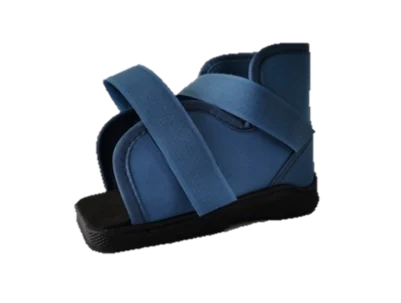
Post-Op Shoe Square Toe DG-107
Know Which Articles Cover Which Size Range
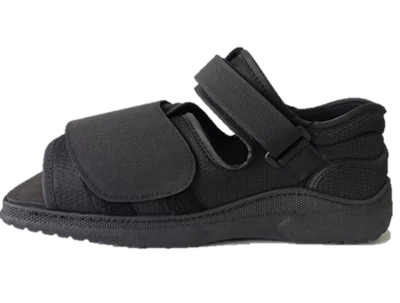
The size runs are not identical across the range, and that matters when you build a purchase order. The Post-Op Shoe Square Toe DG-107 and the Post-Op Shoe Round Toe DG-0109 run Children, XXS, XS, S, M, L and XL, which is the widest run in the catalogue and the reason those two articles cover both paediatric and adult wards. The Cast Shoe Square Toe DG-028 and the off-loading shoes run XS through XL. Check the run before you assume one article covers a department.
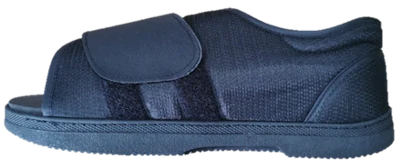
Post-Op Shoe Round Toe DG-0109
Why the Toe Box Shape Changes the Fit
The square toe box exists to give bandage material room. On a dressed forefoot, a rounded last presses on the dressing before the shoe is even closed, and the patient loses the fit as soon as the dressing is rebuilt slightly thicker. If the surgical site is on the forefoot and the dressing is bulky, size into a square toe article rather than sizing up in a round toe one. Sizing up in a round toe shoe gives length the patient does not need and still does not give the dressing height.
Check the Heel Before You Check the Length
The reinforced heel counter and the padded heel collar are what stop the foot sliding forward onto the surgical site. A shoe that is a size too long lets the heel travel, and no amount of strap tension fixes it, because the strap is over the midfoot. Fit the heel into the counter first, then close the straps from the rear forward. If the heel lifts out during a normal step, the shoe is too long regardless of what the toe end looks like.
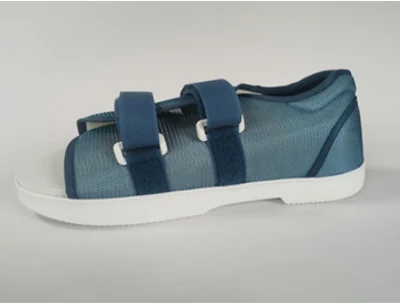
Classic Post-Op Shoe Round Toe DG-0107
Build the Size Assortment Around Where Stock Actually Runs Out
Ward stock does not deplete evenly. M and L go first in adult departments, and the ends of the curve sit on the shelf, so an even split across seven sizes leaves you reordering the middle and writing off the ends. If you are a distributor, ask for the carton assortment to match the mix you actually sell rather than an even split. Da Gao sets the size assortment per carton to the buyer's mix, which is a packing decision rather than a production one.
Economy Post-Op Shoe Round Toe DG-0108
What To Confirm Before the First Order
Three things settle most sizing problems before they reach a patient. Confirm which article numbers you are quoting, because the size runs differ. Confirm the assortment per carton against your own sales mix. Confirm whether the shoe is going out under your brand, because private label artwork on the product and the retail pack is proofed before production rather than after. Send that list to [email protected] and the quotation comes back against your actual assortment.