Interior Length and Posture
Choose chamber size from the user posture and entry needs, then verify capacity, delivery access and the installed operating footprint. Interior dimensions alone do not show whether a chamber will reach the room or leave enough space to use and service it.
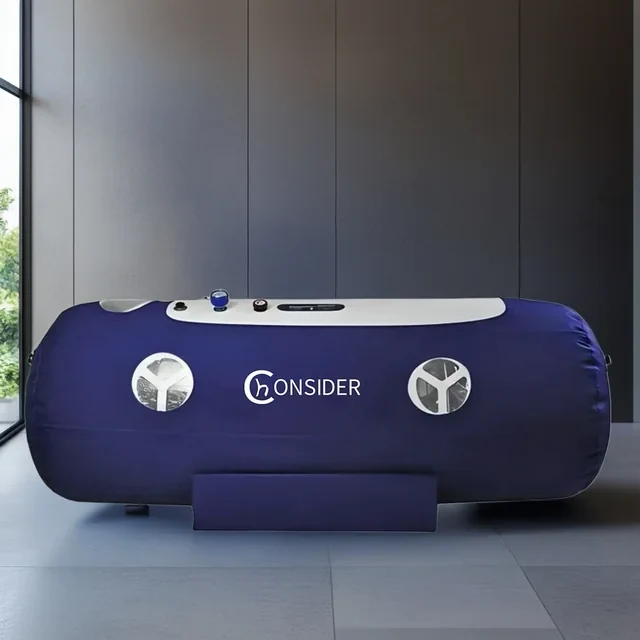
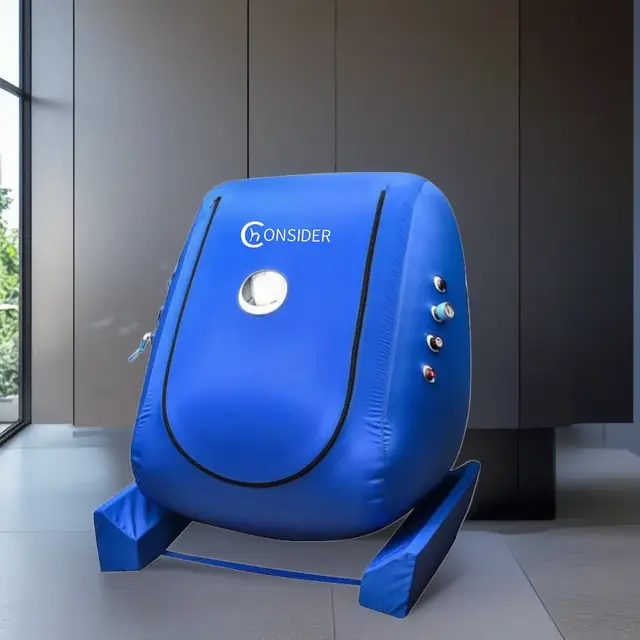
Taller users should check interior length first. Lying soft chambers run up to around 90–95 cm wide and 230 cm long, giving unrestricted legroom — ideal for sleep-focused sessions. Sitting chambers trade some lying space for the ability to sit fully upright, which many users prefer for reading or working.
Browse postures on the soft lying and soft sitting pages.
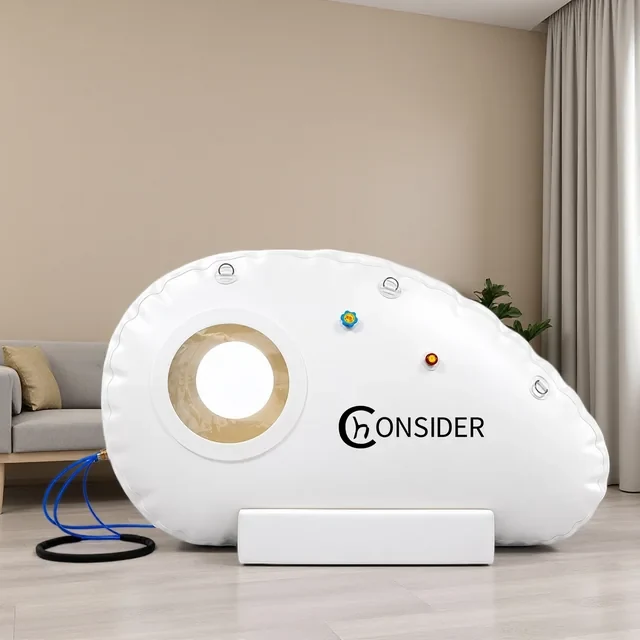
Most home chambers are sized for one adult, with larger sitting models fitting an adult plus a child. If you need room for two adults, or a caregiver to accompany a user, a double or wheelchair-accessible chamber is the right choice — the COSW14 fits two and offers a wide entrance.
That flexibility also suits rehabilitation settings , where a wide entrance allows direct wheelchair access.
Clinics think about capacity differently — the question is how many clients you can treat per session. Multiplace hard-shell chambers treat several users at once: the COHB20 supports up to five and the COHS20 up to three. See the multiplace range and our monoplace vs multiplace guide .
- Compare packed dimensions with doors, corridors, turns and lift capacity
- Confirm the installed footprint plus entry, operator and service clearance
- Check the floor and access route for the delivered weight of a hard-shell chamber
- Reserve space for the compressor, oxygen equipment, ventilation and cables
- Verify where users, wheelchairs and staff will wait, enter and exit