Why a Brushless DC Motor Is More Efficient Than a Brushed One
Caroute publishes eight advantages of the permanent magnet brushless DC motor. They are worth reading in order, because most of them follow from the first one: there is no rotor excitation, so there is nothing on the rotor to lose energy.
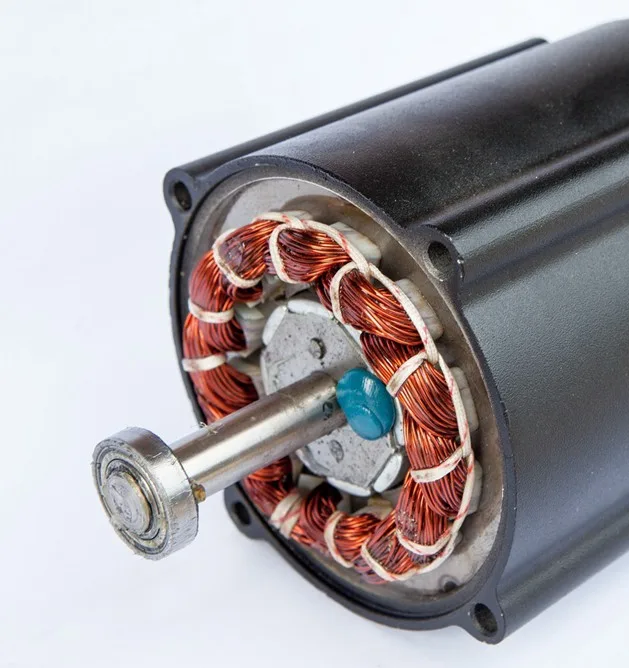
High efficiency
A permanent magnet synchronous motor does not need rotor excitation the way an asynchronous motor does, so there is no copper loss and no iron loss on the rotor. Caroute puts the gain at 5% to 12% over an equivalent asynchronous motor at rated load.
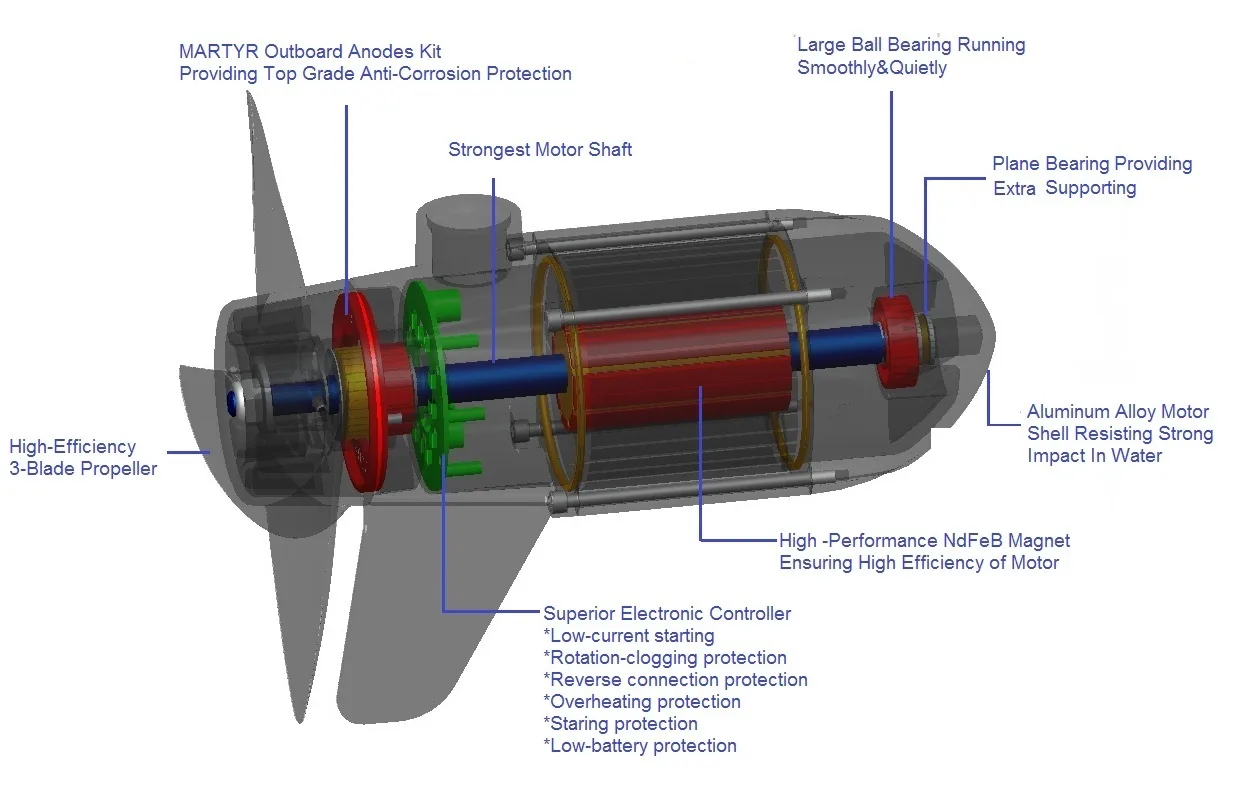
The rotor core is built from silicon steel laminations and the magnets are NdFeB, which has low permeability and high resistance. That combination cuts eddy current loss and, just as importantly, keeps the magnet material from demagnetising as it heats.
A wide high-efficiency band
Peak efficiency is easy; holding it is not. At rated load, system efficiency stays above 80% across more than 70% of the motor's entire speed range.
On a boat that matters more than a peak figure, because a trolling motor spends its life at part throttle, not at the one speed where a datasheet was measured.
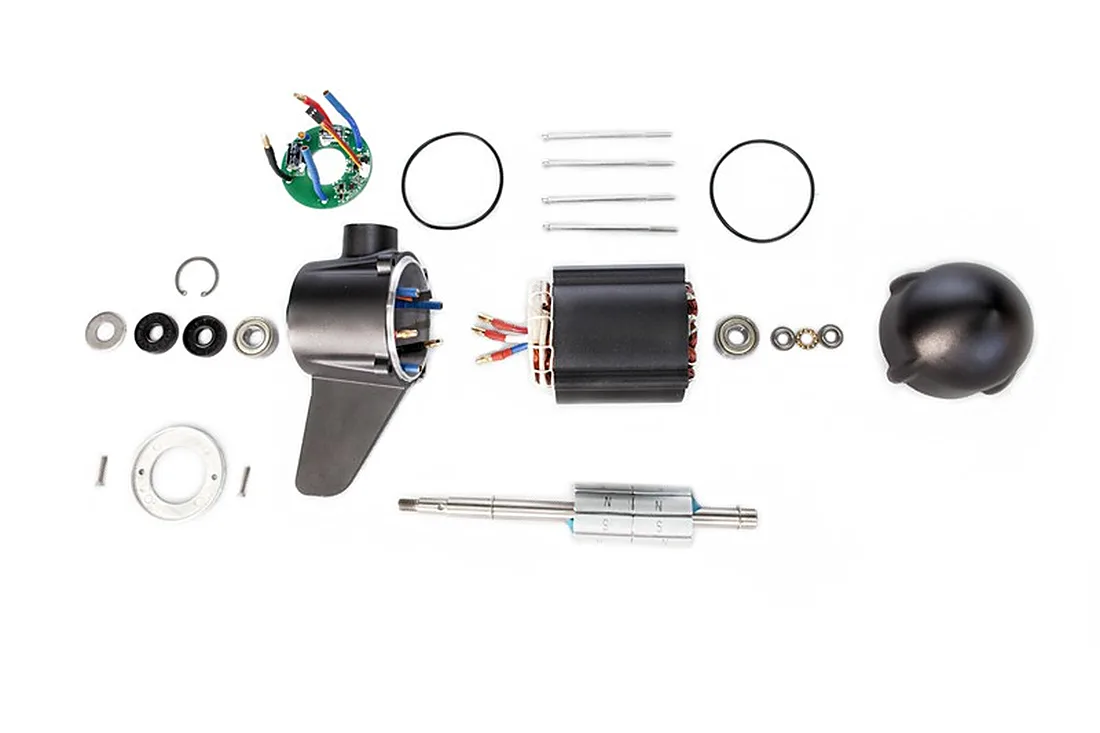
Power factor close to unity
With no rotor excitation the power factor sits close to 1. Less reactive power is drawn for the same shaft output.
Starting torque and overload
Mechanical and regulation characteristics resemble a DC shunt motor: high starting torque with low starting current, and a wide adjustment range with no starting winding of the kind a synchronous motor needs.
Maximum overload torque reaches four times rated torque. That is the reserve that gets a loaded hull moving against a current.
Power density
Against an asynchronous motor of the same volume and the same maximum operating speed, output rises by 30%. A smaller housing does the same work — which is why a Caroute 80 lb motor runs from a single 12 V battery and a 160 lb motor from 24 V.
Tolerance of a poor supply
Under closed-loop speed control, with the supply voltage varying from +10% to −15% and a 40 K ambient temperature spread, steady-state speed deviation stays within ±1% of the set speed across 0 to 100% of rated torque.
Battery voltage sags as a bank discharges. This is what stops the boat slowing as it does.
Stability under sudden load
The speed control system is self-controlled. A sudden load change does not produce oscillation or pull the motor out of step — the failure mode that a synchronous machine is prone to.
Simple structure, easy maintenance
No brushes and no commutator means no wear parts in the electrical path. Caroute states five times the service life of a conventional brushed electric motor and no maintenance requirement.
What It Means for Your Boat
Every one of these shows up as the same two things on the water: more range from the same battery, and fewer things that need replacing at the end of a season.
Motors These Figures Describe
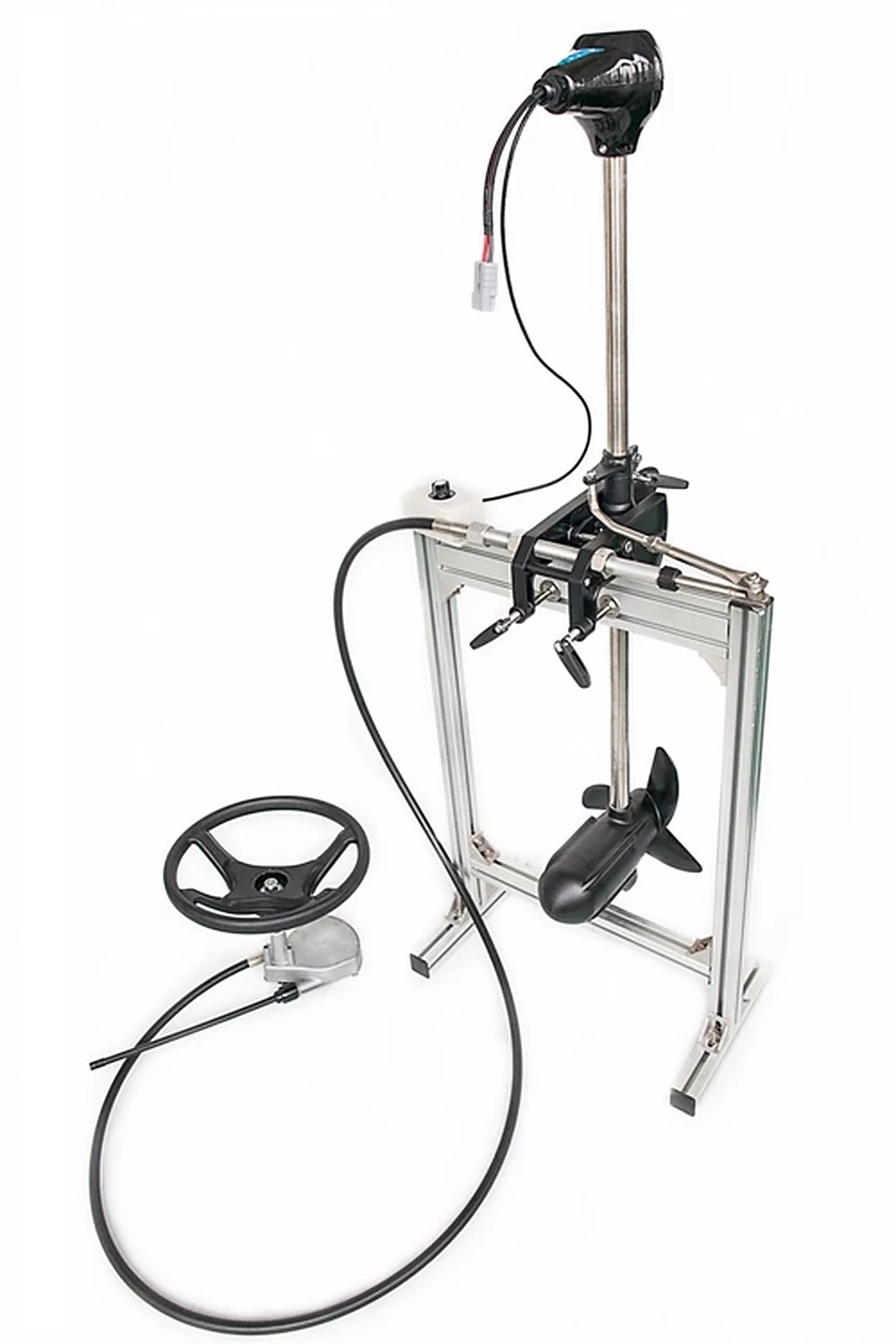
N Platform Brushless Electric Boat Motor
Five tiller-controlled models from 80 LB to 180 LB of thrust, all built on the same brushless drive…
View details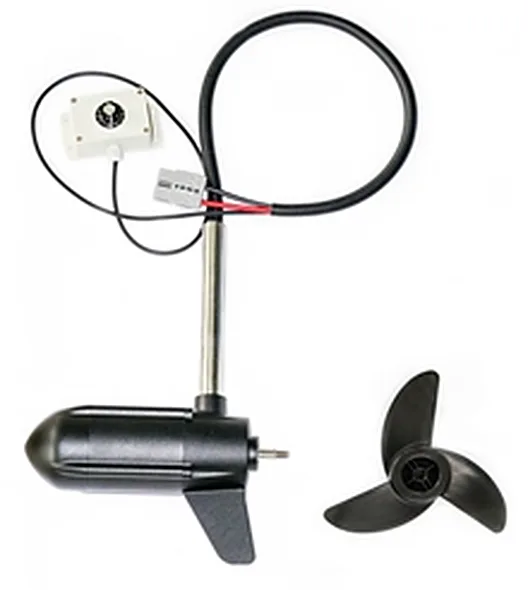
S Platform Brushless Electric Boat Motor for DIY
The drive on its own: five thrust ratings, four shaft lengths and no fixed mounting, so the…
View detailsRelated Articles
Permanent Magnet Brushless DC Motor Advantages in Short
Eight short points comparing a permanent magnet brushless DC traction motor with three-phase…
Read articleBrush Motor and Brushless Motor The Difference That Matters
Service life, energy use and maintenance compared: 20,000 hours against 5,000, 7-10 years against…
Read articleQuestions About This Topic
How much more efficient is a brushless motor?
Does efficiency hold at part throttle?
What is the overload capability?
Why does a Caroute 80 lb motor only need 12 V?
Ask about the numbers in this article
If a figure here matters for a decision you are making, send the boat details and Jane will tell you how it applies.