
Technical Guide
How a Photovoltaic Cell Turns Sunlight into Electricity
The physics behind every module on this site, in the terms our own FAQ uses.
Sunlight is made of photons
Sunlight is made up of photons, or particles of solar energy. Photons contain various amounts of energy, corresponding to the different wavelengths of the solar spectrum. That spread of energies is why a solar cell responds differently to different light conditions — it is not one uniform input.
Only absorbed photons do work
When photons strike a PV cell they may be reflected, absorbed, or pass right through. Only the absorbed photons generate electricity. This is why cell quality, glass and lamination matter: low iron tempered glass and EVA lamination exist to get as many photons as possible into the cell rather than bouncing them back off the surface.
Energy transfers to an electron
When a photon is absorbed, its energy is transferred to an electron in an atom of the PV cell — which is a semiconductor. That transfer is the whole mechanism. Everything else in a module is packaging designed to keep that process running for twenty-five years.
What this means when you specify a module
The figures on our datasheets follow from this. Module efficiency, quoted from 6.5 % on the 5 W panel to 13.10 % on the 45 W BSM045P, is the fraction of incident energy the module converts. Operating temperature range, −40 °C to +85 °C across the range, tells you where the cell still behaves predictably. And the air gap our mounts hold under a panel exists because a hot cell converts less.
Products referenced
Hardware Mentioned in This Guide
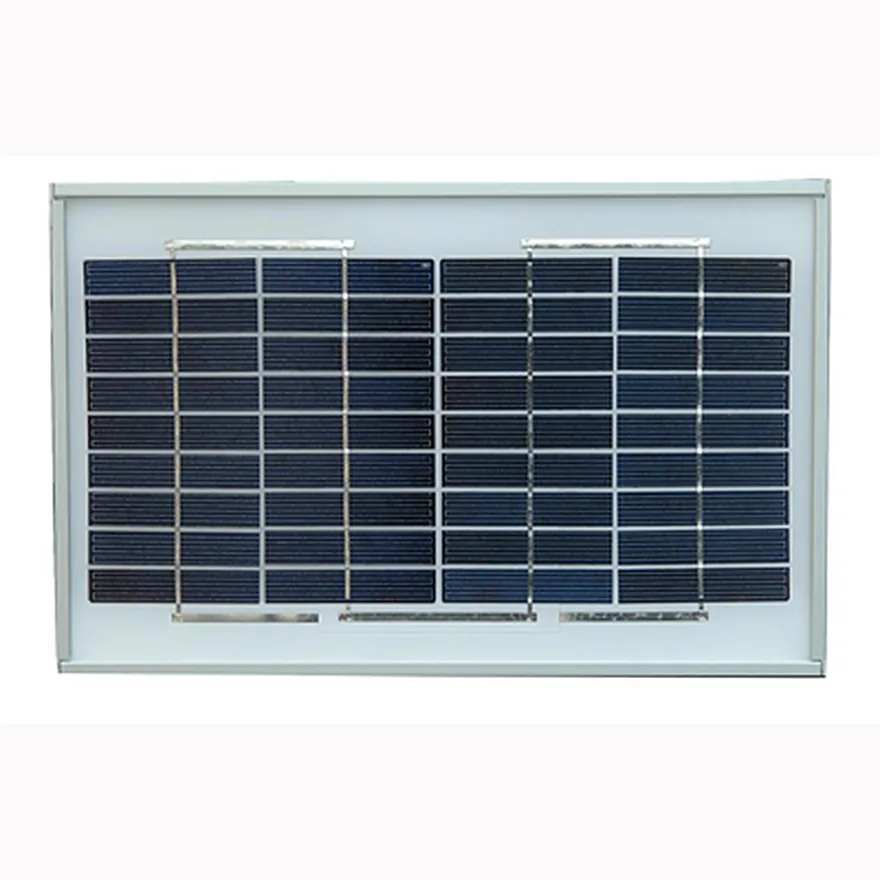 BSM005P-T
BSM005P-T 5 W Multicrystalline Solar Module
A 5 W 12 V multicrystalline module for battery maintenance, remote gates and garden lighting.
View details →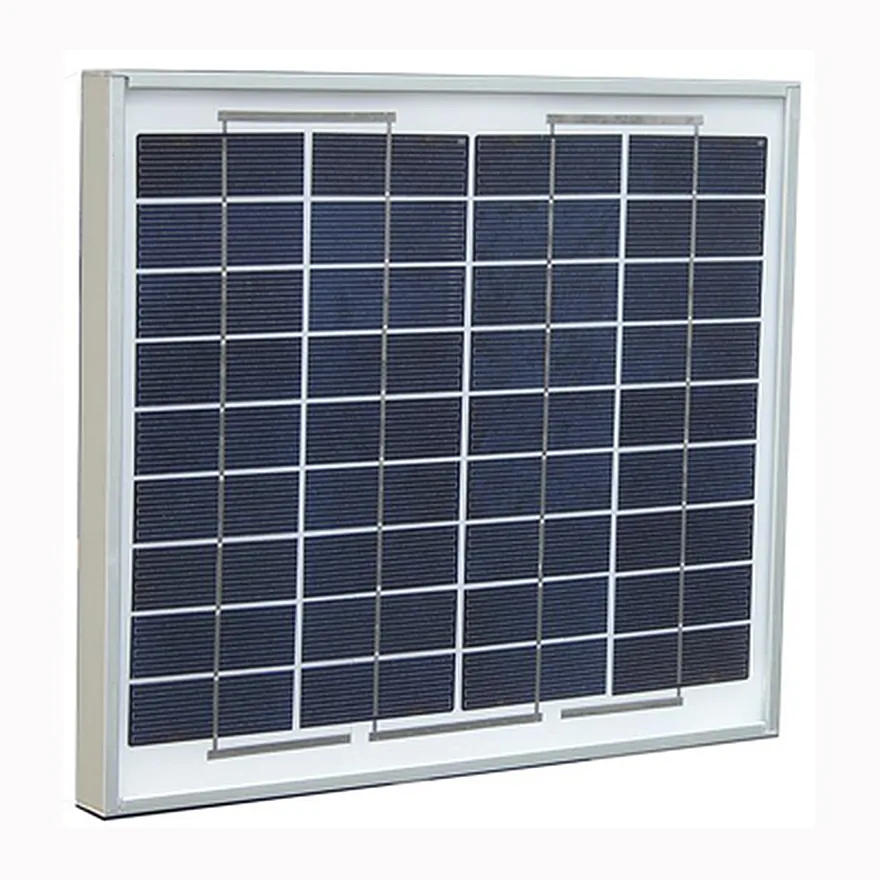 BSM010P-T
BSM010P-T 10 W Multicrystalline Solar Module
A 10 W 12 V module at 9.5 % efficiency with a 9.8 ft open-end cable.
View details →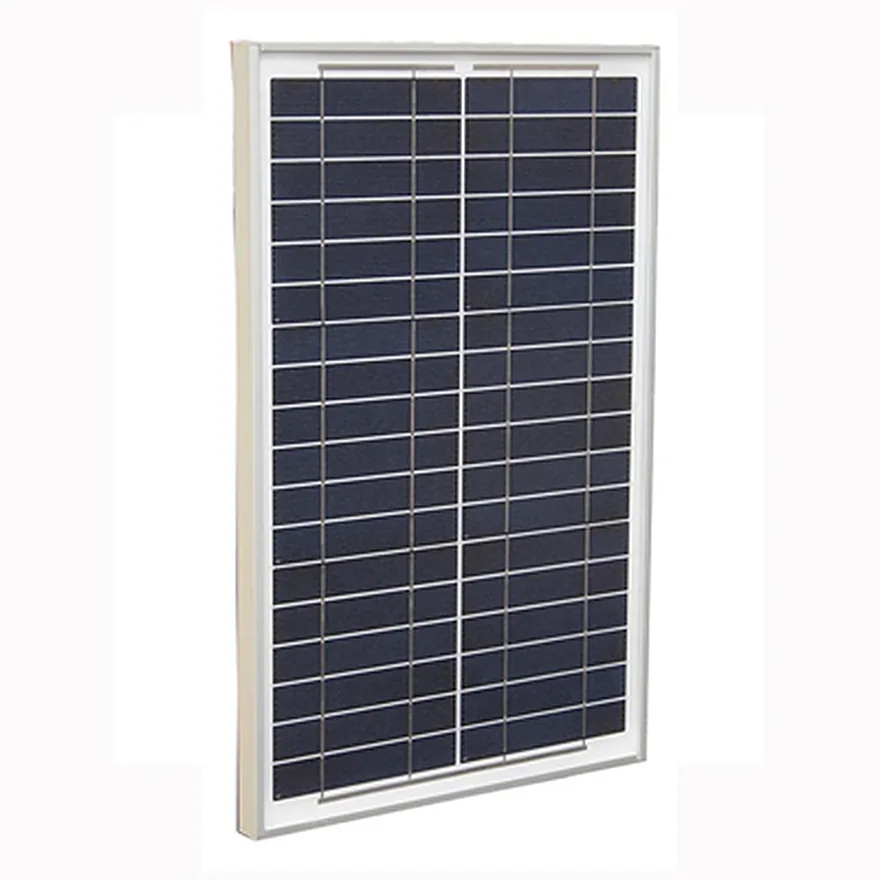 BSM020P-T
BSM020P-T 20 W Multicrystalline Solar Module
A 20 W 12 V multicrystalline module, 10.0 % efficient, with a 36-cell 2 × 18 layout.
View details →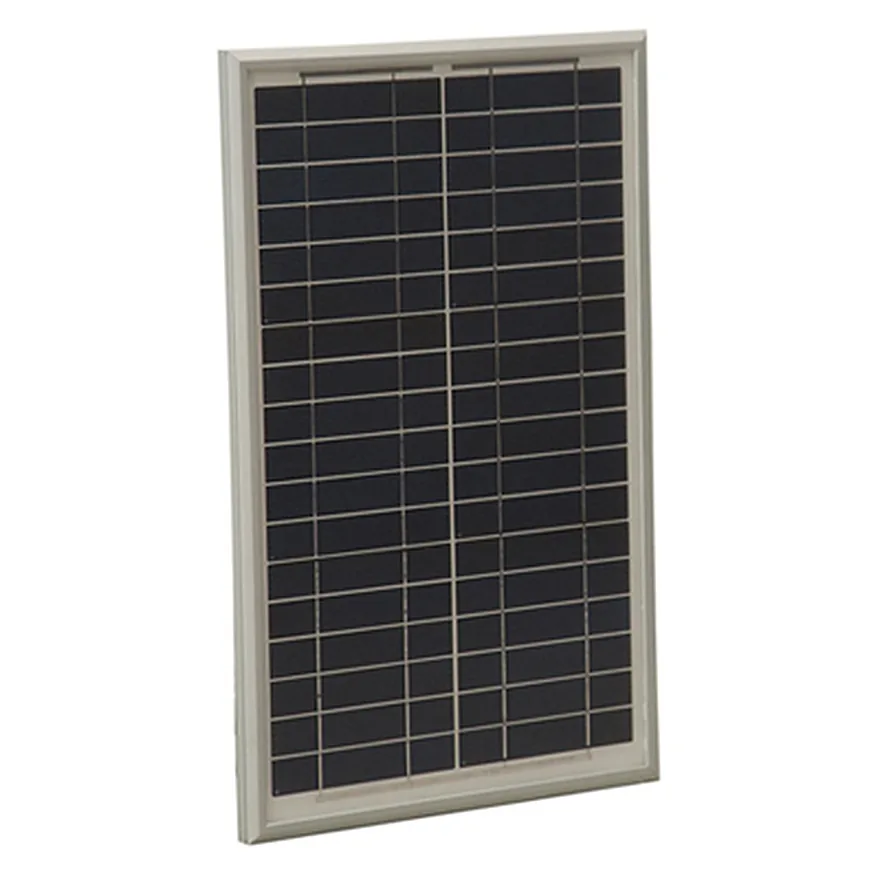 BSM020P-N
BSM020P-N 20 W Multicrystalline Solar Module
The 24 V nominal 20 W module — 68 cells, 41.3 V open circuit, 10.38 % efficient.
View details →Questions
Frequently Asked Questions
How can we get electricity from the sun?
Sunlight is made up of photons. When photons strike a PV cell they may be reflected or absorbed or pass right through; only the absorbed photons generate electricity, by transferring their energy to an electron in an atom of the semiconductor.
Why does module efficiency vary so much across a range?
Efficiency is the proportion of incident energy converted. It depends on cell type and on how much of the module area is active cell rather than frame — which is why a small 5 W panel publishes 6.5 % and a 45 W panel publishes 13.10 %.
Does temperature affect output?
Every module here is rated −40 °C to +85 °C operating temperature. Keeping an air gap under a roof-mounted panel is part of why our mounts are shaped the way they are.
Keep reading
More From the Knowledge Centre
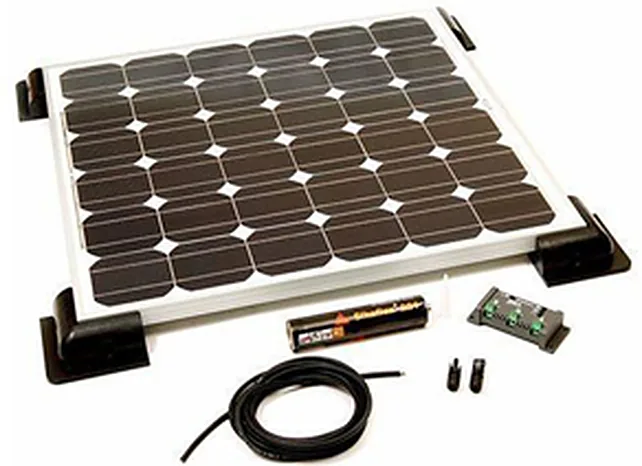
The Three Parts of a Motorhome Solar Battery Charging System
Panel, regulator, battery — what each one does and why you cannot skip the middle one.
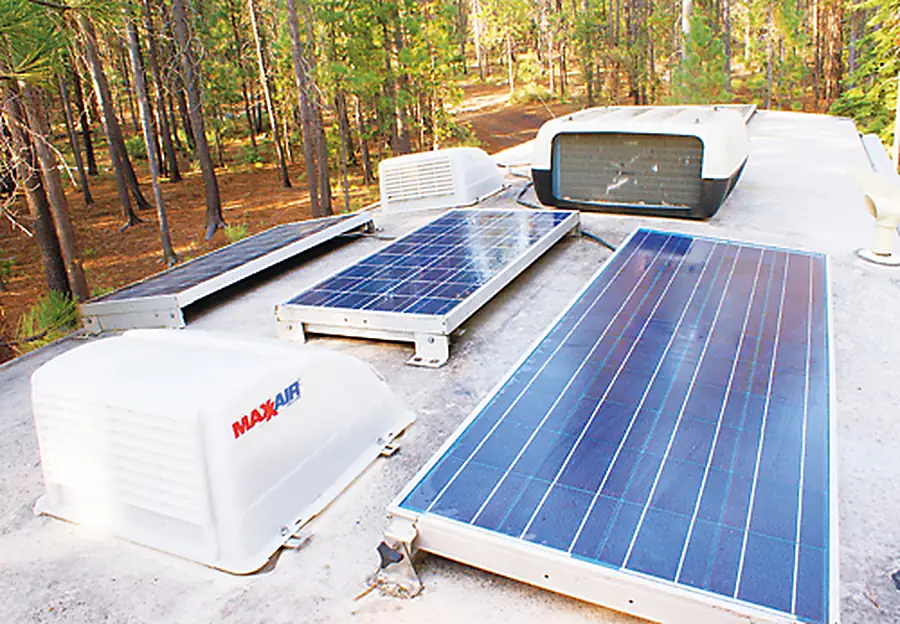
Sizing a Solar Panel for an RV
Count the loads first, then pick the module — not the other way round.
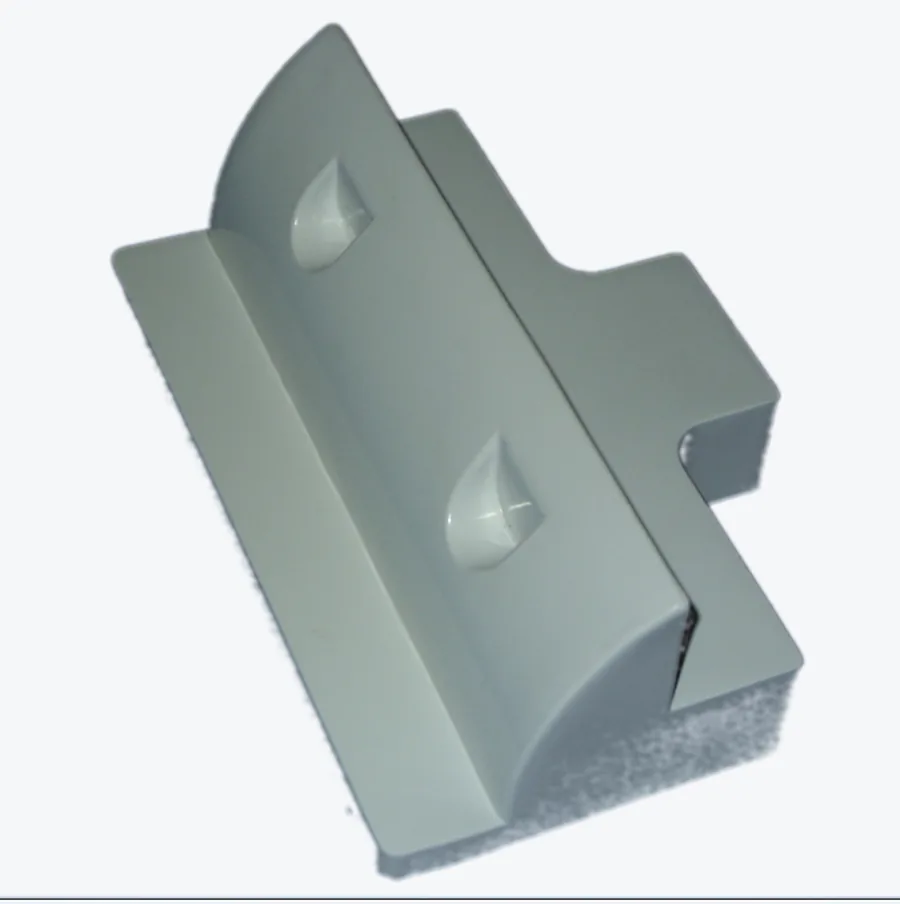
No Drill Adhesive Mounting for Caravan Roofs
The reasoning behind the ABS range, and what changed when white was added.
Question This Guide Did Not Answer?
Send it to us. We answer technical questions about mounting, sealing and module selection whether or not there is an order attached.