
Laboratory Jack
Laboratory jack is a small up and down lifting mechanical equipment specially designed for the laboratory. The upper and lower sides are flat and smooth, and can withstand small laboratory instruments and glass products. Turn the knob to drive the extension and contraction of the internal support rod of the lifting...
Introduction
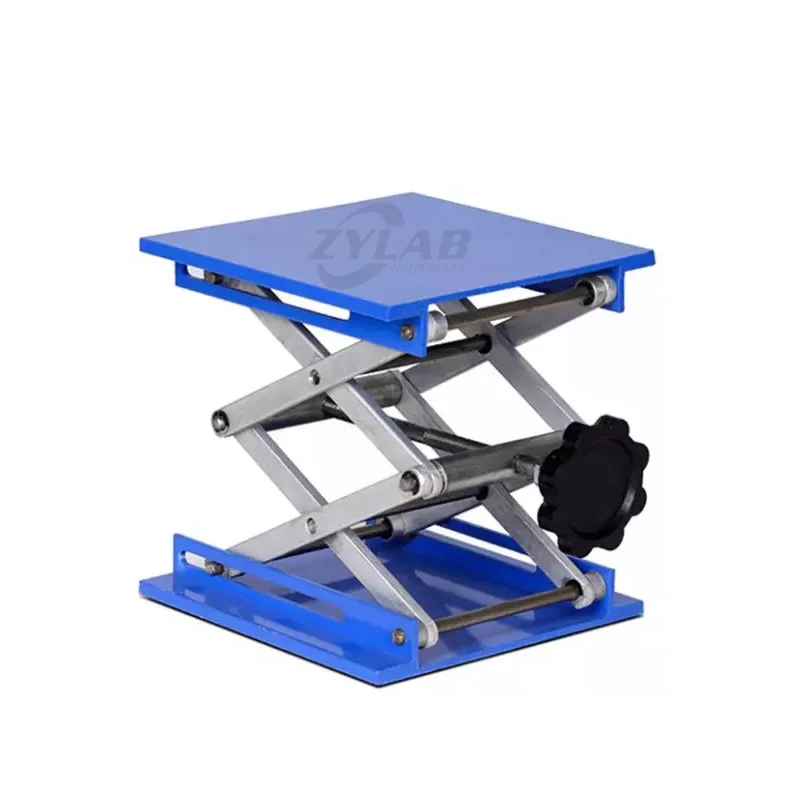
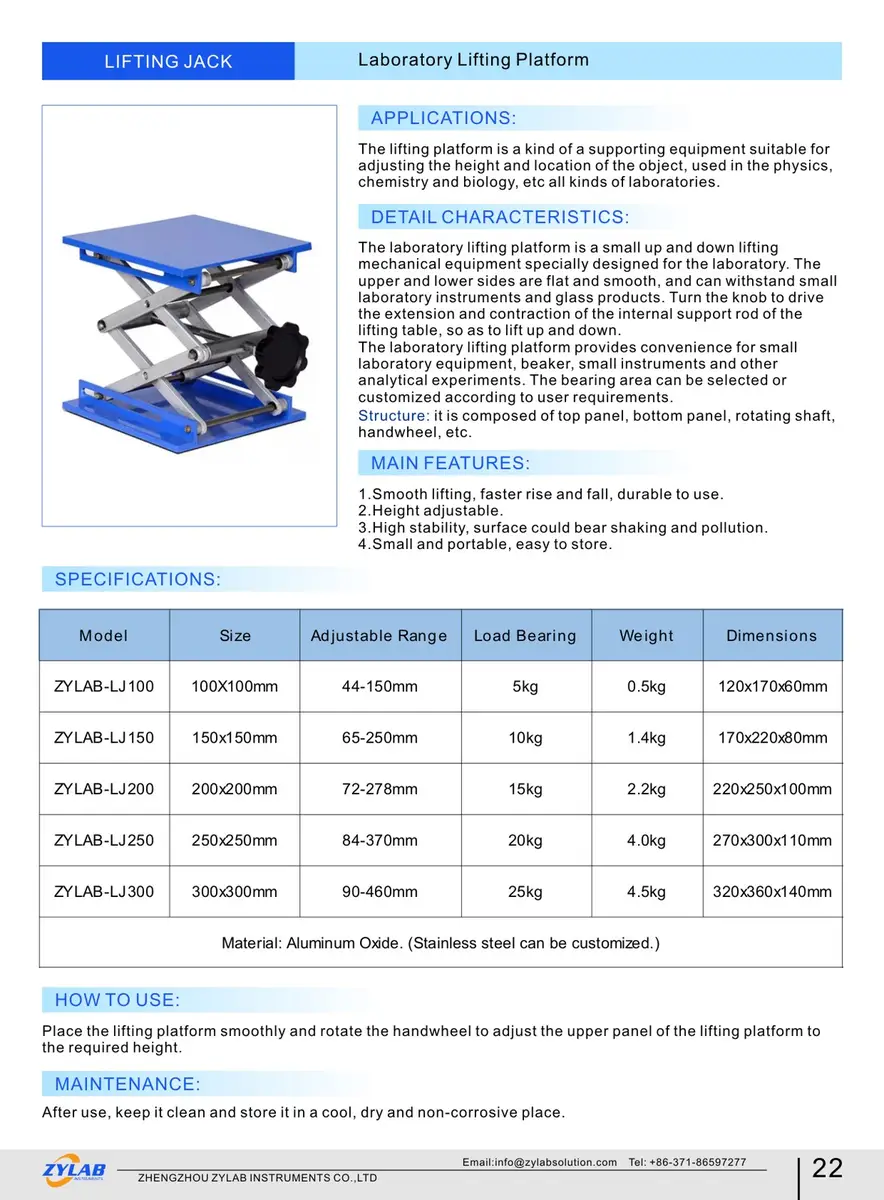
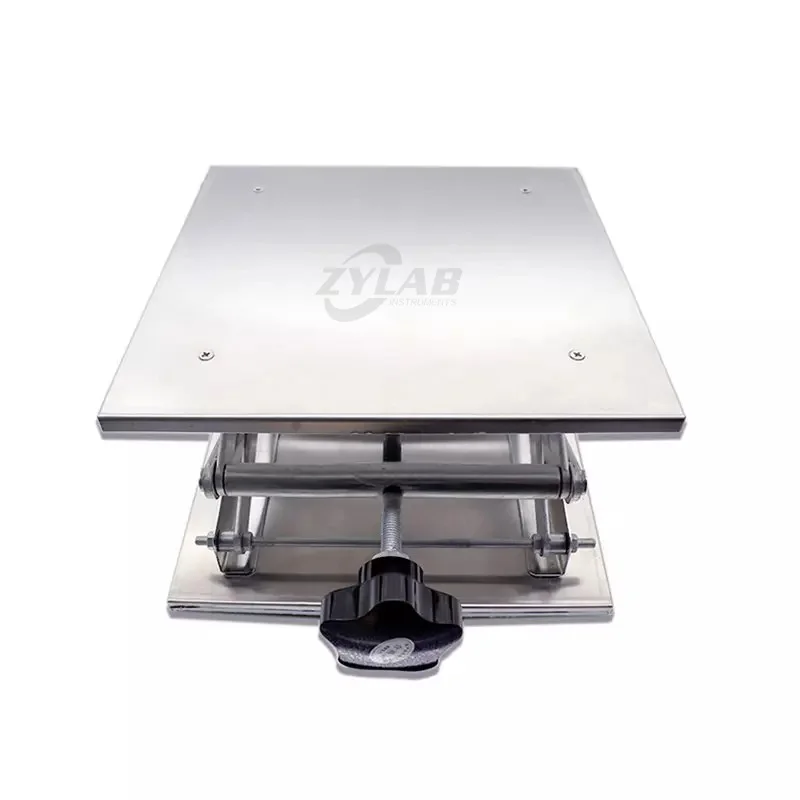
Laboratory jack is a small up and down lifting mechanical equipment specially designed for the laboratory. The upper and lower sides are flat and smooth, and can withstand small laboratory instruments and glass products. Turn the knob to drive the extension and contraction of the internal support rod of the lifting table, so as to lift up and down.
The laboratory jack provides convenience for small laboratory equipment, beaker, small instruments and other analytical experiments. The bearing area can be selected or customized according to user requirements.
Structure
It is composed of top panel, bottom panel, rotating shaft, handwheel, etc.
Main Features
1. Smooth lifting, faster rise and fall, durable to use.
2. Height adjustable.
3. High stability, surface could bear shaking and pollution.
4. Small and portable, easy to store.
Applications of Laboratory Jack
Laboratory jacks, also known as lab jacks or lab lifts, are versatile pieces of equipment commonly found in laboratories. THere are some common applications of laboratory jacks:
Adjusting Equipment Height
Laboratory jacks are often used to elevate various pieces of lab equipment to a desired height. This could include raising hot plates, stirring platforms, or other instruments to an appropriate level for experimental setup or operation.
Supporting Apparatus
Lab jacks can provide stable support for a variety of apparatus, such as glassware setups, reaction vessels, or distillation setups. By adjusting the height of the jack, researchers can ensure proper alignment and stability during experiments.
Optical Experiments
In optical experiments, precise positioning of components like lenses, mirrors, and light sources is crucial. Laboratory jacks allow researchers to finely adjust the height and position of optical elements to achieve the desired experimental setup.
Microscopy
Laboratory jacks are often used in microscopy setups to adjust the height of the microscope stage or to position specimens and slides for viewing. This ensures that samples are properly focused and centered under the microscope objective.
Heating and Cooling
Lab jacks can be used to raise or lower heating mantles, hot plates, or cooling baths to control the temperature of reactions or samples. By adjusting the height, researchers can regulate the heat transfer or cooling efficiency of the equipment.
Electrochemistry
In electrochemical experiments, laboratory jacks may be used to position electrodes, reference electrodes, and other components relative to the electrolyte solution. Precise height adjustment is essential for achieving accurate and reproducible results in electrochemical measurements.
Material Characterization
Laboratory jacks are used in material characterization techniques such as X-ray diffraction (XRD), X-ray fluorescence (XRF), and atomic force microscopy (AFM) to position samples or detectors at the desired height or angle for analysis.
Educational Demonstrations
Laboratory jacks are commonly used in educational settings to demonstrate principles of physics, such as mechanical advantage, force, and motion. They can be used to lift various objects or to illustrate concepts like equilibrium and stability.
Overall, laboratory jacks are essential tools in the laboratory, providing precise height adjustment and support for a wide range of experimental setups and applications. Their versatility makes them indispensable for researchers, technicians, and educators alike.
FAQ
1. How to use?
Place the lifting platform smoothly and rotate the handwheel to adjust the upper panel of the lifting platform to the required height.
2. How to Maintenance?
After use, keep it clean and store it in a cool, dry and non-corrosive place.
Specifications
Figures below are the manufacturer data for this model. Anything not listed is confirmed in writing with the quotation rather than estimated here.
| Model | Size | Adjustable Range | Load Bearing | Weight | Dimensions |
|---|---|---|---|---|---|
| ZYLAB-LJ100 | 100X100mm | 44-150mm | 5kg | 0.5kg | 120x170x60mm |
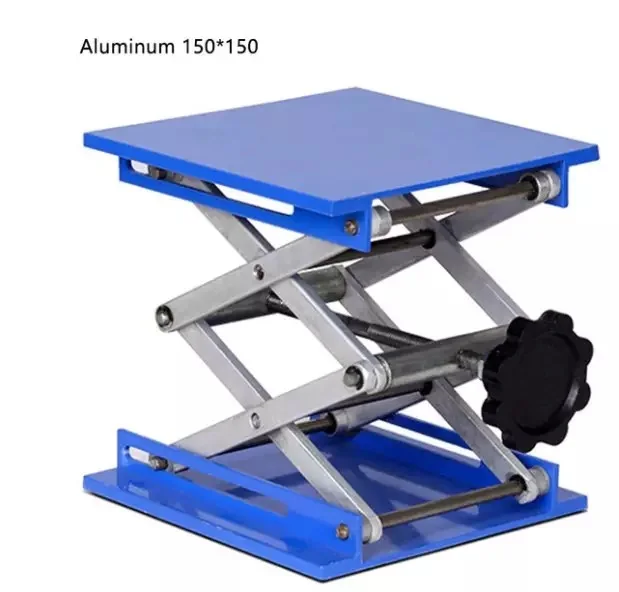
| ZYLAB-LJ150 | 150x150mm | 65-250mm | 10kg | 1.4kg | 170x220x80mm |
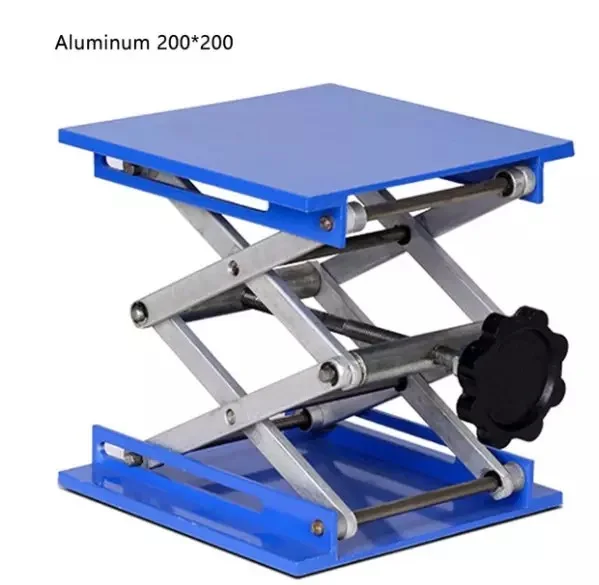
| ZYLAB-LJ200 | 200x200mm | 72-278mm | 15kg | 2.2kg | 220x250x100mm |
| ZYLAB-LJ250 | 250x250mm | 84-370mm | 20kg | 4.0kg | 270x300x110mm |
| ZYLAB-LJ300 | 300x300mm | 90-460mm | 25kg | 4.5kg | 320x360x140mm |
| Material: Aluminum Oxide. (Optional: Stainless Steel) |
Laboratory Jack In Detail
Processes This Unit Supports
These are the applications ZYLAB lists this model under. Each link opens the full equipment set for that process, which is useful when a project needs more than one machine.
- General laboratory sample preparation
Who Orders It
Fields this model already works in, plus what ZYLAB puts behind it: a 2-year warranty on most products, glass excluded, spare parts in stock and free application support by WhatsApp or email.
Related Equipment
Models from the same family and the same processes, in case a different chamber size or temperature range fits better.
Ordering Laboratory Jack
What is Laboratory Jack typically used for?
Laboratory jack is a small up and down lifting mechanical equipment specially designed for the laboratory. The upper and lower sides are flat and smooth, and can withstand small laboratory instruments and glass products. Turn the knob to drive the extension an
Can Laboratory Jack be customised for our process?
Yes. Chamber or tube size, temperature profile, atmosphere, gas path, control system and data recording can all be adapted. Send us your process conditions and sample details and our engineers work out a configuration with you.
What warranty comes with Laboratory Jack?
Most ZYLAB products carry a 2-year warranty, glass components excluded; the exact term for this model is the one printed in its specification table and repeated on the quotation. Within the warranty period any part that fails through no misuse of your own is replaced free of charge.
How can we pay for Laboratory Jack?
Bank (wire) transfer, letter of credit for larger orders, major credit and debit cards, and PayPal. Bank details are printed on the invoice; send us the transfer confirmation and we start processing straight away.
How is Laboratory Jack packed for export?
Packing is chosen for the safety of the machine against freight cost, typically a plywood or wooden crate with internal padding and vacuum-sealed accessories. Export documents such as Form A, Form E and Form F can be issued to help you save duty.
Quote For Laboratory Jack
Tell us the sample, the temperature and the atmosphere. You get the configuration, the price and the despatch date in one reply.