
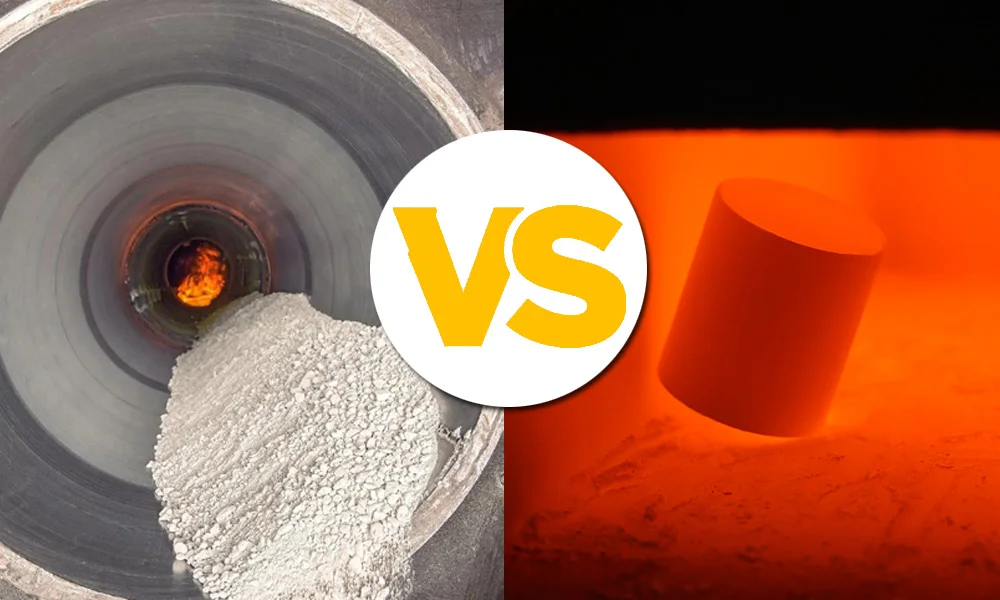
The Differences Between Calcination and Sintering Processes
Calcination (Calcination) and sintering (Sintering) are two common high-temperature processes. Although both involve heating, their purposes, temperatures, processes, and results differ significantly.
- LaboratoryThermal ProcessingApplications of Calcination and SinteringCalcination and SinteringCalcination and Sintering for Material Science2024-12-02
Table of Contents
Calcination (Calcination) and sintering (Sintering) are two common high-temperature processes. Although both involve heating, their purposes, temperatures, processes, and results differ significantly. Below are their key distinctions:
Definition and Purpose
Calcination:
Definition: Calcination involves heating solid materials (usually ores or powders) to high temperatures to remove volatile components such as moisture, CO₂, or other volatiles, altering the chemical composition.
Purpose: The primary goal is to remove moisture, volatiles, or oxides, causing physical or chemical changes. For example, limestone calcination produces calcium oxide (CaO) and carbon dioxide (CO₂).
Sintering:
Definition: Sintering heats granular materials to a high temperature, causing diffusion and bonding between particles, forming a solid mass without melting.
Purpose: The goal is to create material transfer and bonding between particles, resulting in a denser structure with improved mechanical strength and stability. This is commonly used in metallurgy, ceramics, and powder metallurgy.
Temperature Range
Calcination: Typically occurs at lower temperatures, ranging from 500°C to 1000°C, depending on the material.
Sintering: Takes place at higher temperatures, usually between 1000°C and 2000°C, tailored to the material type and desired properties.
Material Changes During the Process
Calcination: Focuses on the removal of substances (e.g., water, gases, or volatiles) and may involve chemical changes.
Examples:
- Decomposition of limestone to produce calcium oxide and CO₂.
- Activating ores by altering their structure for easier decomposition, e.g., microwave activation of bentonite.
- Removing impurities like organics or adsorbed water, as in dehydroxylation of kaolinite.
- Crystalline transformation, such as roasting titanium dioxide or molecular sieves.
Sintering: Involves physical changes where particles bond through diffusion and contact, creating a solid, denser material without chemical reactions.
Examples:
In sintering chromium-iron spinel, adding sodium salts reduces its melting point, making it easier to fuse.
The presence of sodium salts facilitates oxidation, converting it into water-soluble sodium chromate clinkers.
Post-sintering, the material exhibits high strength, uniform grain size, and excellent high-temperature resistance.
Calcination Furnace
Click to view the high-efficiency calcination rotary furnace working video.
Application Fields
Calcination:
- Metal ore extraction (e.g., limestone calcination to produce lime).
- Pre-treatment of ceramic materials (e.g., moisture removal and oxidation).
- Chemical industry applications (e.g., alumina and titanium dioxide preparation).
Sintering:
- Powder metallurgy (e.g., metal and ceramic sintering).
- Production of magnetic materials.
- Material consolidation in 3D printing (additive manufacturing).
Final Results
Calcination: Results in chemical composition changes (e.g., oxidation or dehydration), while the physical form may not significantly change.
Sintering: Results in particle bonding to form a solid mass with improved mechanical strength and stability, accompanied by significant changes in physical structure.
Summary
Calcination: Primarily removes volatile components and alters chemical composition, suitable for minerals and metal raw materials.
Sintering: Bonds particles into dense solid masses, suitable for powder metallurgy, ceramics, and material shaping.
Share this entry
You might also like
Related ZYLAB Products
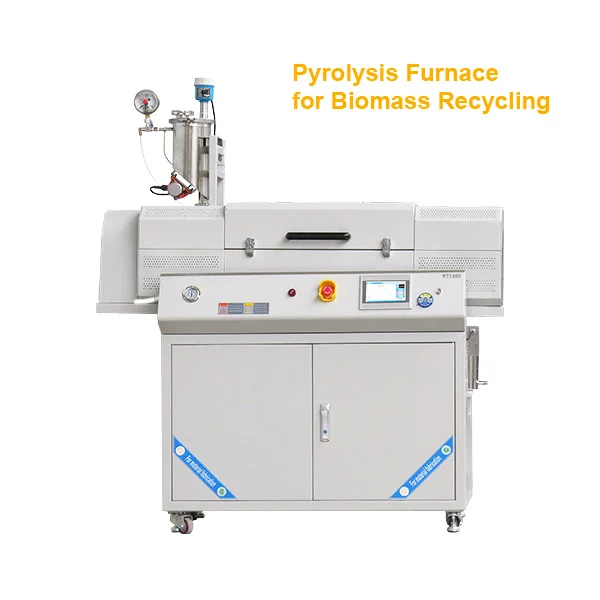
Advanced Continuous Pyrolyzers for Biomass and Organic Solid Waste Thermal Processing & Sintering
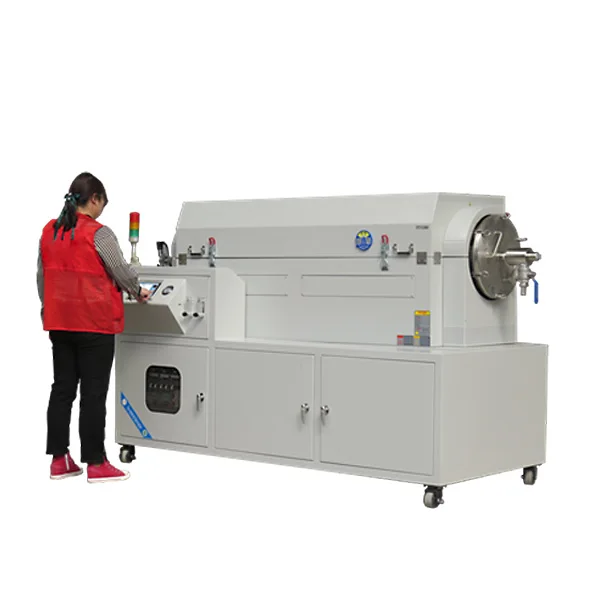
Rotary Powder Calcination Furnace for Battery Material Processing
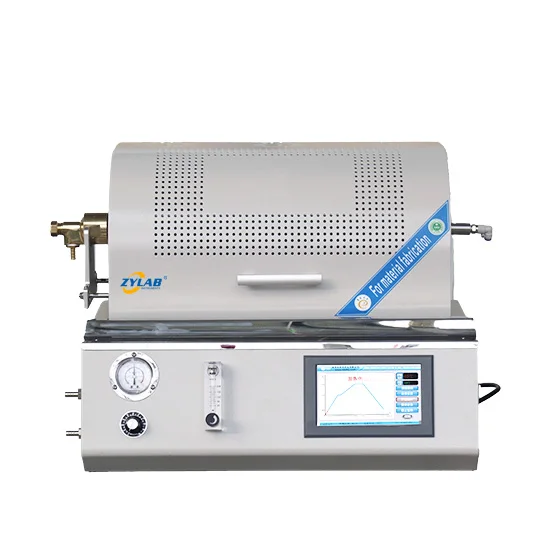
Laboratory Mini Rotary Oscillating Tube Furnace for Powder & Granular Material Calcination
4.5L Muffle Furnace – Precision 1200°C Laboratory Furnace for Thermal Processing
Working With ZYLAB On A Project Like This
Can The Differences Between Calcination and Sintering Processes be customised for our process?
Yes. Chamber or tube size, temperature profile, atmosphere, gas path, control system and data recording can all be adapted. Send us your process conditions and sample details and our engineers work out a configuration with you.
How quickly can The Differences Between Calcination and Sintering Processes be shipped?
Most standard ZYLAB models are held in stock. After testing and packing we normally ship The Differences Between Calcination and Sintering Processes within 3 to 7 days. Customised builds are scheduled after the drawing is confirmed, and we give you the date in writing before the order is placed.
How is The Differences Between Calcination and Sintering Processes packed for export?
Packing is chosen for the safety of the machine against freight cost, typically a plywood or wooden crate with internal padding and vacuum-sealed accessories. Export documents such as Form A, Form E and Form F can be issued to help you save duty.
Can you supply items that are not on this page?
Yes. We have access to the complete lines of most of our suppliers and build custom equipment in our own factory, so tell us what the experiment needs and we will source or make it.
Have A Similar Requirement
Describe the material, the temperature and the throughput you need and an engineer will answer with a workable configuration.