
Working Principle and Application of Sieve Shaker: How to Optimize Particle Size Analysis in the Laboratory?
A sieve shaker is a laboratory instrument used for particle size analysis, separation, and classification of granular materials. It is compact, low-noise, and capable of precisely separating granular materials into 2 to 7 particle size fractions.
- Powder ProcessingApplication of Sieve ShakerApplication of Sieve Shaker in LaboratoriesApplication of Sieve Shaker in Mining and MetallurgyApplication of Sieve Shaker in Pharmaceutical Industry2024-11-01
What Is a Sieve Shaker?
A sieve shaker is a laboratory instrument used for particle size analysis, separation, and classification of granular materials.
It uses a series of sieves with different mesh sizes to divide particles into various size fractions, widely applied in quality control, research, and product development across industrial and laboratory settings.
Working Principle
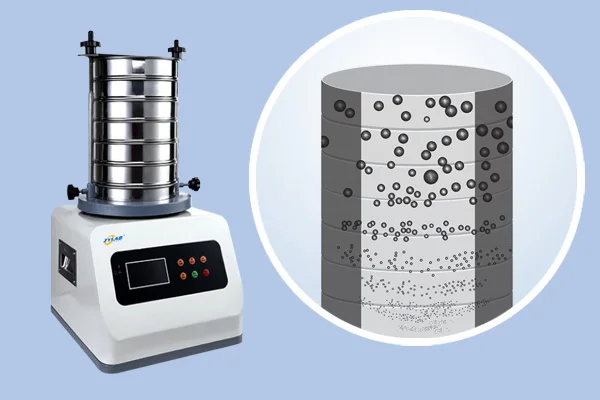
The core principle of a sieve shaker is vibration screening.
The device uses a vibrating motor to generate vibrations that are transferred to the base, which then transmits them to the standard test sieves placed on top. When material is added to the sieve stack, smaller particles pass through the sieve mesh to the lower layers, while larger particles remain on the upper layers. This process continues layer by layer, resulting in each sieve layer retaining only particles of the same size.
This classification method enables precise separation by particle size and provides data support for subsequent particle size distribution analysis.
Advantages
Sieve shakers offer numerous advantages, making them essential equipment in laboratories and industries:
- Efficiency: Well-designed to quickly and effectively sieve various powders or liquids.
- Durability: Built with high-quality materials, ensuring long-term use.
- Compactness: Small in size, saving space, and easy to move and operate.
- Multi-Layer Sieving: Accommodates up to 7 sieve layers, accurately separating granular materials into 2 to 7 particle size fractions.
- Automatic Timing: Built-in timer for convenient operation, ensuring experimental repeatability.
- Low Noise: Operates quietly, ideal for laboratory environments.
- Diverse Sieve Materials: Available with nylon or stainless steel sieves to meet different sample requirements.
- Ultrasonic Option: Optional ultrasonic function for sieving ultra-fine powders.
Application of Sieve Shaker
Sieve shakers have a wide range of applications across multiple industries, catering to different particle material screening needs:
- Pharmaceutical Industry: Used for screening drug powders and quality control, ensuring consistent particle size distribution in drug formulations, which affects drug release and absorption.
- Chemical Industry: Applied for grading powders and particles to ensure size consistency in chemical batches; additionally, in catalyst screening, it ensures catalysts have appropriate particle sizes to optimize reaction rates.
- Food Industry: Utilized for sieving ingredients such as flour, spices, and sugar to ensure uniform particle size, thereby enhancing product quality.
- Construction Industry: Screens aggregates like sand and gravel for concrete and asphalt production; the particle size distribution of cement and lime affects their mixing effectiveness.
- Mining and Metallurgy: Ensures size consistency of processed raw materials during the grading of ores, minerals, and coal.
- Environmental Science: In soil analysis, sieve shakers determine the size distribution of soil particles, assisting in the study of soil structure in agriculture and the environment.
- Cosmetic Industry: Used for particle size grading and quality control of powdered cosmetics, ensuring consistency in raw materials and final products.
- Ceramics and Glass: Screens raw materials to ensure uniform particle size in ceramics and glass products.
- Nanotechnology: Critical for particle size analysis of nanoparticles in the research and development of nanomaterials, ensuring precise size distribution.
- Academic and Research Laboratories: Sieve shakers are used for particle size analysis and classification studies of various materials, helping researchers and students understand the principles of material separation.
Choosing a Sieve Shaker
When selecting a sieve shaker, you can refer to the following points to ensure the equipment meets your actual needs:
Sieve Diameter
Choose an appropriate sieve diameter based on the particle size range of the samples. Common specifications include 20mm, 30mm, 40mm, and 60mm.
Number of Sieve Layers
The sieve shaker supports configurations of up to 7 layers of sieves. Choose the number of layers based on the complexity of the sample’s particle sizes.
Sieve Material
Select the appropriate sieve material based on the chemical properties of the samples. Nylon sieves are suitable for general materials, while stainless steel sieves are appropriate for high-temperature or corrosive samples.
Ultrasonic Function
If sieving extremely fine powders, consider models with ultrasonic functionality to prevent particle clogging and further enhance sieving accuracy.
As an efficient laboratory tool, the sieve shaker is suitable for various particle size analysis and screening needs. A careful evaluation of specific requirements in experiments or production will help optimize screening efficiency and improve the level of quality control for products.
ZYLAB One-stop Powder Processing Solutions
At ZYLAB, we offer comprehensive one-stop powder solutions tailored for research needs, including crushing, grinding, mixing, sieving, forming, sintering, etc. To learn more about advanced powder processing techniques and their applications, check out our article here.
Share this entry
You might also like
Related ZYLAB Products
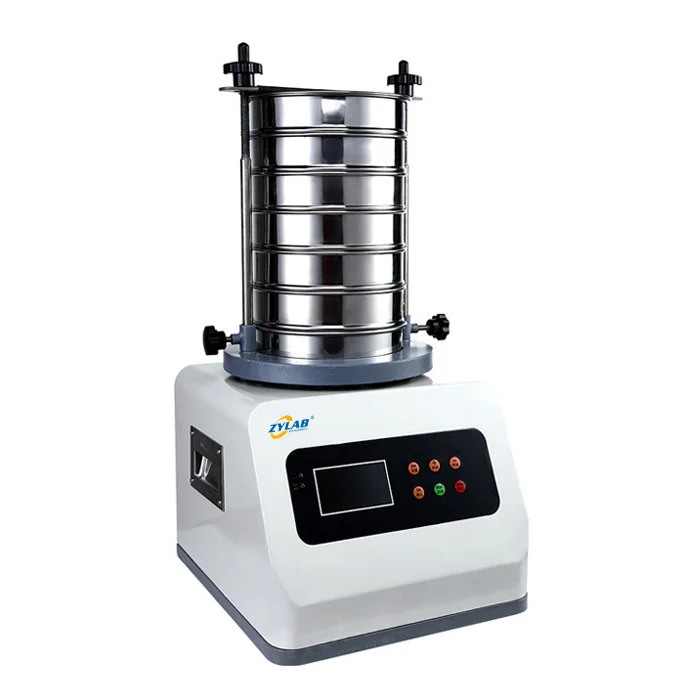
Laboratory Tabletop Sieve Shaker for Particle Size Analysis – Compatible with 8″ Sieves
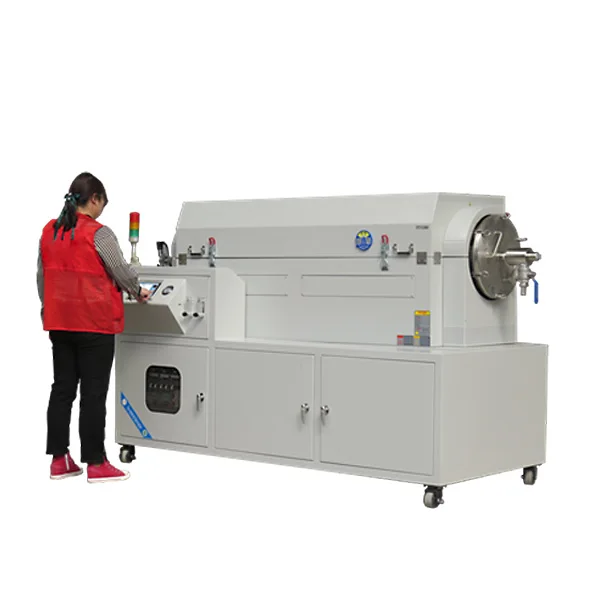
Rotary Powder Calcination Furnace for Battery Material Processing
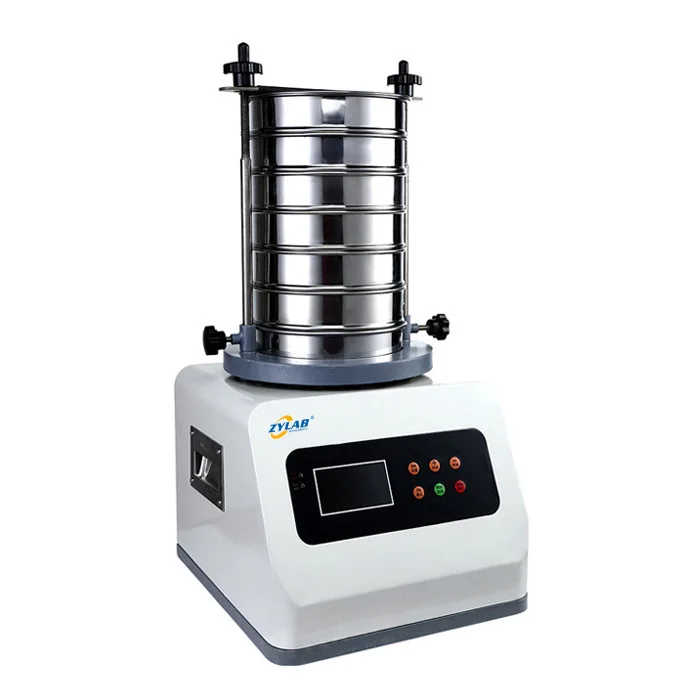
High-Efficiency Lab Bench-top Sieve Shaker (Dia 200/300/400mm) for Accurate Material Separation
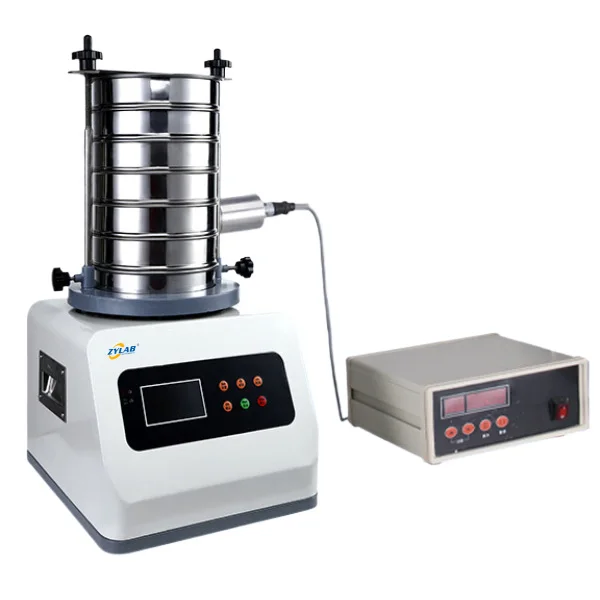
Lab Sieve Shaker with Ultrasonic Generator for Ultrafine Powder
Working With ZYLAB On A Project Like This
Can Working Principle and Application of Sieve Shaker: How to Optimize Par be customised for our process?
Yes. Chamber or tube size, temperature profile, atmosphere, gas path, control system and data recording can all be adapted. Send us your process conditions and sample details and our engineers work out a configuration with you.
How quickly can Working Principle and Application of Sieve Shaker: How to Optimize Par be shipped?
Most standard ZYLAB models are held in stock. After testing and packing we normally ship Working Principle and Application of Sieve Shaker: How to Optimize Par within 3 to 7 days. Customised builds are scheduled after the drawing is confirmed, and we give you the date in writing before the order is placed.
How is Working Principle and Application of Sieve Shaker: How to Optimize Par packed for export?
Packing is chosen for the safety of the machine against freight cost, typically a plywood or wooden crate with internal padding and vacuum-sealed accessories. Export documents such as Form A, Form E and Form F can be issued to help you save duty.
Can you supply items that are not on this page?
Yes. We have access to the complete lines of most of our suppliers and build custom equipment in our own factory, so tell us what the experiment needs and we will source or make it.
Have A Similar Requirement
Describe the material, the temperature and the throughput you need and an engineer will answer with a workable configuration.