
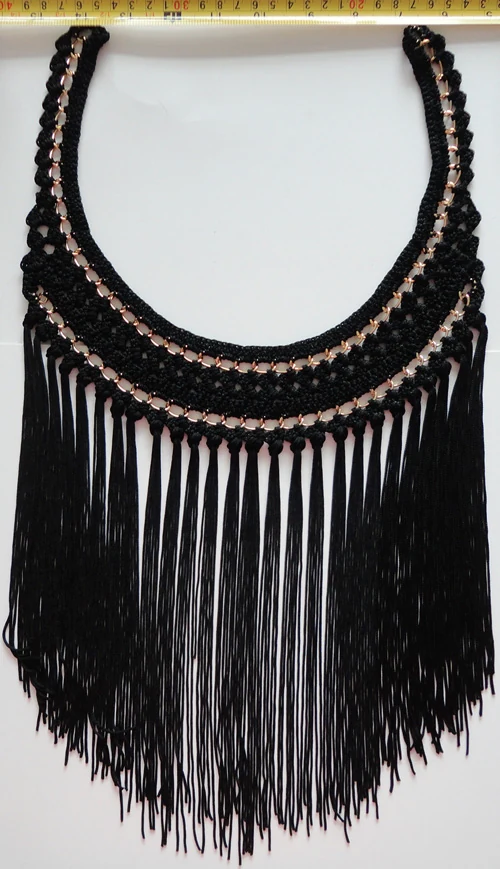
From Your Sketch To An Approved Trim Sample
We welcome customers who send their own designs for development. This page describes what happens between the moment you email a sketch and the moment you hold a sample you can approve.
How This Works In Practice
- 1
Brief
You send a sketch, a photograph or a physical swatch, plus the garment it is for, the critical dimension and the target market.
Unclear briefs are the main cause of a wasted sample round.
- 2
Feasibility
We confirm which technique fits: machine crochet, hand beading, embroidery, hot fix or a fabric corsage. Some designs change technique at this point because the original idea cannot hold at production volume.
A design that only works by hand will cost and behave differently from one a machine can run.
- 3
Material Selection
Base cloth, thread, stones, metal parts and backing are chosen. If the market requires nickel free or lead and AZO free material, it is specified here rather than after inspection.
Compliance decided late is the most expensive kind of change.
- 4
Sampling
A physical sample is produced and sent for your approval, with the size measured the way the catalogue measures it, across the widest point.
Screens do not show scale or hand. A physical sample settles both.
- 5
Approval
You approve, or you mark the changes and we resample. The approved sample becomes the physical standard for the bulk run.
Without a retained standard, bulk drifts and no one can prove it.
- 6
Coding
The approved design is given an item code so you can reorder it next season without redrawing anything.
A code is what makes a trim repeatable.
Where This Applies
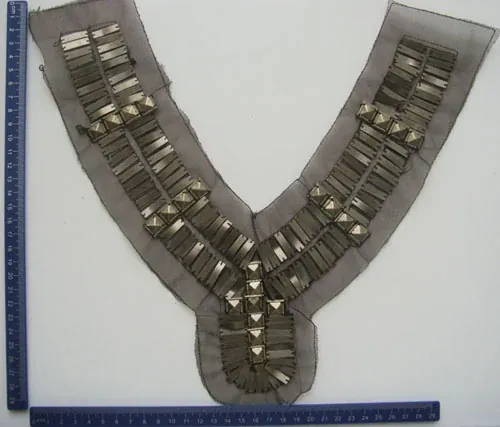
Hand Beading Collars And Motifs
Beads and stones applied by hand onto a base cloth, for collars and motifs where a machine cannot place the pattern.
View the range →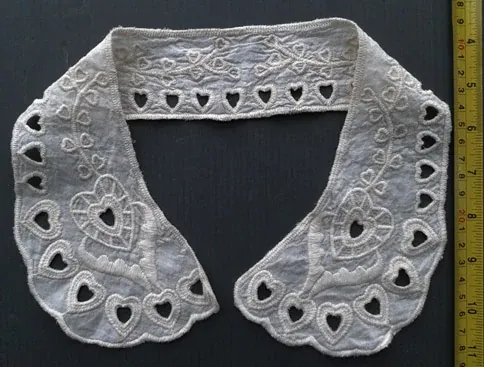
Machine Crochet Collars
Crochet collars produced on machine, the largest category in our catalogue, with hundreds of patterns available by item code.
View the range →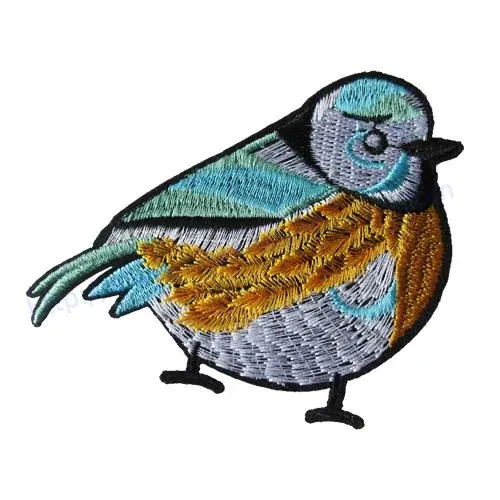
Plain Embroidery Patches
Rayon polyester embroidery badges that iron on or sew on, supplied in a wide range of widths so one design can run across several garment sizes.
View the range →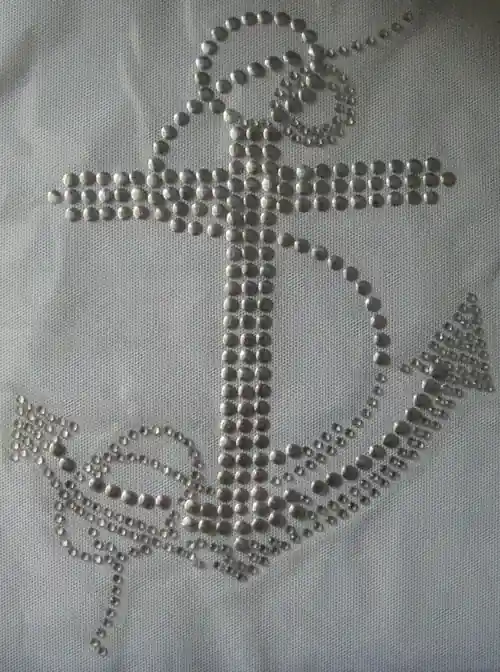
Hot Fix Rhinestone Motifs
Rhinestone and stud motifs pre arranged on transfer, applied to the garment with a heat press instead of stitching.
View the range →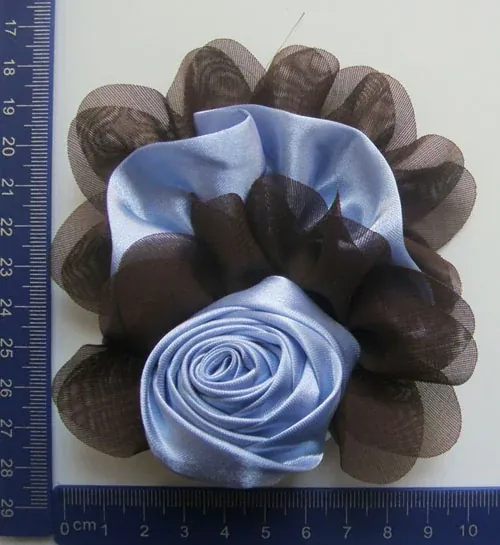
Fashion Corsages
Fabric flower and bow corsages that sew on or attach to a pin, measured across the widest point and customised in material and colour.
View the range →Custom Design Development Questions
Do you develop designs sent by customers
Yes. We welcome customers who send their own designs for development, and buyer artwork is used only for that buyer.
What should I send with the design
The artwork, the garment it is for, the critical dimension, the colour reference and the target market.
How many sample rounds are normal
Simple trims are often right on the first sample. Hand beading and mixed material pieces usually take two.
Who owns the design
You do. A design developed for a customer is not offered to other customers.
Custom Design Development Starts With One Email
Send the brief, the artwork if you have it, and the market the goods ship to. You will get a straight answer on technique, sampling time and price.