

Troubleshooting
Signs an Air Strut or Compressor Is Failing
The symptoms that point to a leaking air spring, a worn compressor or a valve block fault, and how to tell them apart before ordering parts.
The Vehicle Sits Down Overnight
A corner or a whole axle low in the morning that lifts again after the engine runs is the classic leaking air spring symptom. If a single corner drops, suspect that corner's air spring or its valve. If both corners on one axle drop, suspect the axle valve in the valve block or a shared line.
A useful workshop check is to spray a dilute soap solution around the air sleeve, the crimped collars at each end and the air line fitting while the system is pressurised, then look for bubbles.
The Compressor Runs Long or Runs Often
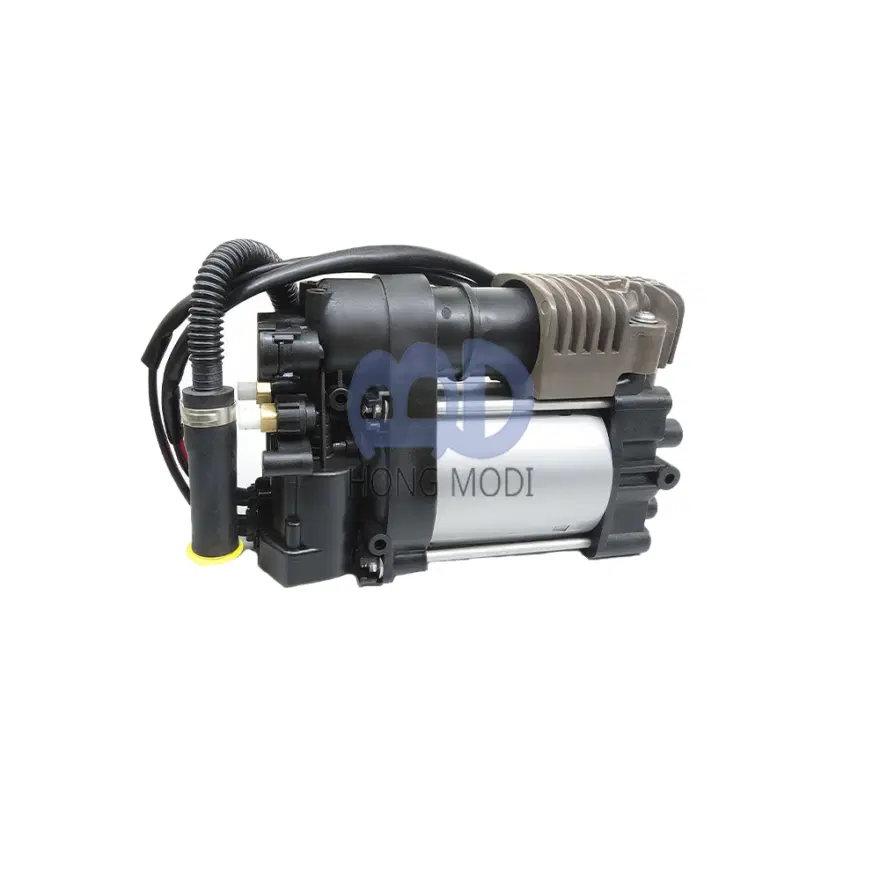
A healthy compressor runs briefly at start-up and after load changes. A compressor that runs for a minute or more, or that cycles repeatedly at rest, is working against a leak somewhere in the system.
A compressor that has been doing that for months is usually worn even if it still builds pressure. Listen for a rattling or grinding note, and check whether the housing is unusually hot after a levelling cycle.
Fault Codes and Warning Messages
Most systems raise a chassis or suspension warning and drop into a limp behaviour, holding a fixed height or refusing to raise. Read the codes before ordering. A ride height sensor fault, a compressor relay fault and an air spring leak produce different codes and different parts.
Codes point at the circuit, not always at the failed component. A height sensor code can be caused by a broken linkage rather than a failed sensor, and a compressor code can be caused by the relay or the wiring.
Ride Quality Changes
A harsh ride with sharp impacts over expansion joints can indicate an air spring that is no longer holding its designed pressure, or a damper that has failed inside a combined strut. A floating or wallowing ride after a repair often means the system is not achieving the correct target height.
What To Do Before You Order
Identify which corner is affected. Read and record the fault codes. Photograph the reference number on the failed part. Check the compressor's running behaviour, because replacing a strut and leaving an already worn compressor in place is the most common repeat repair on these systems.
Then send us the reference number and the VIN so the correct application can be confirmed.
More Guides
- How To Read an OE Number and Match a Replacement Part
- How an Air Suspension System Works
- Choosing the Right Air Conditioning Compressor
- Diagnosing Control Arm and Tie Rod Wear
- Ignition Coil Failure and How To Confirm It
- Water Pump and Thermostat Replacement Explained
- How To Buy Replacement Auto Parts From a Chinese Supplier
Related Products
Parts Covered by This Guide
FAQ
Questions About Troubleshooting
The compressor is dead. Do I need a strut as well
Very often yes. A compressor that has failed has usually been overworked by a leak. Pressure test the system before assuming the compressor was the root cause.
Can a valve block be repaired instead of replaced
Some blocks respond to cleaning if the fault is contamination, but a solenoid that has failed electrically is not serviceable. Diagnose before ordering.
Will a suspension warning clear itself after replacement
Most systems need the fault memory cleared and, on some platforms, a ride height calibration after a strut or sensor is replaced.
Next Step
Send the Reference and We Will Confirm It
Every enquiry is checked against the catalogue before a price is given.