

Technical Guide
How an Air Suspension System Works
The parts that make up an air suspension system, what each one does, and why a failure in one component quickly loads the others.
The Basic Idea
An air suspension system replaces the steel coil spring with a flexible rubber air sleeve, called an air spring or air bag, that carries the vehicle on a column of compressed air. Because the pressure in that column can be changed on demand, the system can hold a constant ride height whatever the load, and can raise or lower the body for access, ground clearance or high speed stability.
That flexibility is why air suspension appears on large saloons and SUVs from Mercedes-Benz, BMW, Audi, Land Rover, Porsche, Volkswagen and Bentley — and why those are the platforms this catalogue was built around.
The Main Components
Air strut or air spring. The load carrying element. On many vehicles the air sleeve and the damper are combined into one strut assembly; on others the air spring sits separately from the shock absorber.
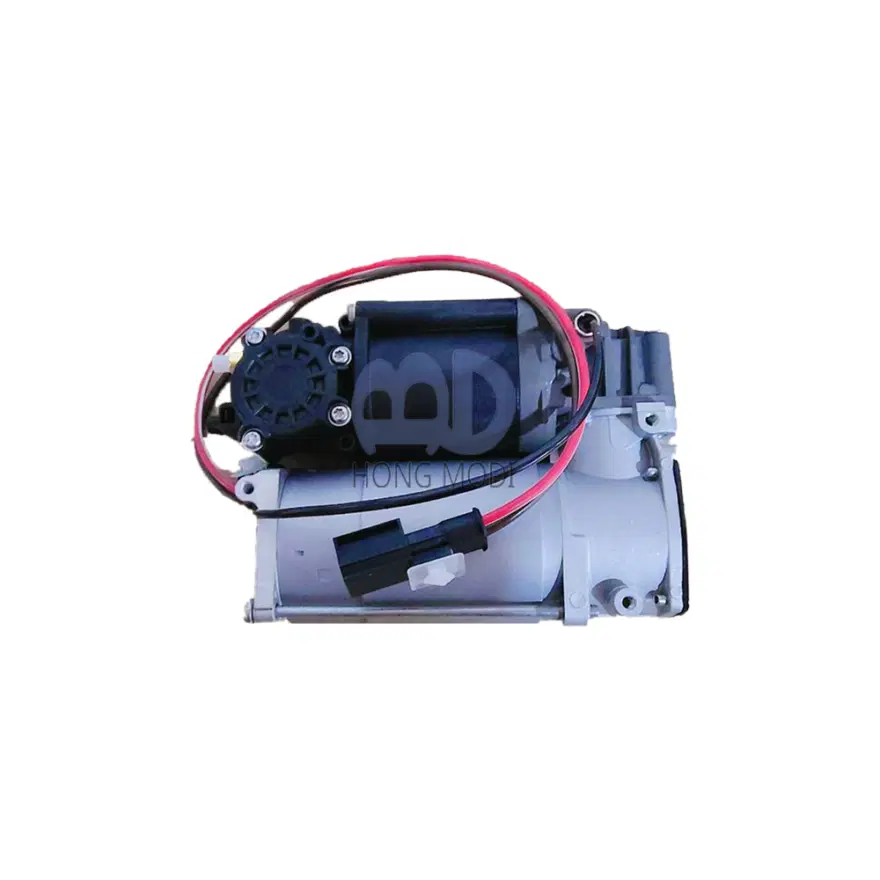
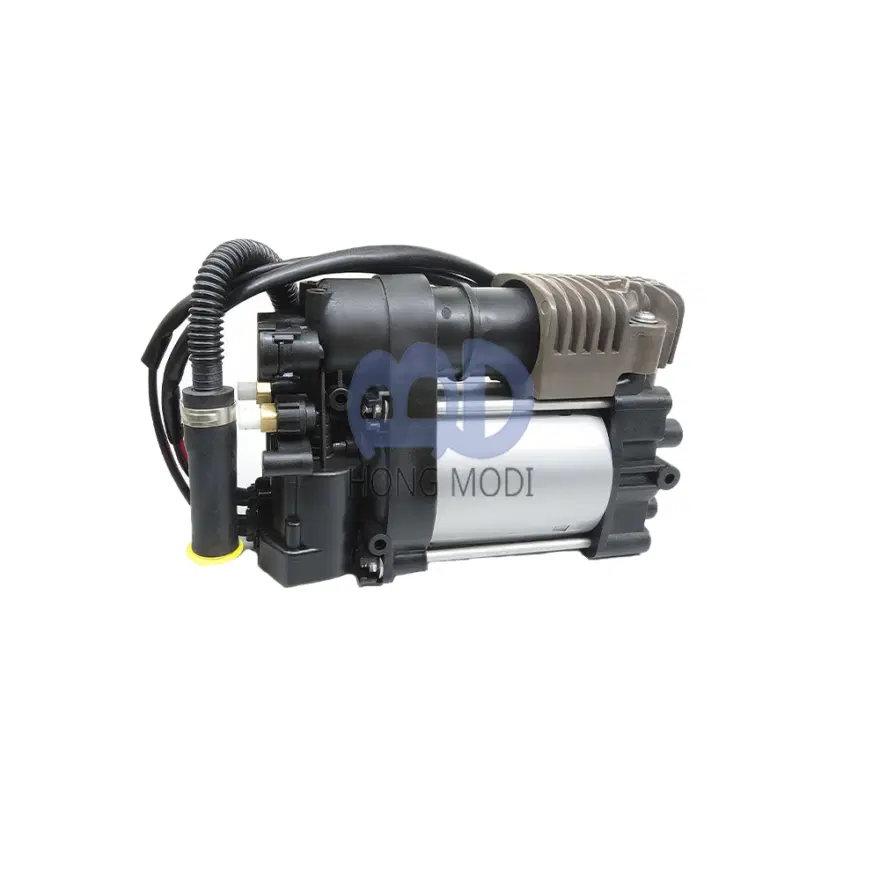
Compressor pump. An electric compressor, often with an integrated dryer, that supplies compressed air to the system. On several platforms it is packaged as an air supply unit together with the dryer and a relief valve.
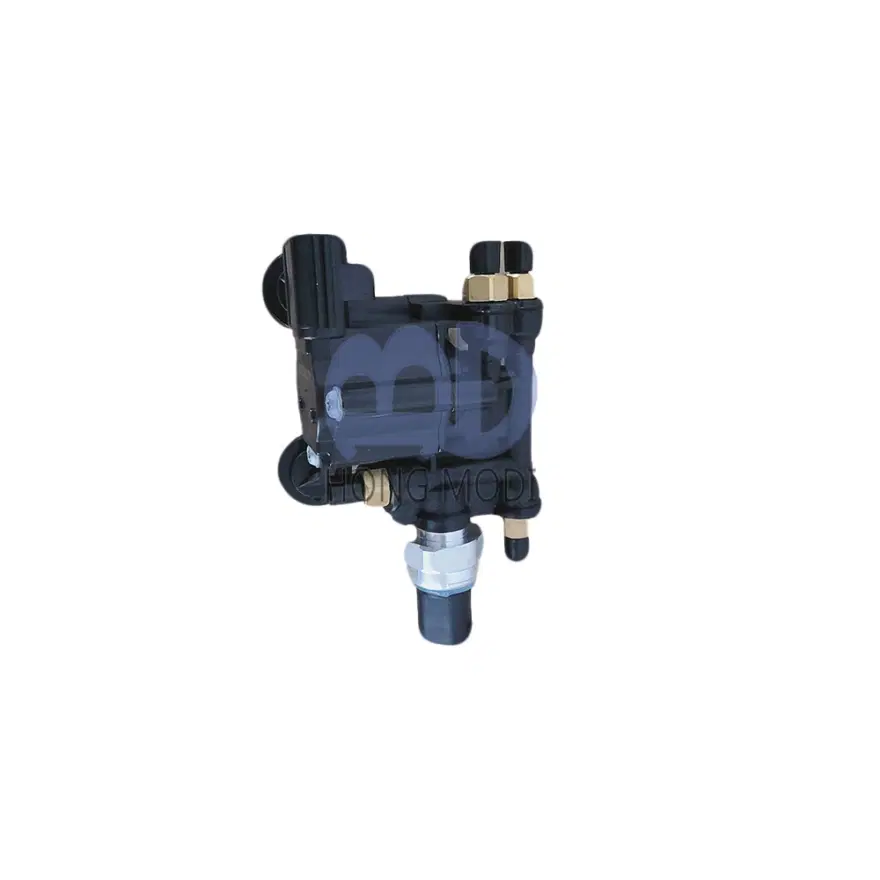
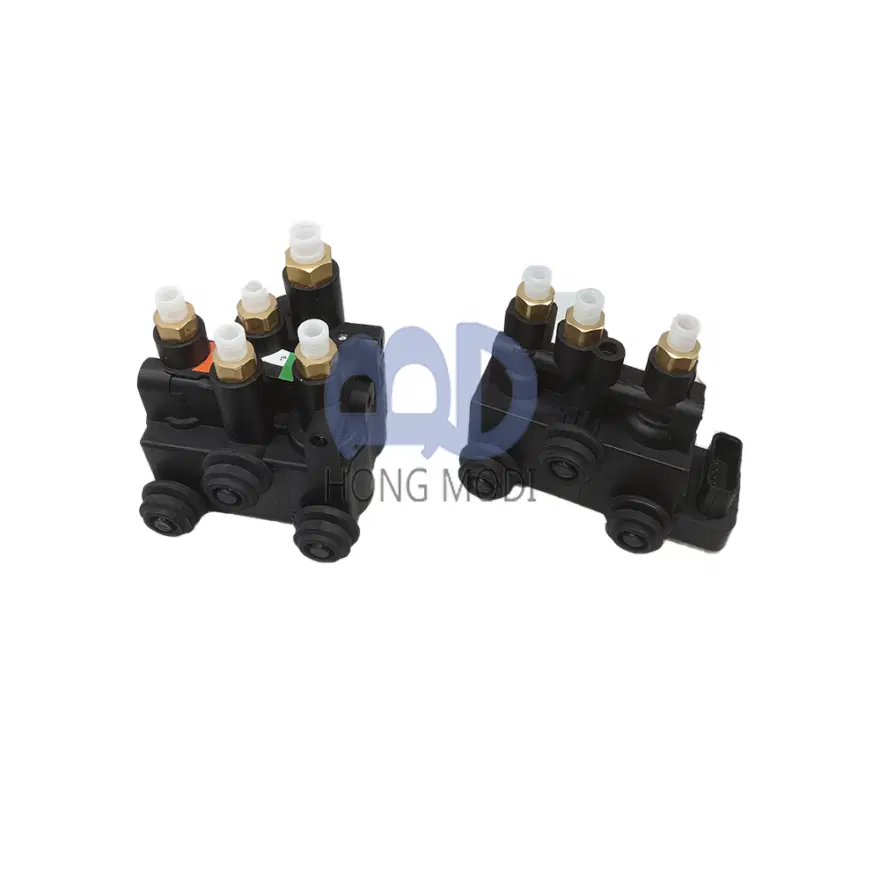
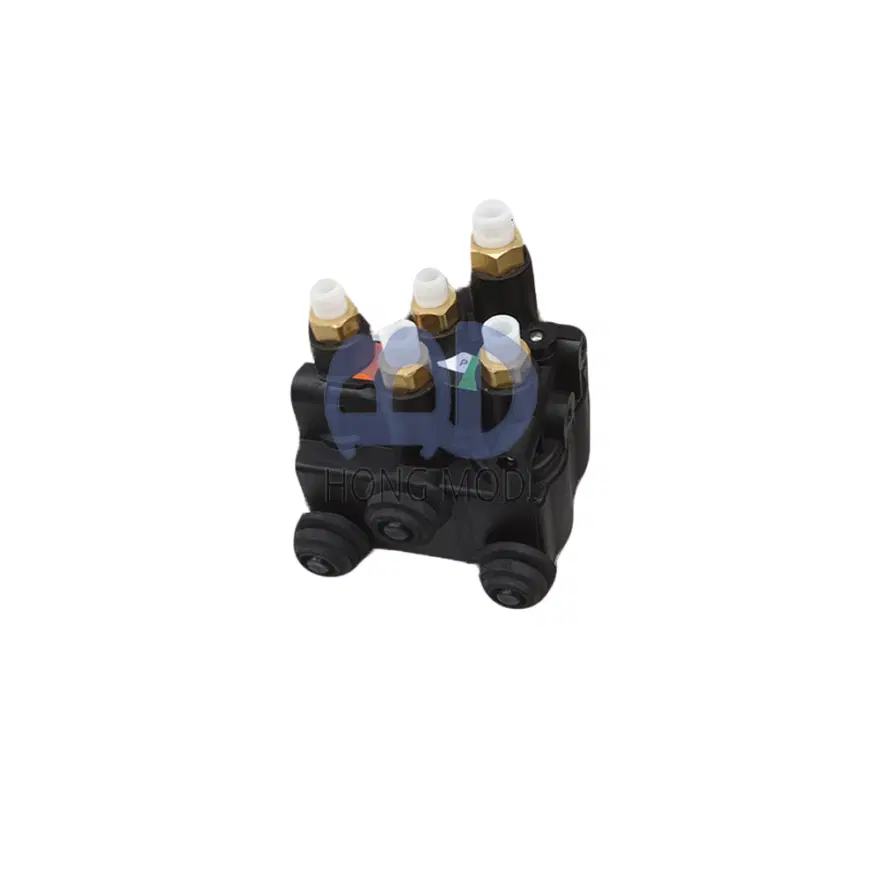
Valve block. A manifold of solenoid valves that routes air to individual corners, to the reservoir and to atmosphere. The valve block is what makes independent corner levelling possible.
Ride height sensors. Linkage-mounted sensors at each corner that tell the control module where the body is sitting.
Control module and reservoir. The module decides when to add or release air; the reservoir, where fitted, stores pressure so small corrections do not require the compressor to run.
Why One Failure Cascades
Air struts fail by leaking. Rubber perishes with age, ozone and road salt, and a pinhole in a sleeve is enough to let a corner settle overnight. The control module responds by running the compressor to bring the corner back up.
That is the cascade. A leak the driver never notices makes the compressor run far more often than it was designed to, the compressor overheats, its piston seal wears, and eventually the compressor fails too. By the time a vehicle arrives with a dead compressor, there is very often a leaking strut behind it.
This is why experienced workshops replace the leaking strut and inspect the compressor at the same time rather than replacing whichever part threw the fault code.
Practical Consequences When Ordering
Order struts in the correct axle pair where the vehicle uses different front and rear parts, and check whether your vehicle uses a left and right specific part or a single common part.
If a compressor is being replaced after a long period of leak-induced overwork, the dryer is often saturated. Ask whether the dryer is integrated in the compressor assembly you are ordering or whether it is a separate item.
Valve blocks are shared across several platforms far more often than struts are. A single valve block reference can appear across Audi, Volkswagen, Porsche and Jeep applications.
More Guides
- How To Read an OE Number and Match a Replacement Part
- Signs an Air Strut or Compressor Is Failing
- Choosing the Right Air Conditioning Compressor
- Diagnosing Control Arm and Tie Rod Wear
- Ignition Coil Failure and How To Confirm It
- Water Pump and Thermostat Replacement Explained
- How To Buy Replacement Auto Parts From a Chinese Supplier
Related Products
Parts Covered by This Guide
FAQ
Questions About Technical Guide
Can I replace one air strut or must I replace the pair
Mechanically a single strut can be replaced. Most workshops replace in axle pairs because both sides have aged identically, and a new strut on one side against a ten year old sleeve on the other tends to bring the second failure forward.
Is it worth converting to coil springs instead
Conversion kits exist but they remove the levelling function and can leave chassis fault codes active. If the vehicle is being kept, replacing the air components keeps the system as designed.
How long does an air strut last
Service life depends heavily on climate, road salt and mileage, so we do not publish a figure. Failures are usually seen as the rubber ages rather than at a fixed mileage.
Next Step
Send the Reference and We Will Confirm It
Every enquiry is checked against the catalogue before a price is given.