 AJEGarment Accessories Manufacturer
AJEGarment Accessories Manufacturer
AJEGarment Accessories Manufacturer
Guide
Damask, satin, taffeta, crocheted and high density — what each construction does well, and which one suits your garment.
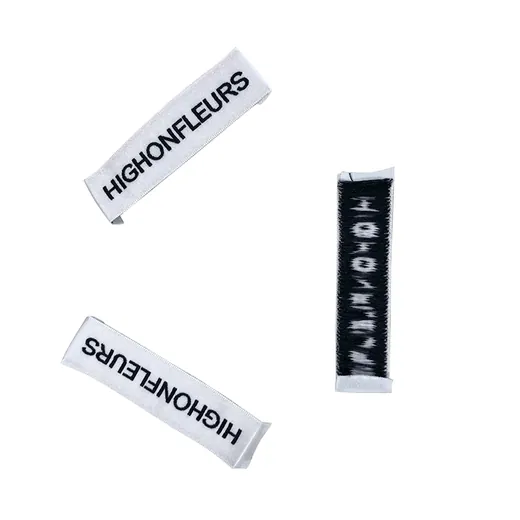
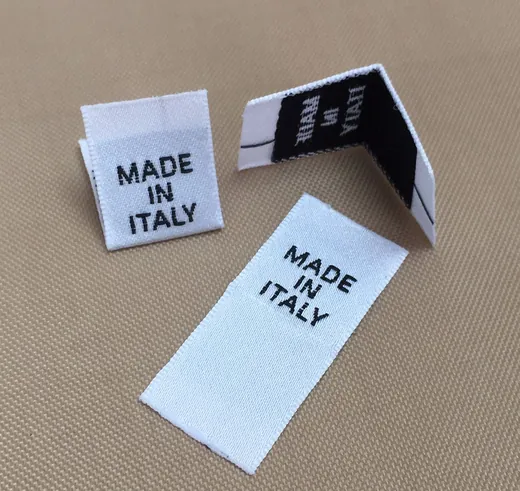
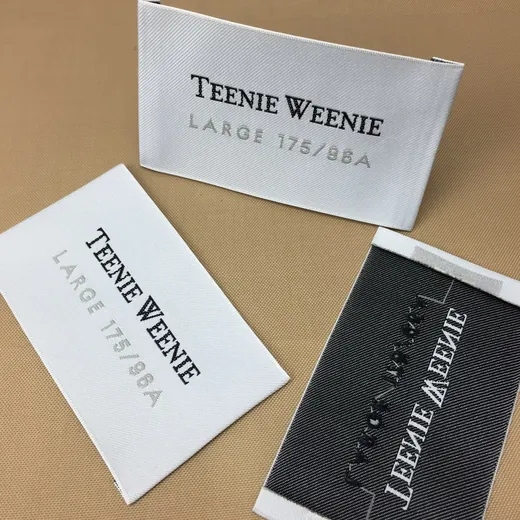
Woven labels all look similar in a photograph. The construction decides how much detail you get, how it feels against the skin and how it wears.
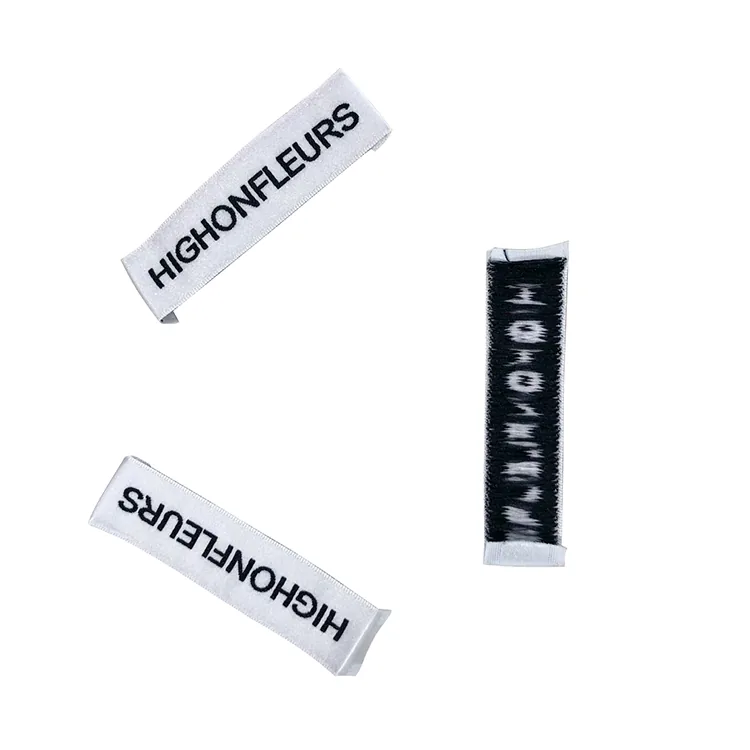
The workhorse of brand labels. A dense weave with a soft finish that holds reasonably fine detail and sits comfortably at the neck. If you are not sure what to specify, this is usually the starting point.
A smoother, glossier surface with a fluid drape. It suits lingerie, silk and lightweight garments where a stiffer label would show through or irritate. Detail resolution is slightly lower than damask.
The most economical construction. Crisper to the touch and best kept away from direct skin contact — it works well for size labels, care labels and internal identification rather than a neck label.
Woven at a much finer thread count so small text, thin lines and gradients survive. This is the construction to specify when a logo has detail that damask cannot hold at the finished size.
A textured, looped edge finish with a hand-made character. Popular on knitwear, denim and heritage-styled brands where a flat machine-woven edge would look too clinical.
Work backwards from two things: how much detail your logo carries, and where the label sits on the garment. Detail pushes you towards high density; skin contact pushes you towards damask or satin; internal information labels can drop to taffeta. Our technicians will tell you what will hold at your finished size before you commit.
FAQ
Send your artwork and tell us how the trim will be used — we will recommend the construction and finish.