 AJEGarment Accessories Manufacturer
AJEGarment Accessories Manufacturer
AJEGarment Accessories Manufacturer
Guide
Board, lamination, foil stamping and attachment — the choices that make a hang tag feel expensive or cheap.
The hang tag is the last thing a customer handles before buying, so the finish carries more weight than its cost suggests.
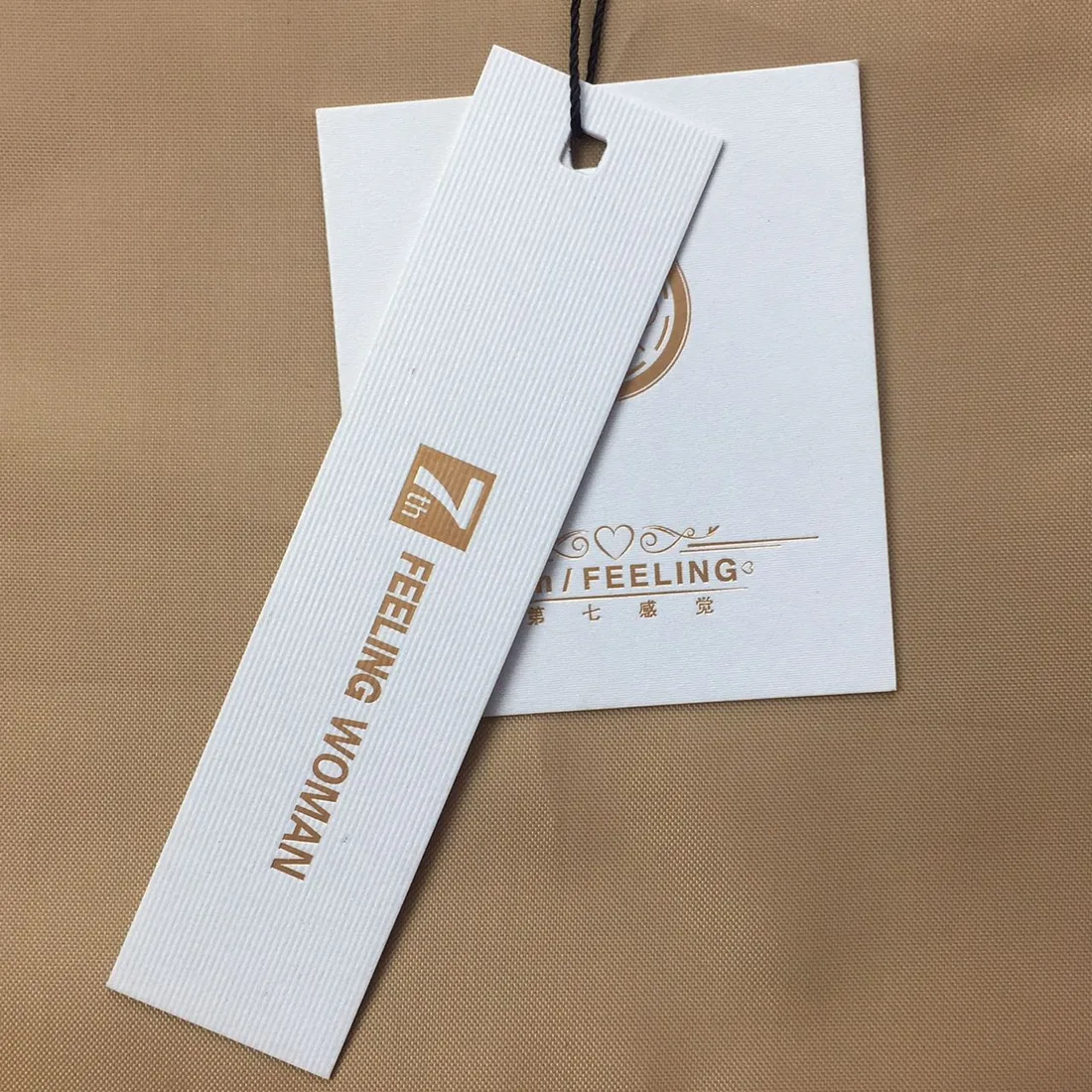
Too light and the tag curls in transit or creases at the hole. Heavier board feels considered and survives the supply chain. Board weight also changes how foil and lamination sit on the surface, so it is decided first, not last.
Lamination protects the print and changes the hand feel. Gloss lifts colour and photography; matt reads quieter and more premium, and shows fingerprints less. Both add durability at the punch hole, which is where tags usually fail.
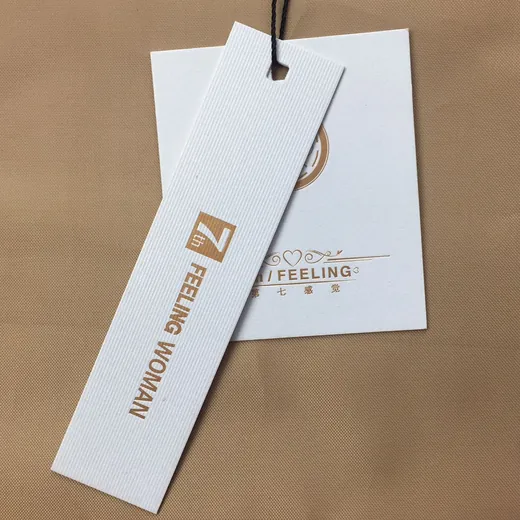
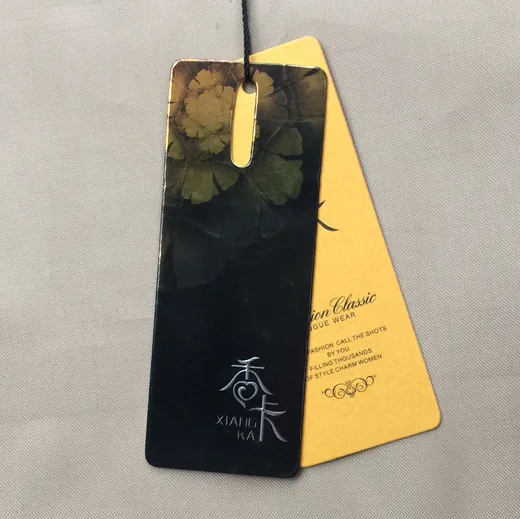
Foil stamping puts a metallic finish on selected areas rather than printing metallic ink. It works best on solid shapes and bold type — very fine foil detail can lift or fill in. Combining foil with matt lamination is a common premium combination.
A shaped tag needs a cutting die. An eyelet reinforces the hole where the string passes through, which matters on lighter board or heavier garments.
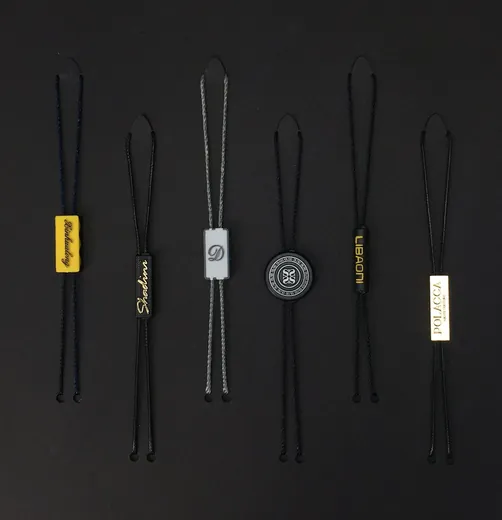
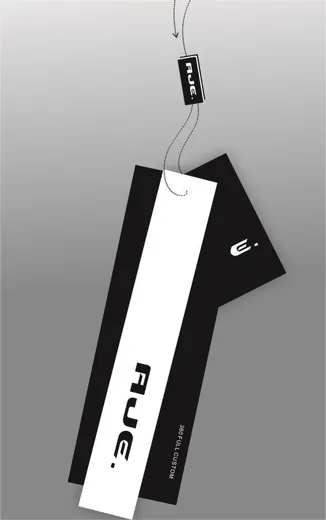
A hang tag is only as good as what holds it on. Cord colour, length and lock style should be chosen with the tag, not after it — which is why we supply string seals alongside the tags rather than leaving you to source them separately.
FAQ
Send your artwork and tell us how the trim will be used — we will recommend the construction and finish.