From bright gold to dye black, what each finish does to a design and where antique finishes help or hurt.
Plating is applied after the piece is formed, which means the same die or mould can produce a bright range and an antique range without a second tooling cost. That is worth knowing before a range is planned.
The fourteen standard finishes are gold, silver, nickel, brass, copper, matt gold, matt silver, antique brass, antique copper, antique gold, antique silver, antique nickel, black nickel and dye black.
Gold, silver, nickel, brass and copper are the bright finishes. They give maximum contrast against enamel colour, and they keep a flat logo legible because the plated surface stays even.
They also show every fingerprint and every handling mark, which matters on a piece that will be passed around.
Matt gold and matt silver take the shine off without changing the colour. They hide handling far better than bright plating and they photograph more evenly, which helps on a product listing.
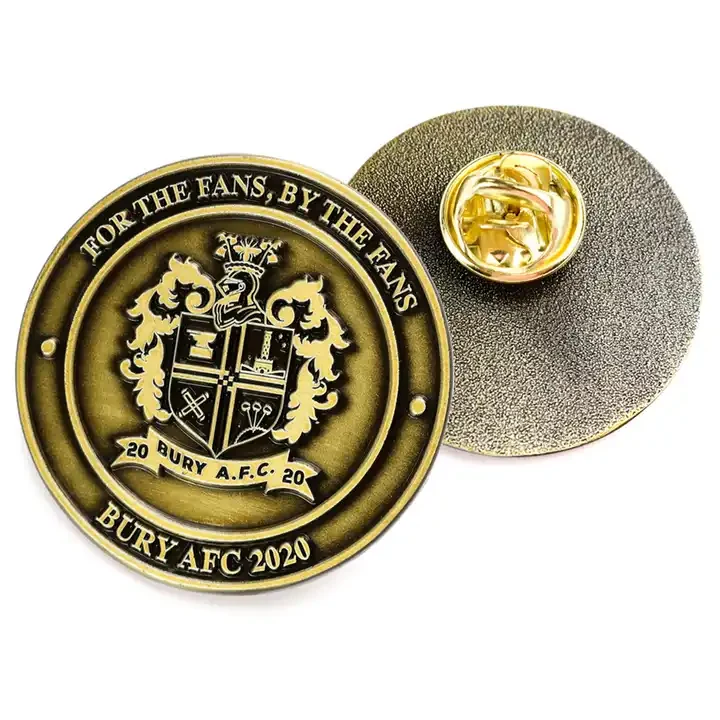
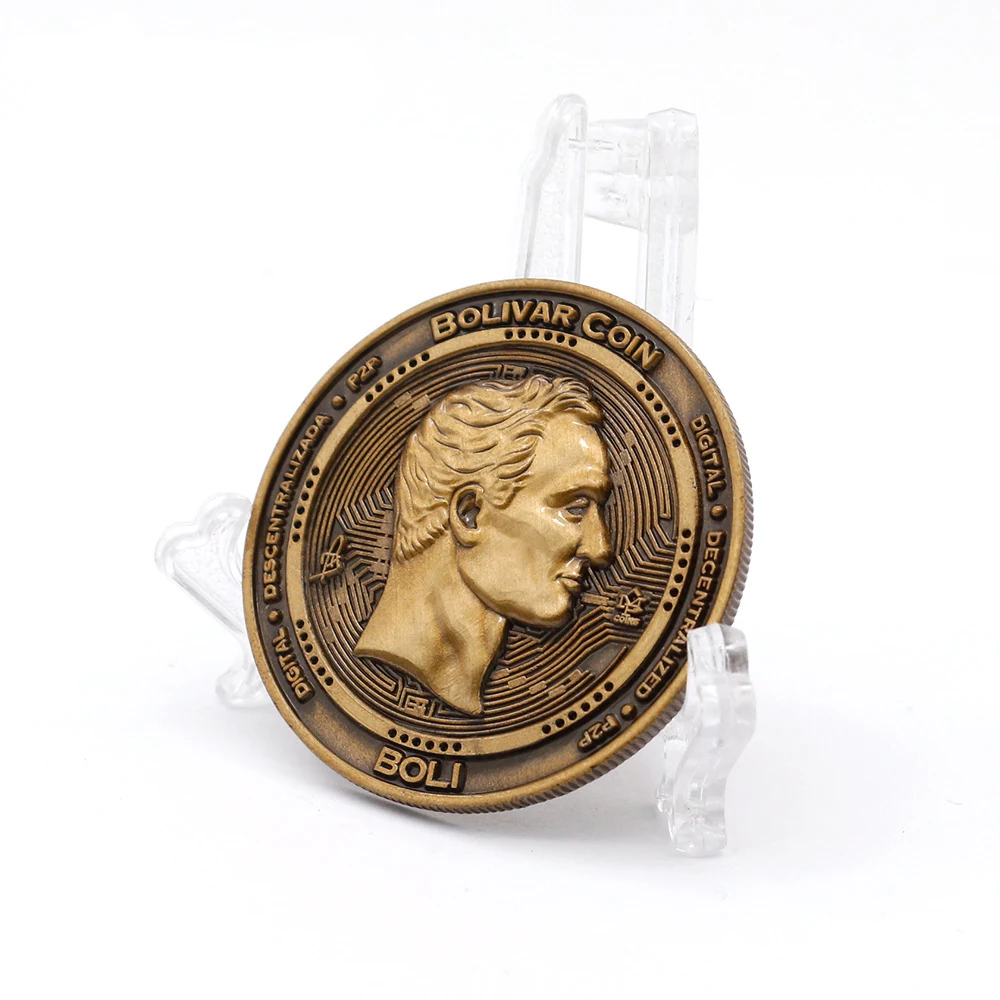
Antique brass, copper, gold, silver and nickel are plated and then relieved, so the recesses stay dark and the raised faces are bright. That creates depth from the finish alone, without adding a single colour of enamel.
The effect is strongest on a design with real relief. On a flat logo it mostly reads as dirt, which is why antique finishes suit crests and landmarks rather than wordmarks.
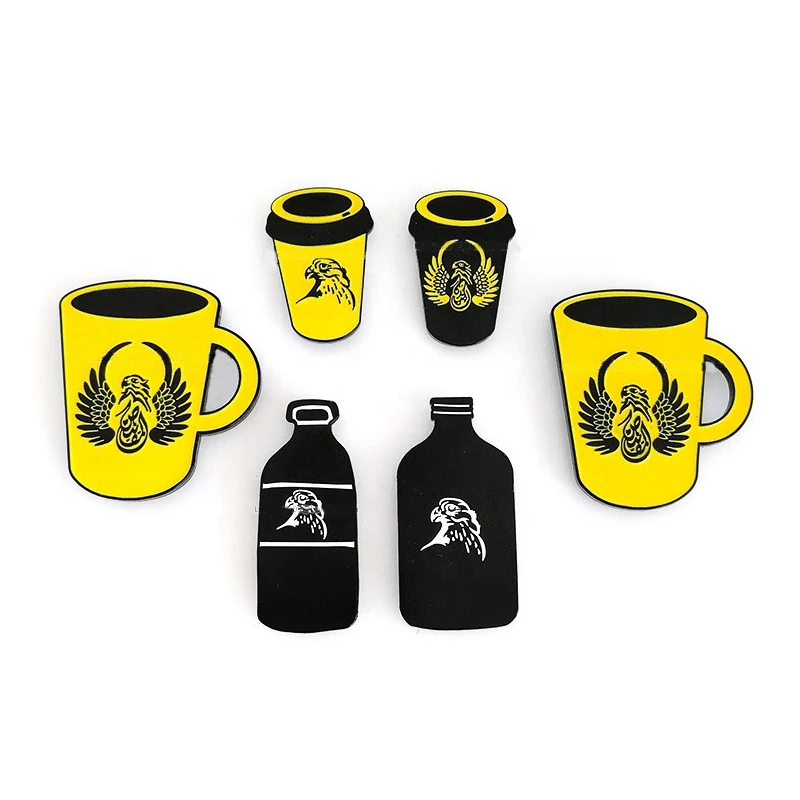
Black nickel keeps a metallic sheen while going dark. Dye black goes flatter and darker still.
Both are used for the same reason: they turn the enamel colour into the only colour on the piece, which is what a single-colour campaign design needs.
Plating and attachment are decided together because both are fitted after forming. The twelve standard options are butterfly clutch, rubber clutch, deluxe clutch, jewelry clutch, magnet back, cuff link, key ring, tie tack with chain, safety pin, stick pin, tie pin and ball chain.
The rule is simple: butterfly for shirts and jackets, rubber or deluxe for knitwear and soft fabric, magnet where the garment must not be pierced at all.
| Bright | Gold, silver, nickel, brass, copper. Maximum contrast, shows handling marks. |
|---|---|
| Matt | Matt gold, matt silver. Hides handling, photographs evenly. |
| Antique | Antique brass, copper, gold, silver, nickel. Relieved for depth, best on real relief. |
| Dark | Black nickel keeps a metallic sheen. Dye black is flatter and darker. |
Yes. Plating happens after forming, so one tooling set can produce a bright and an antique version.
An antique finish. The relieving darkens the recesses and gives depth without enamel.
A bright or matt finish. Antique relieving on a flat design tends to read as dirt.
Use a rubber or deluxe clutch instead of the standard butterfly clutch, or a magnet back.
Confirm the specific finish with your quotation. All fourteen are standard options.
Send the artwork and the quantity. We will tell you which process suits it, and the first sample is free either way.