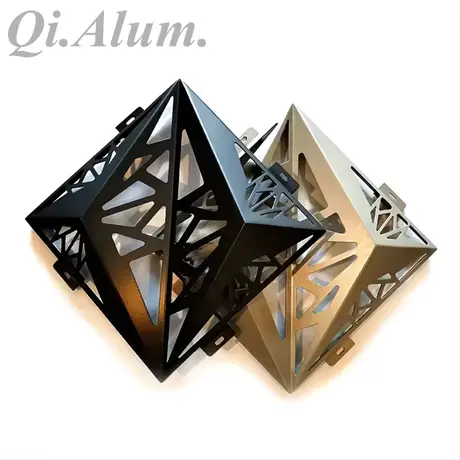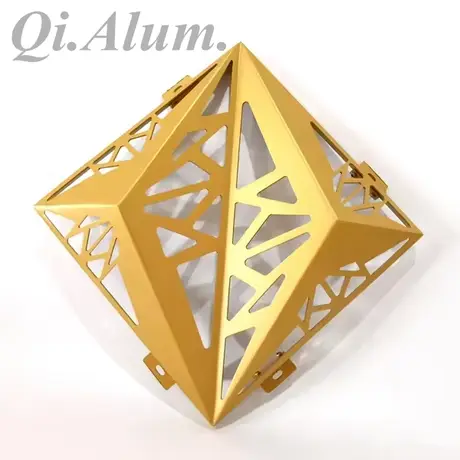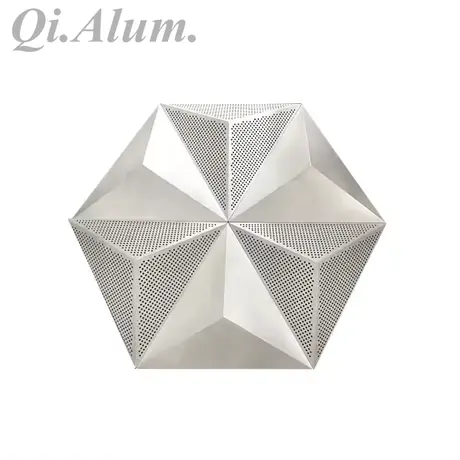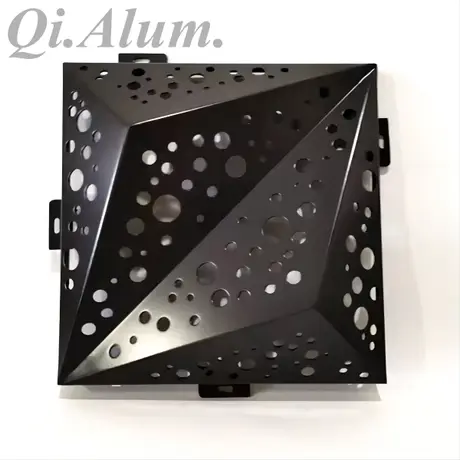
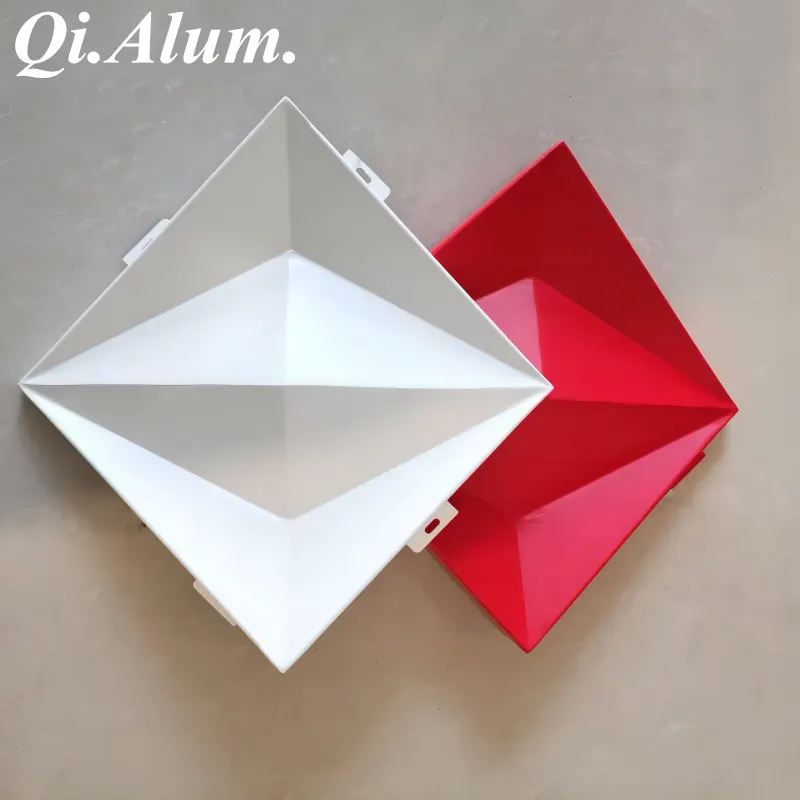
Aluminum panels have gained wide-ranging applications in the field of architecture due to their lightweight nature, corrosion resistance, and excellent malleability, making them a preferred material for many contemporary architectural designs.
Here are some common applications and features of 3D aluminum panel architecture:
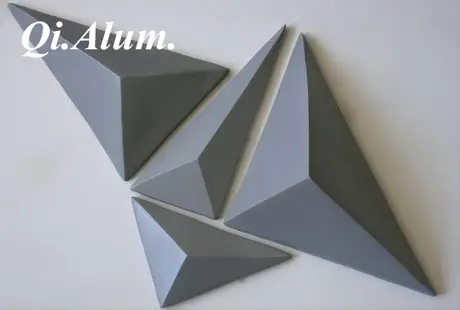
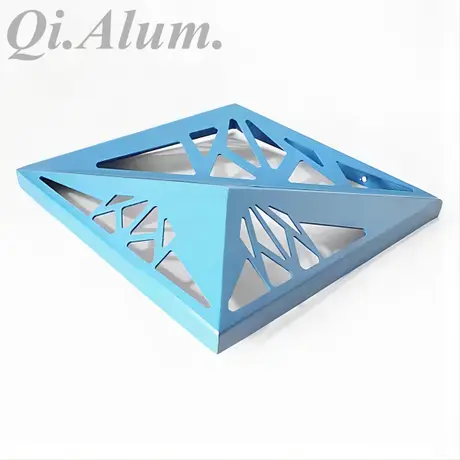
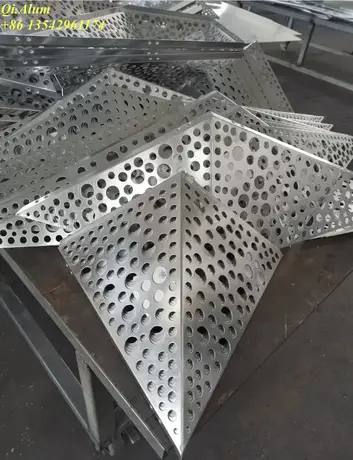
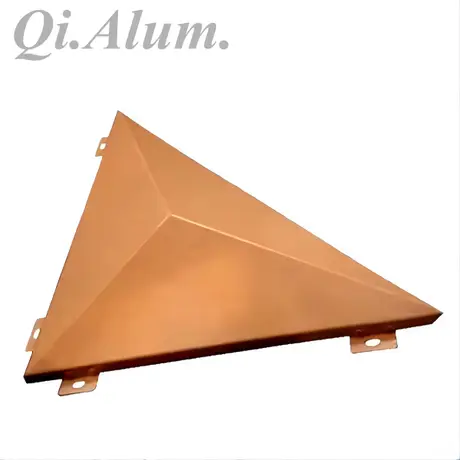
Facade Decoration: 3D aluminum panels can be used for exterior facade decoration, allowing for the creation of diverse visual effects by combining aluminum panels of different shapes, sizes, and surface treatments. This enhances the visual appeal and personalization of the building.
Sunshading and Insulation: Aluminum panels can be utilized to design sunshading devices, leveraging their excellent thermal conductivity to regulate the internal temperature of buildings and reduce energy consumption.
Interior Decoration: In addition to facade decoration, 3D aluminum panels are commonly used for interior decoration, such as wall cladding, ceilings, columns, etc., imparting a sense of depth and modernity to the space.
Structural Support: In certain innovative designs, 3D aluminum panels can be integrated as a part of the building structure, providing support and reinforcement while creating unique architectural forms.
Sustainability: Aluminum is a recyclable material, exhibiting good sustainability characteristics. Employing aluminum panels in construction helps reduce the consumption of natural resources and contributes to waste reduction generated by the building industry.
Innovation in Design: 3D aluminum panel architecture offers designers greater creative possibilities. Through customized aluminum panel shapes and structural designs, a wide range of unique and eye-catching architectural elements can be realized.