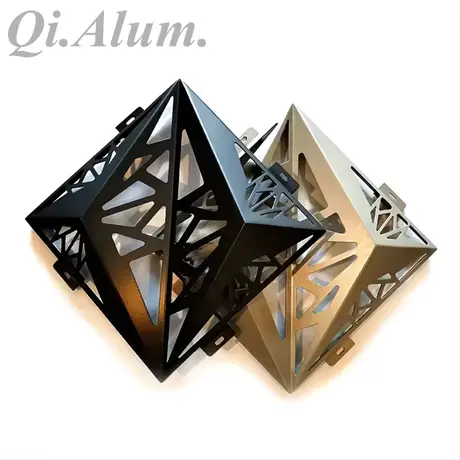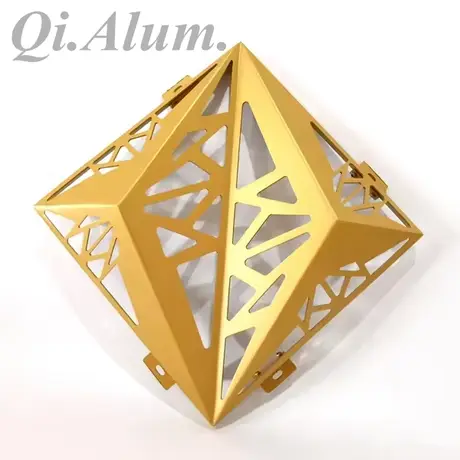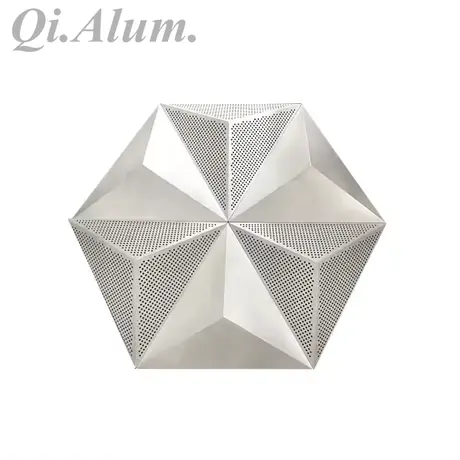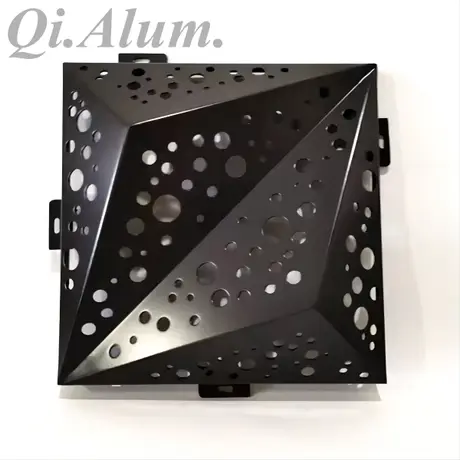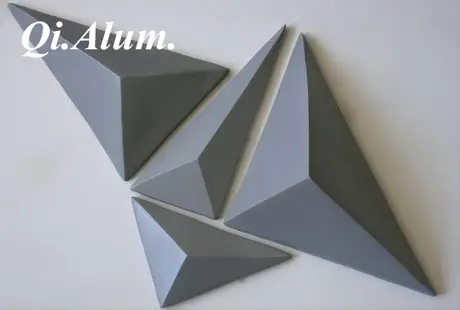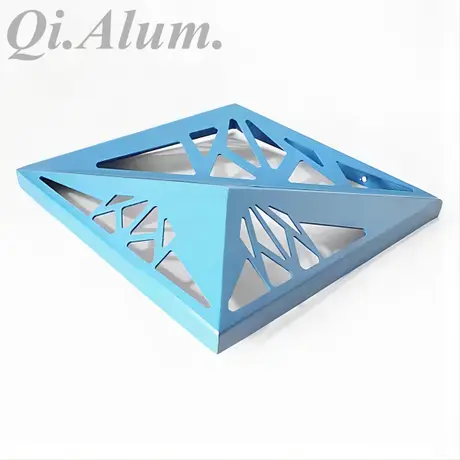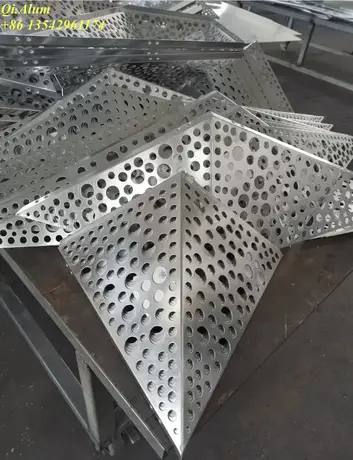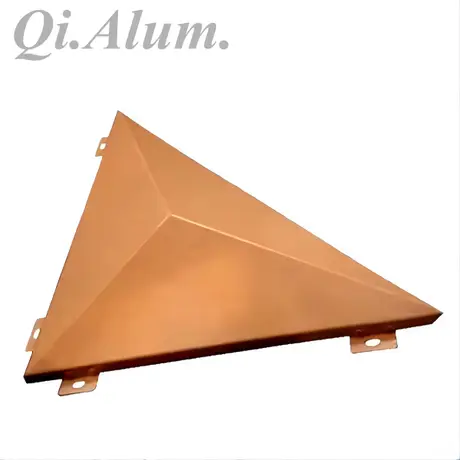
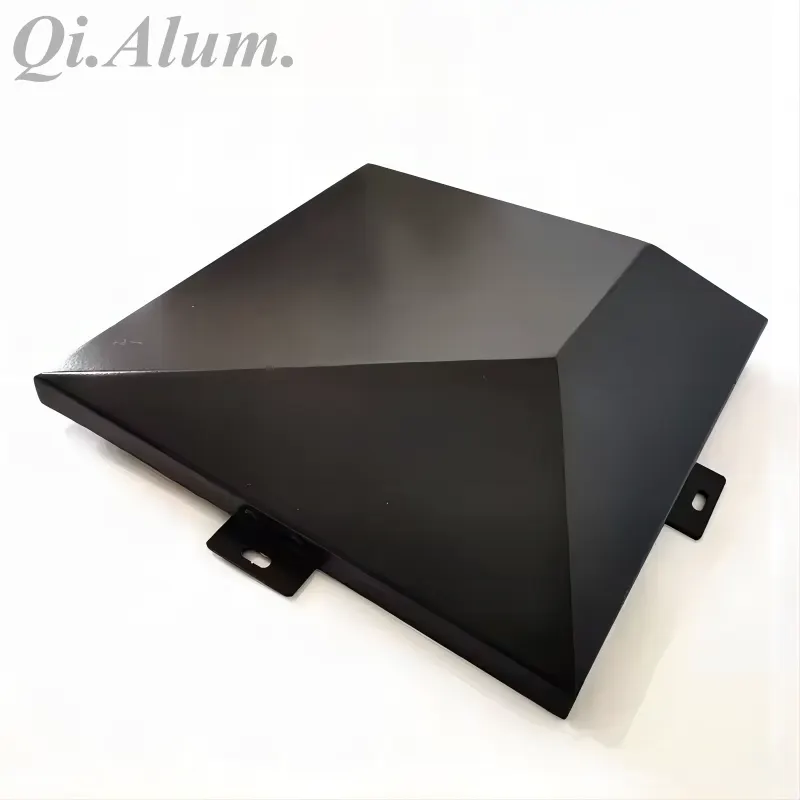
Here are some common applications and features of 3D aluminum panel architecture:
1. Facade Decoration: 3D aluminum panels can be used for the external facade decoration of buildings. By combining aluminum panels of different shapes, sizes, and surface treatments, architects can create a diverse range of visual effects, enhancing the architectural appeal and individuality.
2. Sunshade and Thermal Insulation: Aluminum panels can be utilized in the design of sunshade devices. Leveraging their excellent thermal conductivity, these panels help regulate the internal temperature of the building, reducing energy consumption.
3. Interior Decoration: In addition to external facades, 3D aluminum panels are often employed in interior decoration, such as wall coverings, ceilings, and columns, imparting a sense of depth and modernity to the space.
4. Structural Support: In some unique designs, 3D aluminum panels can be integrated as part of the building’s structure, providing support and reinforcement to create distinctive architectural forms.
5. Sustainability: Aluminum is a recyclable material that exhibits good sustainability. The use of aluminum panels in construction helps reduce the consumption of natural resources and contributes to minimizing waste generated by the building industry.
6. Innovative Design: 3D aluminum panel architecture offers designers greater creative freedom. By customizing the shape and structural design of aluminum panels, architects can achieve a variety of unique and innovative structures.
As you can see, 3D aluminum panel architecture opens up a world of possibilities for architects and designers. Its lightweight, versatile, and environmentally friendly attributes have made it an increasingly popular choice in the industry.