
Switching Differential and Cycle Rate
Rooms that swing, plant that short cycles and occupants who complain about draughts usually share one cause: the differential is wrong for the system.
What the differential does
The differential is how far the room has to fall below setpoint before the thermostat calls, and how far it rises before it stops. A narrow differential holds temperature tightly but cycles the plant often. A wide one cycles less but lets the room drift.
Where it is adjustable
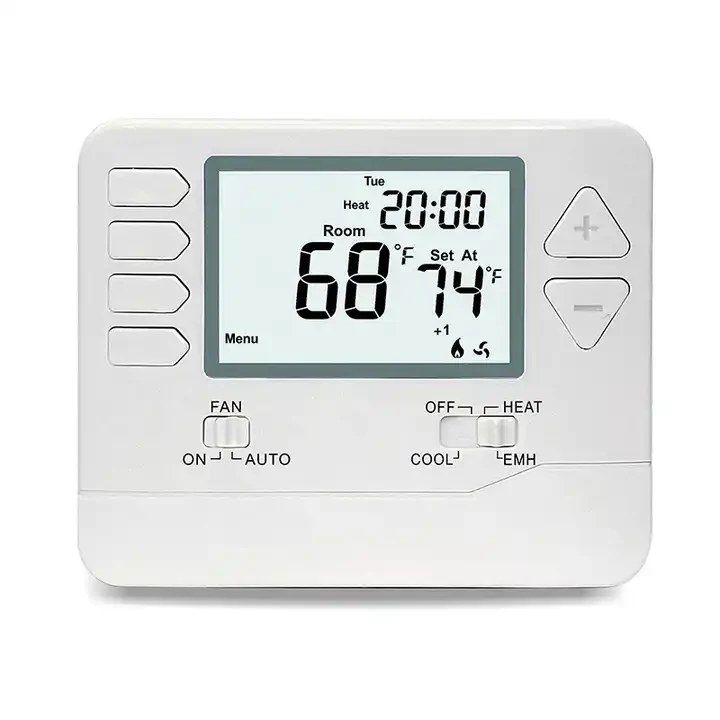
STN1220 and STN721 allow the differential to be set anywhere from 0.2 to 2.0 F. Several 230V models instead expose an adjustable switching sensitivity setting, which does the same job under a different name.
Matching it to the emitter
A fan coil unit responds in seconds and tolerates a narrow differential. A heated screed responds over hours, and a narrow differential will simply chase it. On underfloor systems raise the switching sensitivity so the cycle rate slows.
Heating and cooling are not the same
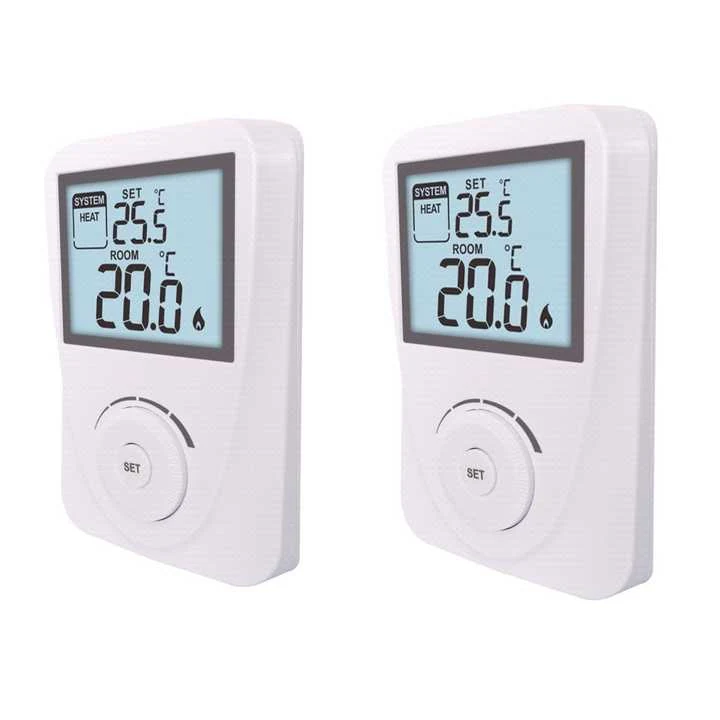
Most of our range allows heating and cooling swing to be set separately, because the same cycle rate rarely suits both modes on the same plant.
Second stage swing
On multi stage and heat pump models the second stage has its own swing setting. Widening it delays auxiliary heat, which is where most of the running cost sits on a heat pump.
Questions On This Topic
The room overshoots by two degrees. What do I change?
On a slow system, widen the differential or raise the switching sensitivity. Also check the thermostat is not mounted near the emitter.
The compressor starts and stops every few minutes. Why?
The differential is too narrow for the plant. Widen it, and confirm the 5 minute compressor delay is enabled.
Can the reading itself be wrong?
Yes. Room temperature calibration of -3 to +3 C is available on most models for positions that read warm or cold.
Need This Checked Against Your System?
Send the equipment details on WhatsApp and we will confirm which of our models matches before you order.