
24V and 230V Thermostats Explained
The single biggest sourcing mistake on room thermostats is ordering the wrong voltage class. The two families are not interchangeable, and the difference changes the terminals, the contact rating and the installation work.
What the voltage actually refers to
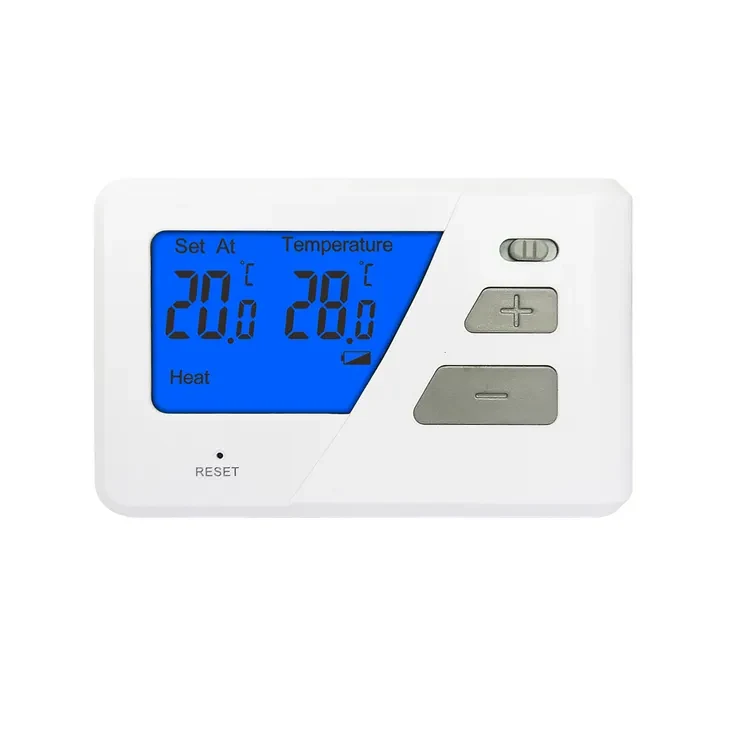
On a 24V thermostat the control circuit runs at 24 VAC, usually 18 to 30 VAC at 50/60 Hz, supplied by a transformer inside the indoor unit or furnace. The thermostat switches low voltage signals to the equipment's own relays. On a 230V thermostat the contact switches mains directly, with maximum loads of 6(2)A or 8(2)A at 230VAC depending on the model.
How that changes the wiring
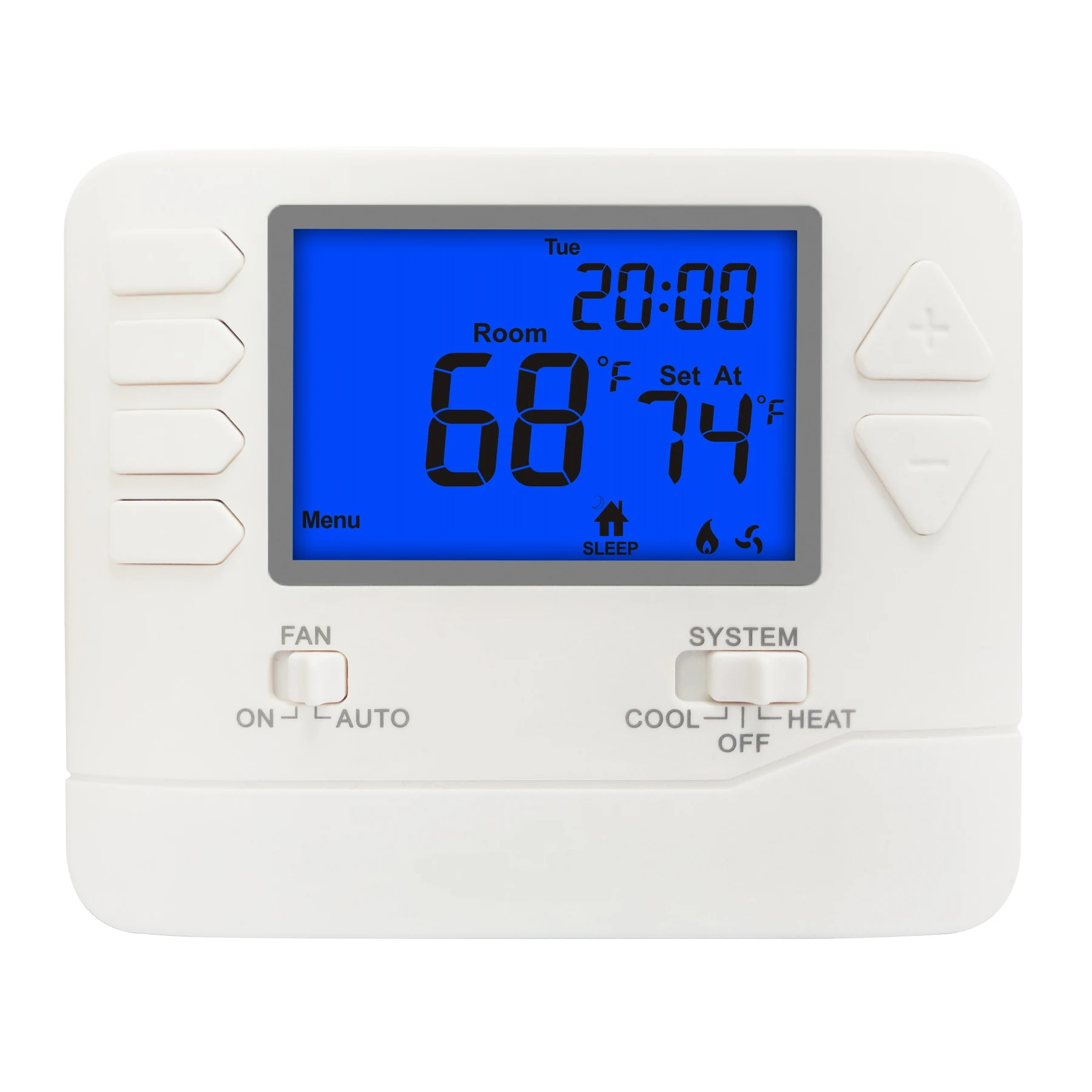
A 24V stat uses letter coded terminals such as R, W, Y, G and C, plus B and O where a reversing valve is fitted. A 230V stat lands live, neutral and a switched conductor. A 24V unit installed on a mains circuit will be destroyed, and a 230V unit cannot signal a 24V board.
Which regions use which
24V control is the norm on North American style packaged and split systems, which is why our 24V models quote temperature in Fahrenheit as well as Celsius. 230V control is usual on European hydronic systems, gas boilers and electric heating.
The common wire question
A 24V thermostat needs a common wire to be powered from the transformer. Many of our 24V models run from 2 x AAA alkaline batteries instead, which is what makes a retrofit possible where no common conductor was pulled.
Checking the load before you order
On 24V models the load rating is typically 1 amp per terminal with 1.5 amp maximum across all terminals combined. On 230V models check the appliance relay or heater load against the 6(2)A or 8(2)A figure, and switch through a contactor above it.
Models Mentioned In This Guide
Questions On This Topic
Can I use a 24V thermostat on a gas boiler?
Only if the boiler has a 24V control circuit. Most European wall hung boilers expect a volt free or mains switched contact, which is what our 230V models provide.
What does 8(2)A mean?
8 A resistive load and 2 A inductive load. Relays and motors are inductive, so the lower figure applies to them.
Do I need a common wire?
Only for hardwired 24V operation. Battery powered models remove the requirement.
Need This Checked Against Your System?
Send the equipment details on WhatsApp and we will confirm which of our models matches before you order.