
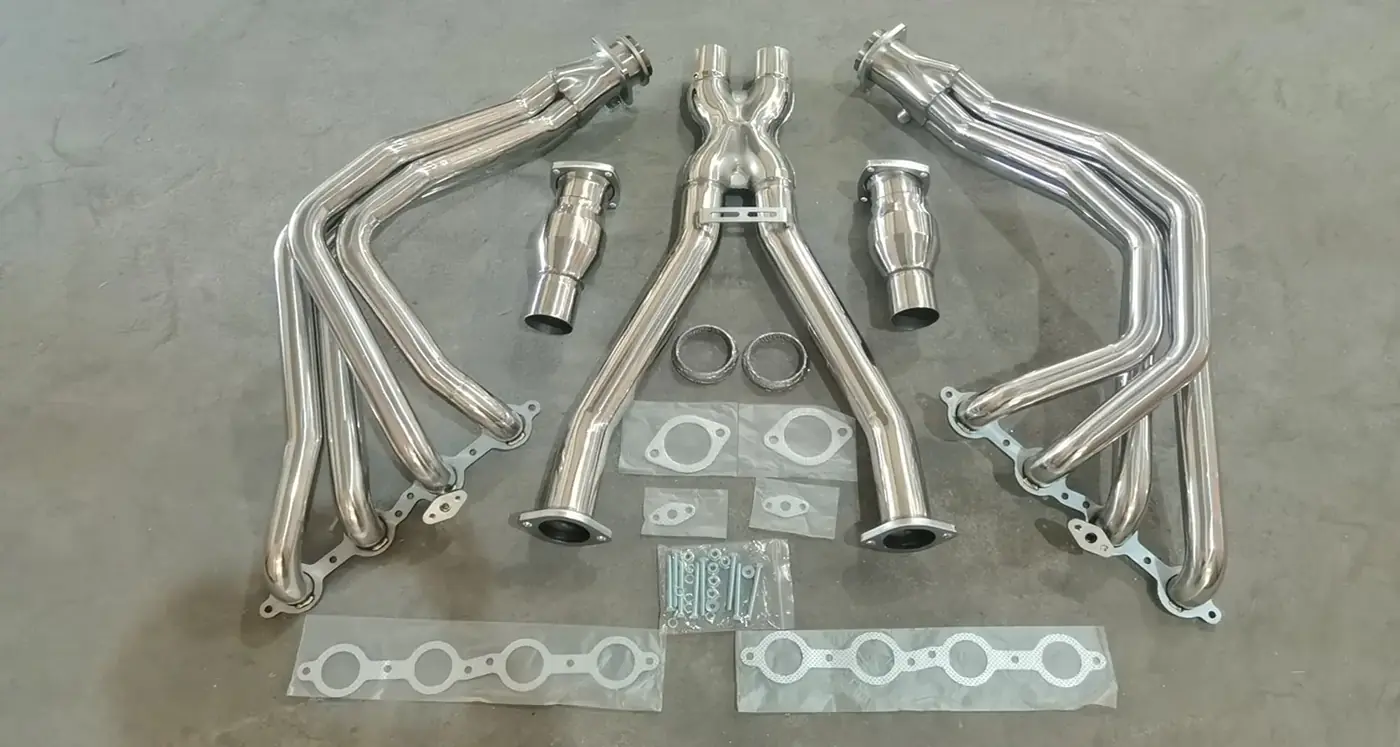
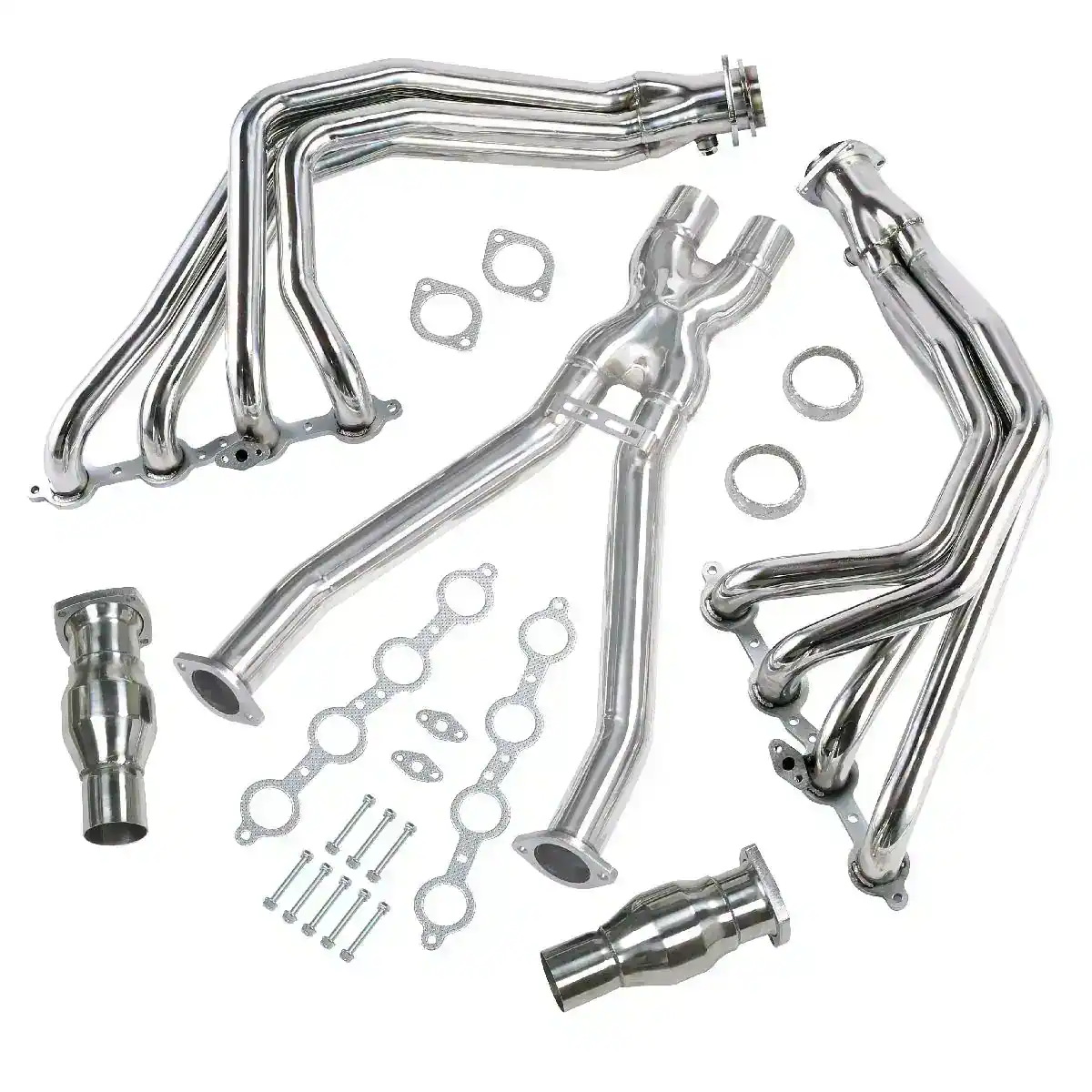
material guide
201 Vs T-304 Stainless For Exhaust Parts
What the two stainless grades used across this catalogue mean for corrosion, cost and where each one belongs.
Why The Grade Is On The Listing
Exhaust parts live in heat, moisture and road salt. The stainless grade decides how long the part looks and behaves like new. Parts in this catalogue state 201 or T-304 where the specification defines it, and the difference is worth understanding before you decide what to stock.
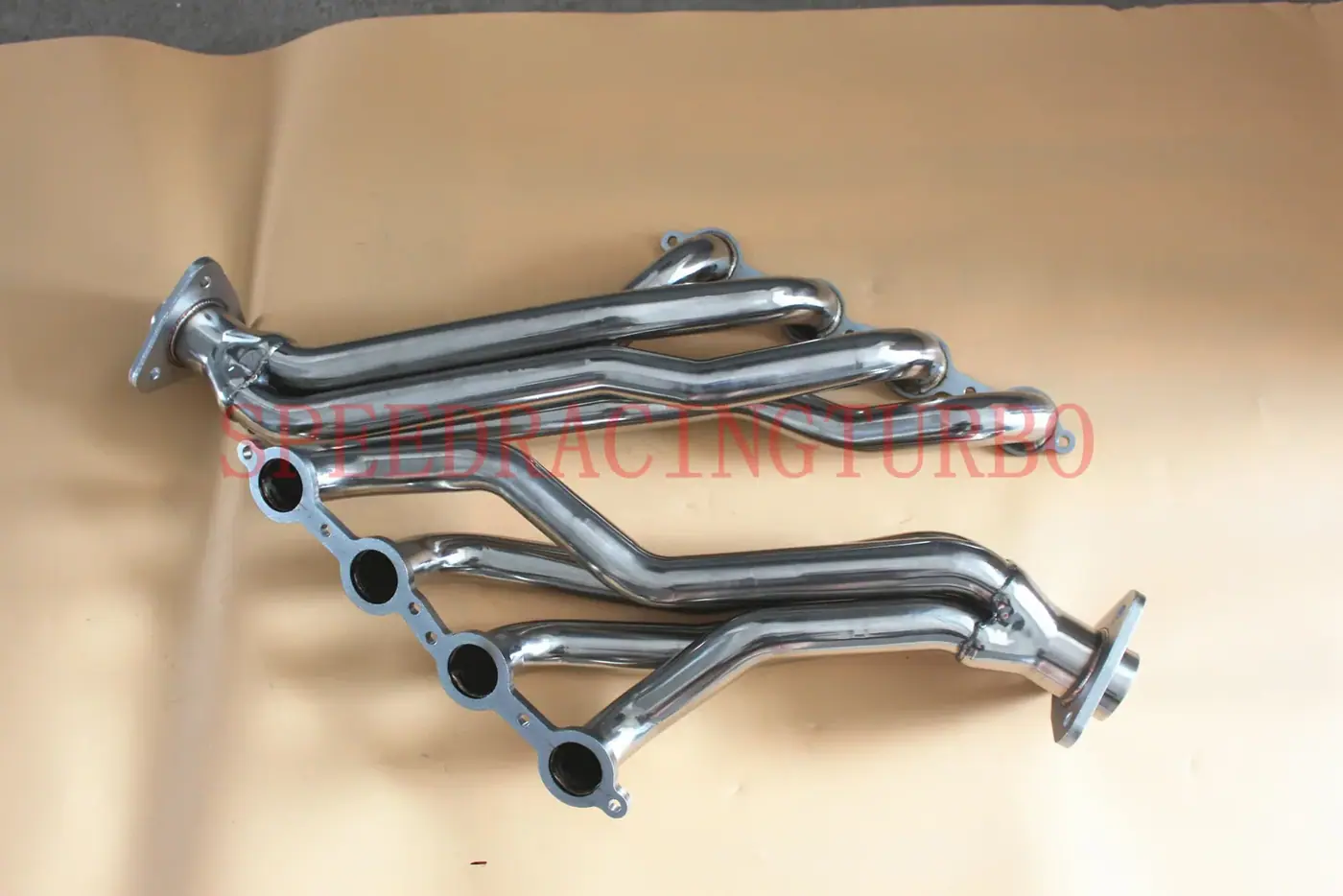
201 Stainless
201 uses manganese and nitrogen in place of some of the nickel found in 300 series stainless. It is meaningfully cheaper and still far more corrosion resistant than mild or aluminized steel. It is a sound choice for parts that see heat but are not sitting in standing salt water for months.
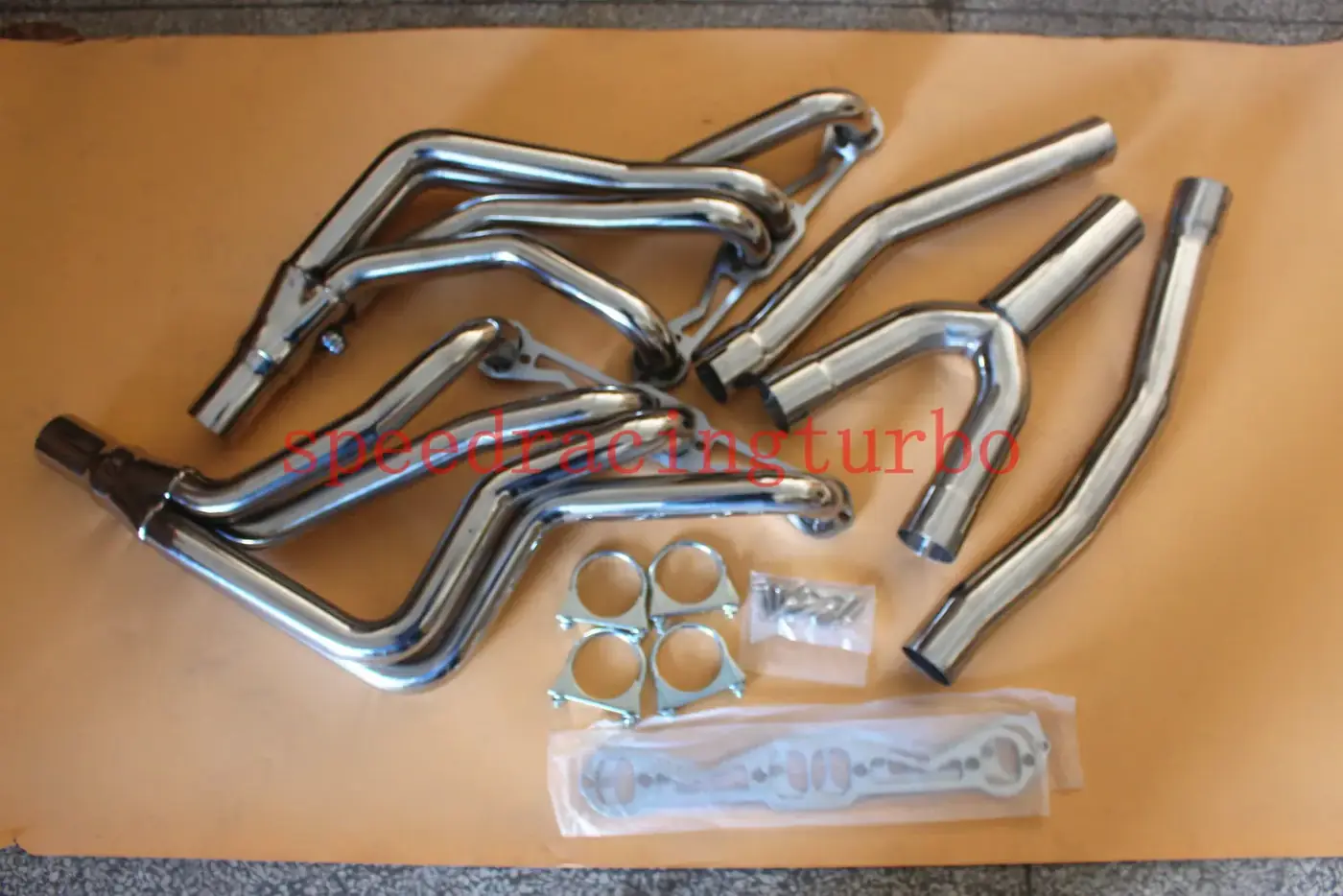
T-304 Stainless
T-304 carries higher nickel and chromium content. It holds up better against salt and repeated heat cycling and keeps a polished surface looking clean for longer. It costs more per unit, which is why the whole market has not simply moved to it.
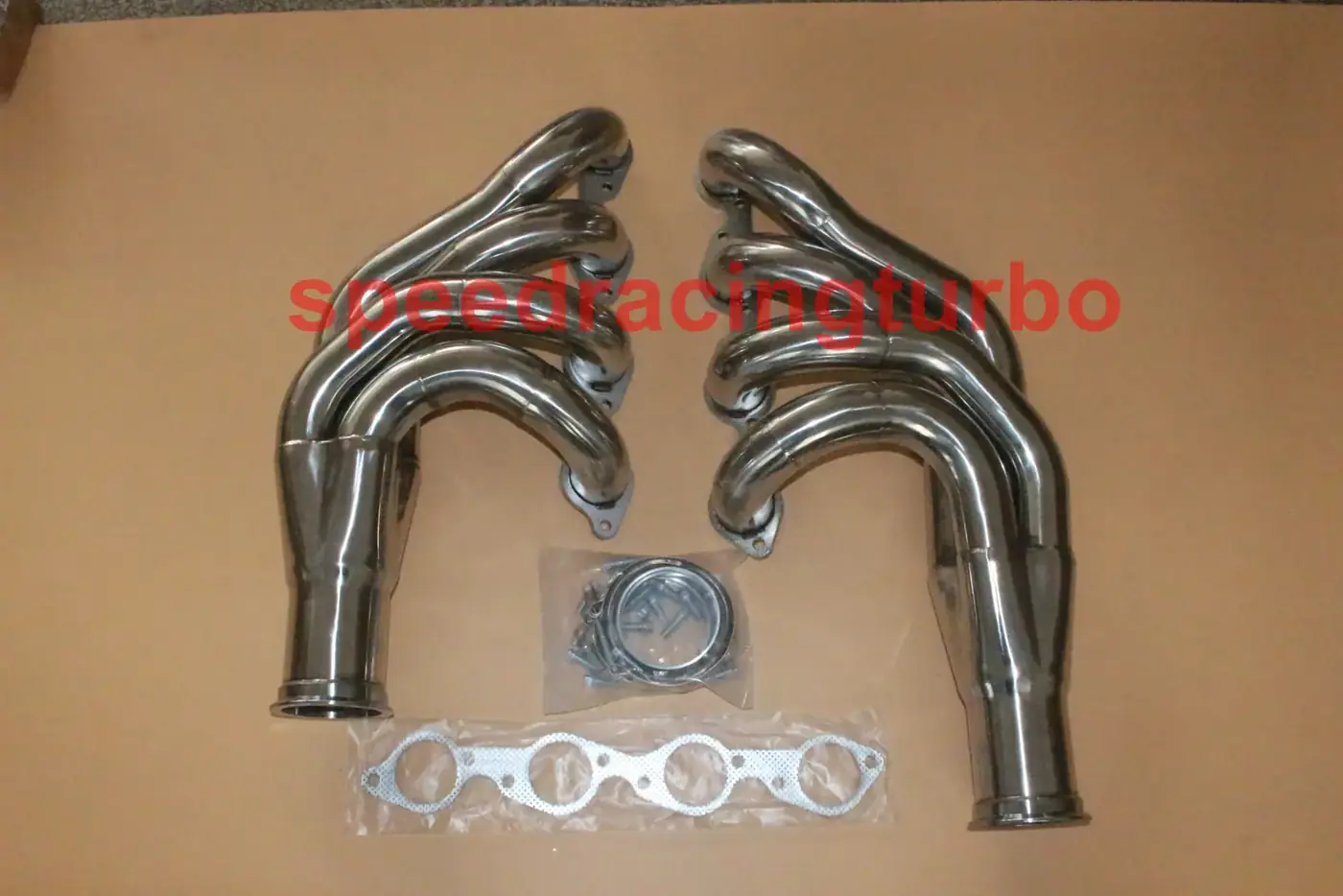
How To Choose For Your Market
Sell into a salt belt where trucks run through winter and the extra cost of T-304 comes back as fewer warranty conversations. Sell into a dry climate, or into price-led online listings, and 201 is usually the commercially right call. What matters is that the listing says which one it is.
Related categories
Parts covered
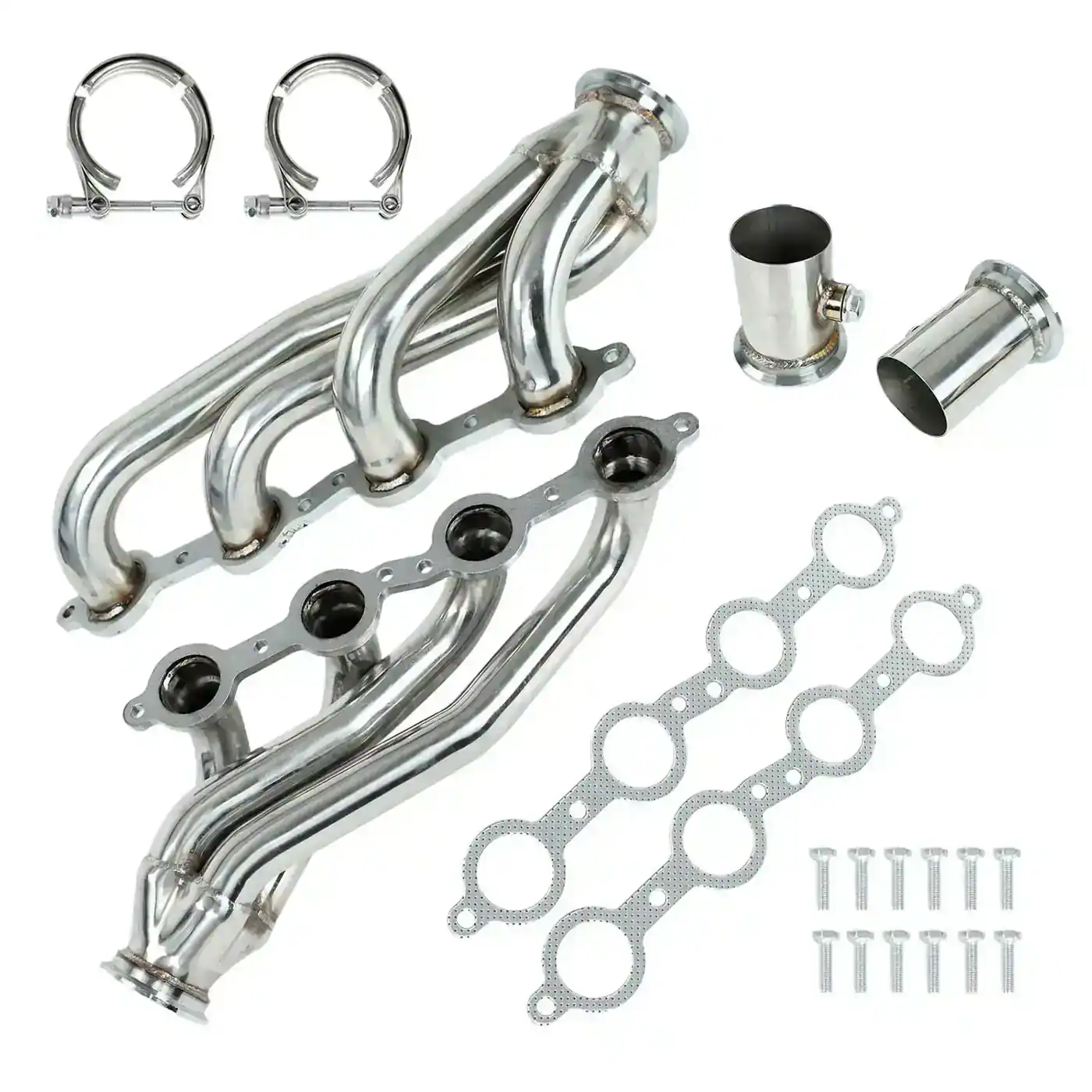
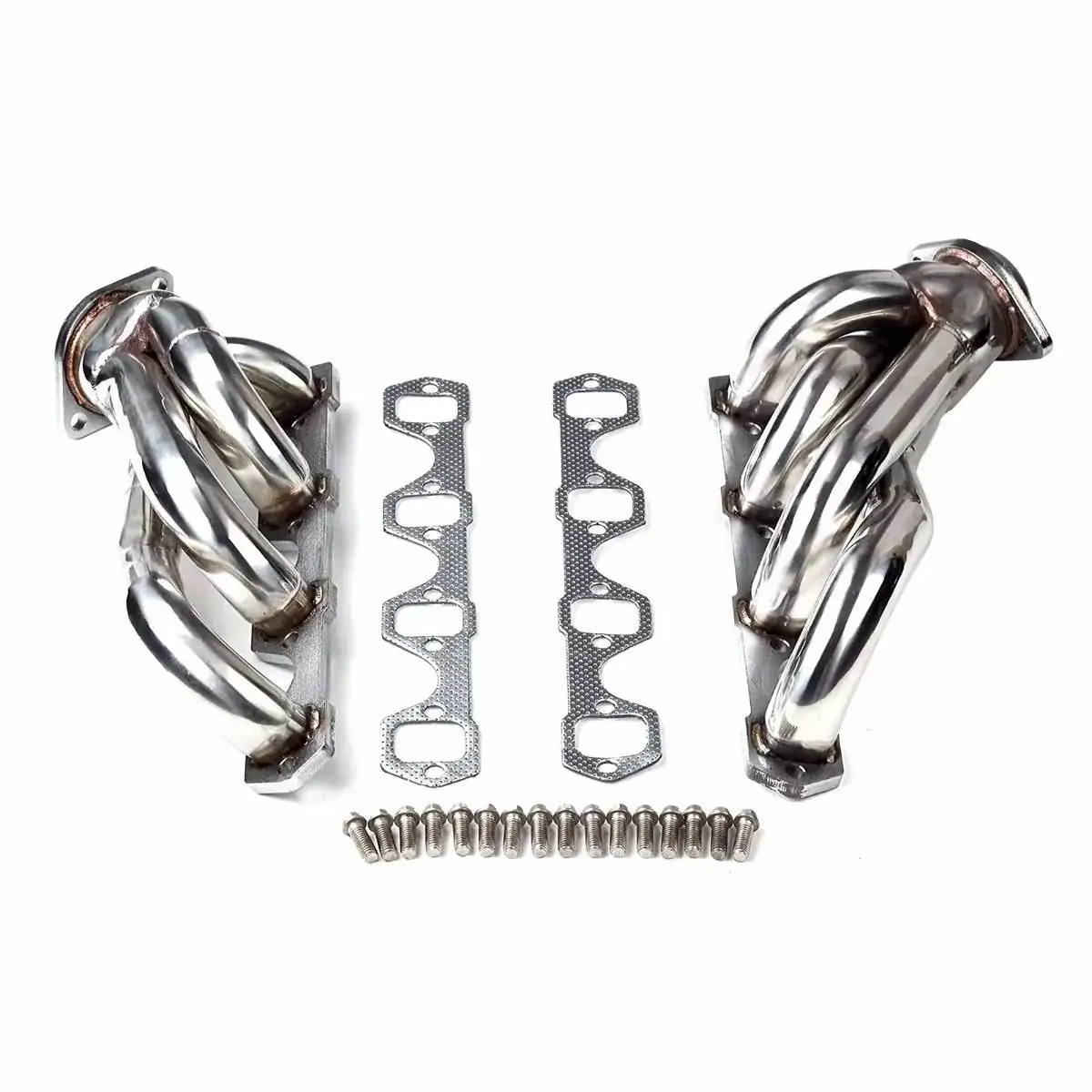
Products This Guide Applies To
Answers
Questions On This Topic
Is 201 stainless going to rust?
It is much more corrosion resistant than mild or aluminized steel but less resistant than T-304. In heavy salt use, surface staining is possible over time.
Can I tell the grades apart by looking?
Not reliably once both are polished. Go by the part specification rather than by eye.
Which grade do your parts use?
Both appear in the catalogue depending on the part number. Each product page states the material given in that part's specification.
Ask Before You Order
A two line email about the vehicle and the job saves a return later.