









Why Glove Choice Is A Process Decision
Welding gloves are a barrier against heat, sparks, molten metal and abrasion, and they also affect how well a welder can hold and control the torch or electrode. A glove that is right for stick welding is too stiff for TIG, and a TIG glove will not survive stick spatter. Choosing by price alone means one model gets issued for everything and it is wrong for most of the work.
Stick Welding Gloves
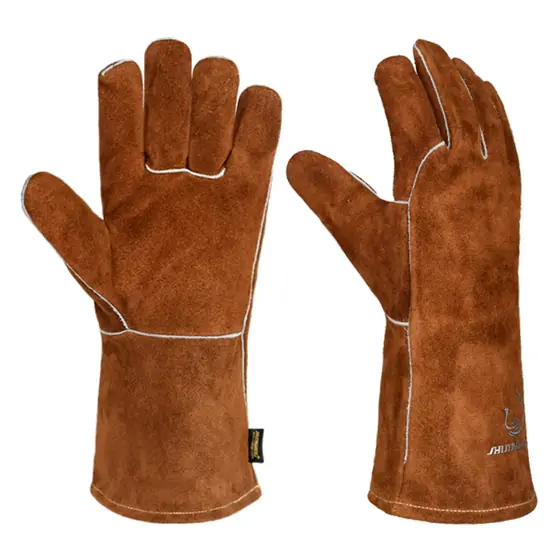
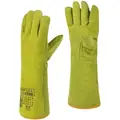
Stick welding produces high heat and significant spatter, so gloves are thick, heavily insulated and usually made from cowhide. Full linings and Kevlar thread matter here, because spatter lands directly on the seams. In our range the MS-726 side split cowhide glove is the model built specifically for stick work.
See the MS-726 Premium Side Split Cowhide Stick Welding Glove
MIG Welding Gloves
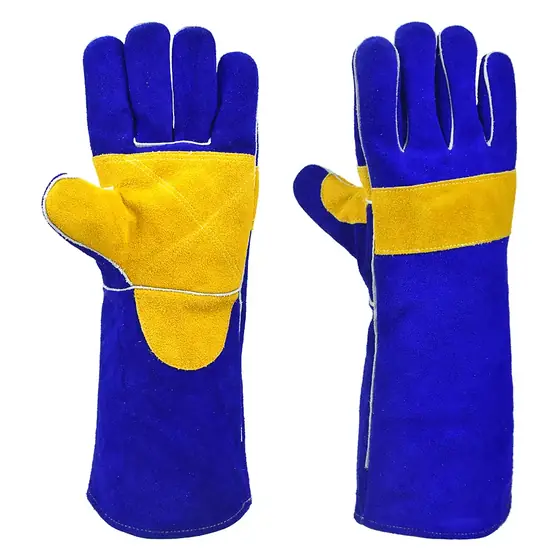
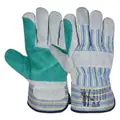
MIG welding needs a balance of dexterity and heat resistance. A fully lined 14 or 16 inch glove works well, with the longer cuff used for overhead and vertical-up work where spatter falls toward the forearm.
See the MS-776 16 inch Welding Gloves Heat/Fire Resistant
TIG Welding Gloves
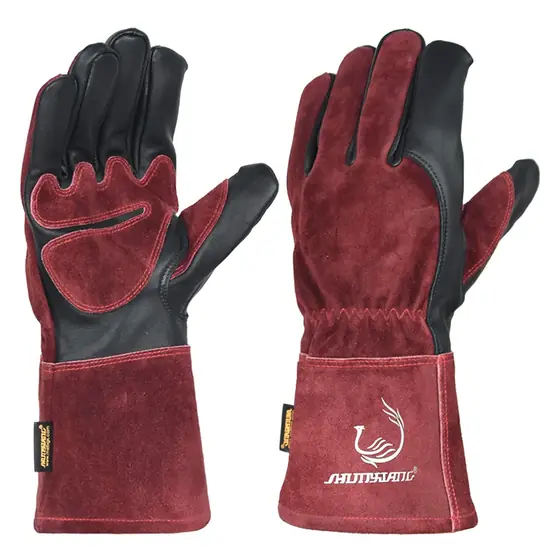
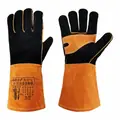
TIG demands fine motor control because the filler rod is fed by hand. Thinner leathers such as goatskin are used for that reason. The MS-832 combines goatskin with split cowhide and a fleece lining so the welder keeps feel without losing protection.
See the MS-832 Large Premium MIG/TIG Welding Gloves
Leather And Lining
Cowhide is durable and heat resistant, goatskin is lighter and more flexible, and pigskin stays supple after it gets wet. Linings change the glove as much as the leather does: an unlined glove gives maximum feel, a half lining balances feel and heat protection, and a full lining is for sustained heat and hot part handling.
Cuff Length And Fit
Longer cuffs protect the wrist and forearm, which matters most in overhead welding. Gloves that are too tight restrict movement and gloves that are too loose cost control, so size against a chart rather than by habit. As a rule: 12 inch for TIG, 14 inch for bench welding, 16 inch for overhead and heavy work.
Heat Resistance And Standards
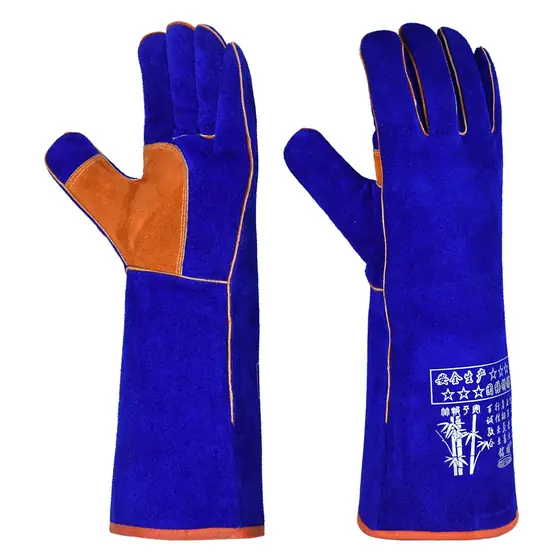
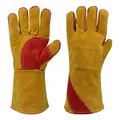
Check that gloves meet the thermal requirements written into your own specification. Our welding gloves are made from materials that meet CE requirements, with abrasion, cut and tear resistance performance stated per model, and dedicated high-heat models for radiant heat exposure.
See the MS-816 932℉ Leather Welding Gloves with Air-isolated Aluminium Foil
Making A Pair Last
Wipe off debris with a damp cloth rather than soaking the leather. Keep gloves out of prolonged heat when they are not in use, store them cool and dry, and inspect for holes, open seams and compressed linings. Replace gloves as soon as the palm is worn through, because a hole in the palm is where the burn happens.