








Sourcing Agent vs Trading Company:Which One Is Better for Your Business?
Sourcing agent vs trading company – which protects your interests? Learn how supplier verification, factory audits, and risk management differ.
But here is the truth many buyers learn too late: a significant number of those suppliers are not factories at all. They are trading companies.
So what should you do? Work directly with a trading company? Or hire a sourcing agent to find and verify real manufacturers on your behalf?
The answer depends on your product, order volume, and risk tolerance. In this article, we will compare both models honestly, share a real-world case where a low-price decision backfired, and show you how proper supplier verification can save your business from costly mistakes.
What Is a Trading Company?
What Is a Sourcing Agent?
Why It Is Difficult to Identify Real Factories on Alibaba?
How a Sourcing Agent Can Verify Suppliers Better?
When Should You Choose a Trading Company?
When Should You Choose a Sourcing Agent?
Frequently Asked Questions
What Is a Trading Company?
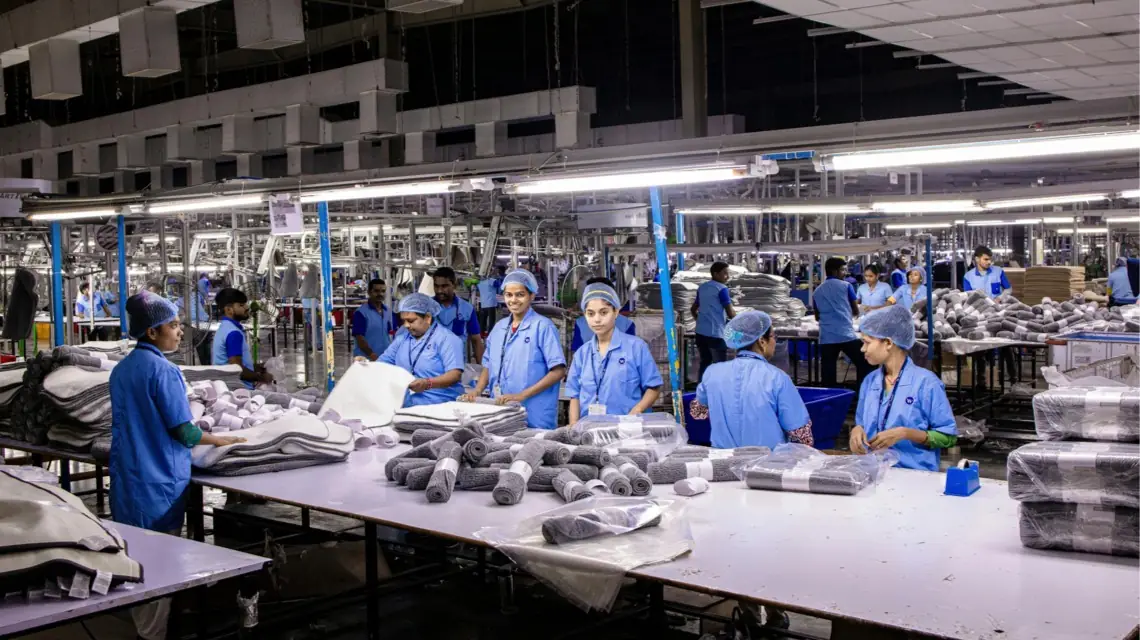
A trading company is an intermediary that buys products from factories and sells them to overseas buyers. They do not own or operate manufacturing facilities. Instead, they maintain relationships with multiple
China factory partners and offer a range of products.
On platforms like Alibaba, trading companies often present themselves as manufacturers. They use professional photography, employ English-speaking sales staff, and respond quickly to inquiries.
Advantages of trading companies:
Fast communication
They are built for export and reply within hours.
Broad product range
One trading company can offer hundreds of items.
Convenience
They handle export documentation, logistics coordination, and sometimes minor quality checks.
Low minimum order quantities (MOQs)
Unlike real factories that need large runs, trading companies aggregate orders.
Limitations of trading companies:
Limited transparency
You rarely know which factory actually produces your goods.
Higher markups
They add a margin on top of the factory price.
Lack of factory control
If quality problems arise, the trading company may blame the factory and offer little remedy.
Information asymmetry
They know the factory's real cost and capability. You do not.
A trading company can be a reasonable choice for small, simple, low-risk orders. But when something goes wrong, their loyalty is often to their factory partners – not to you.
What Is a Sourcing Agent?
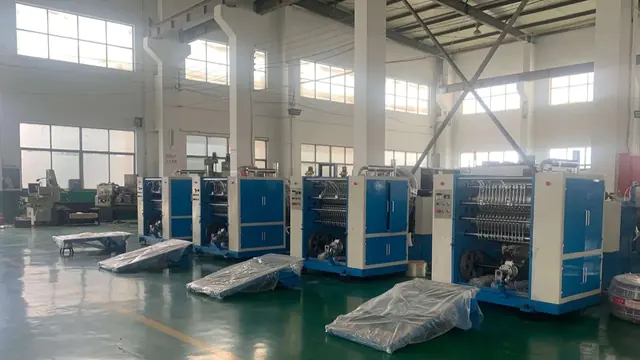
A sourcing agent works directly for you, the buyer. They do not own factories. They do not hold inventory. Their only job is to help you identify suitable manufacturers, verify their credentials, negotiate fair pricing, and manage production quality.
Think of a

China sourcing agent as your local employee in a manufacturing hub like Guangdong or Zhejiang.
Core responsibilities of sourcing services:
Supplier sourcing
Finding factories that match your product specifications.
Factory verification
Checking business licenses, ownership documents, and production capabilities.
Price negotiation
Obtaining factory-direct quotes and exposing hidden fees.
Quality control
Performing in-process inspections and pre-shipment checks.
Production follow-up
Tracking raw material purchases and production schedules.
Shipment coordination
Arranging logistics and export paperwork.
The key difference: a procurement partner like a sourcing agent owes their loyalty to you, not to any supplier. Their reputation depends on your success.
Why It Is Difficult to Identify Real Factories on Alibaba?
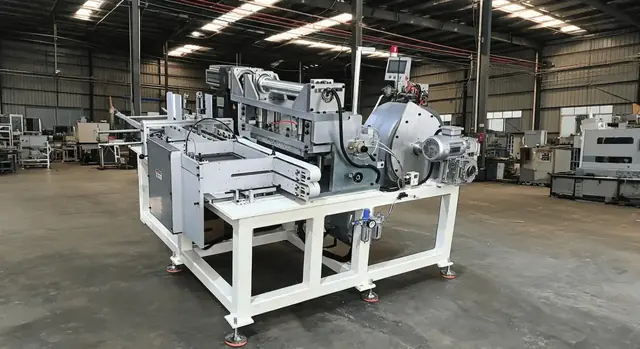
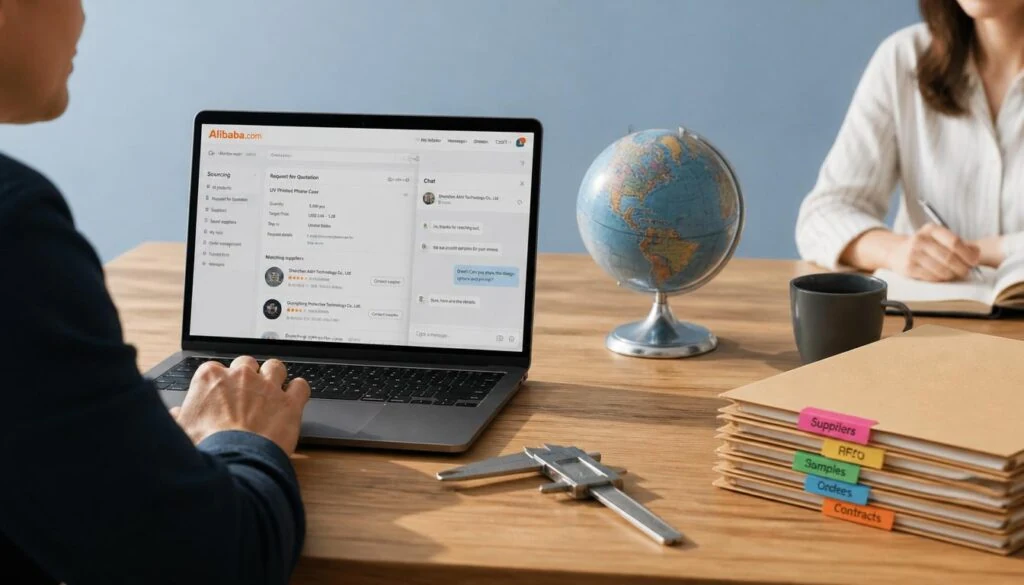
Alibaba is a powerful sourcing tool. But it is also a crowded marketplace where the line between real manufacturers and trading companies has become deliberately blurred.
Similar Product Listings
Browse any product category – from phone cases to packaging machines. You will see the same images, same descriptions, and same specifications repeated across dozens of supplier pages. Trading companies copy content from real factories, making it nearly impossible to tell who actually makes the product.
Manufacturer Claims
Many trading companies write "manufacturer" or "factory" in their company name and profile. Alibaba's verification badges (Gold Supplier, Assessed Supplier) only confirm that a company has paid a fee or submitted documents – not that they own production lines.
Factory Visits Can Be Misleading
Here is a common tactic: a trading company arranges for you to visit a factory. They introduce you to the factory owner. You see workers on the line. You leave convinced you have met the real manufacturer. But what you do not know is that the trading company simply has a relationship with that factory. They do not control production, and they may switch to a different, lower-quality factory for your actual order without telling you.
This creates confusion. You believe you are dealing with a factory, but your real counterparty is a middleman with no manufacturing accountability.
Real Case Study: When Choosing the Lowest Price Became Expensive
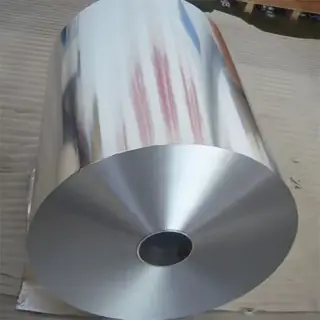
An Indian customer wanted to source a container of aluminum foil raw material. He found a supplier on Alibaba. The price was significantly lower than other quotes. The supplier presented a polished profile, responded quickly, and even invited the customer to visit a factory in China.
The customer flew to China. The factory looked legitimate – busy workers, machines running, raw materials on the floor. He assumed the factory belonged to the supplier. Confident and eager to save money, he placed a large order and paid a 30% deposit.
But then raw material prices in China increased. The supplier came back and asked for additional payment. The customer refused, citing their signed contract.
Because the supplier did not actually own the factory – they were a trading company with no direct control – the factory decided to divert the purchased raw materials to other, more profitable orders. Production stopped completely.
The result:
Nearly $30,000 in direct losses from the deposit
Missed delivery schedules that cost the customer his own buyer relationships.
Months of legal disputes across borders, with little progress.
The deposit remains unrecovered today.
Let us be clear: the problem was not that the supplier was a trading company. Many trading companies operate honestly. The real issues were lack of transparency, no supplier verification, and zero risk management
A sourcing agent could have prevented this by verifying factory ownership, assessing financial health, and structuring payment terms that protected the buyer.
How a Sourcing Agent Can Verify Suppliers Better?
Professional sourcing services go far beyond what a buyer can do alone. Here are the verification methods that separate a trusted procurement partner from a simple order-taker.
Business Registration Checks
A sourcing agent pulls official local business registration records in China. This reveals the legal entity type, registered capital, and whether the company is licensed for manufacturing or only for trade.
Factory Ownership Verification
Lease agreements, utility bills, and property documents prove whether a supplier actually owns or rents a factory. Many trading companies rent a small office and claim factory status. An on-site visit confirms the truth.
Production Capability Assessment
A real factory audit reviews:
Number of production employees vs. administrative staff.
Equipment age, maintenance records, and capacity.
Production lines dedicated to your product type.
Certifications like ISO, BSCI, or industry-specific standards.
Financial and Operational Background Checks
Agents can request credit reports, check for past legal disputes, and speak with other buyers who have used the factory. Warning signs – like multiple lawsuits or rapid ownership changes – become visible before you pay a deposit.
On-Site Factory Audits
A professional factory audit takes half a day or more. The agent walks the entire production floor, interviews line supervisors, reviews quality control logs, and takes dated photographs. You receive a detailed report with evidence, not just promises.
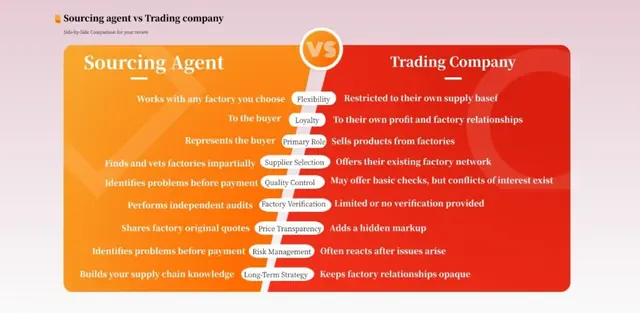
Sourcing Agent vs Trading Company: Side-by-Side Comparison
Neither model is inherently bad. A trading company can be fast and convenient for simple, low-value products. A sourcing agent becomes essential when you need transparency, quality assurance, and long-term reliability.
When Should You Choose a Trading Company?
A trading company makes sense in specific situations:
Small order quantities
Real factories often refuse small runs. Trading companies consolidate orders.
Multiple product categories
If you need ten different items from different industries, one trading company can source them all.
Simple consumer products
Basic items like phone cases, promotional gifts, or low-cost tools have lower risk.
Convenience is your priority
You accept higher prices in exchange for faster quoting and simpler logistics.
If your ord
Have a project like this?
We source the machinery, audit the factory and inspect the goods before they ship.
Ask a question Email usRelated equipment and products
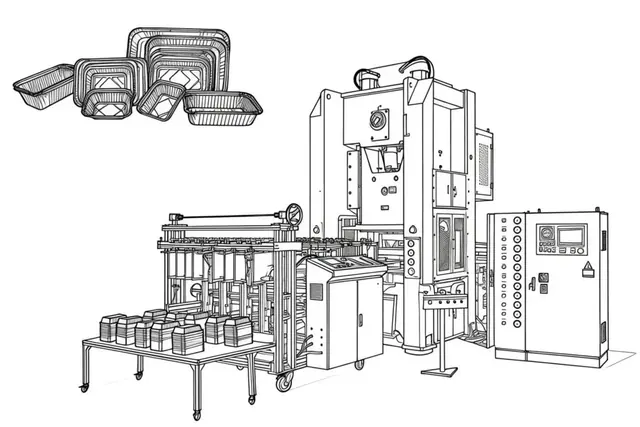
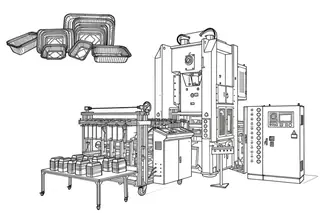
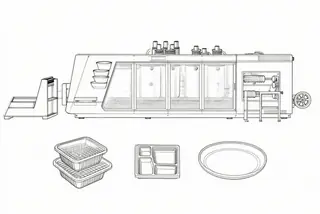
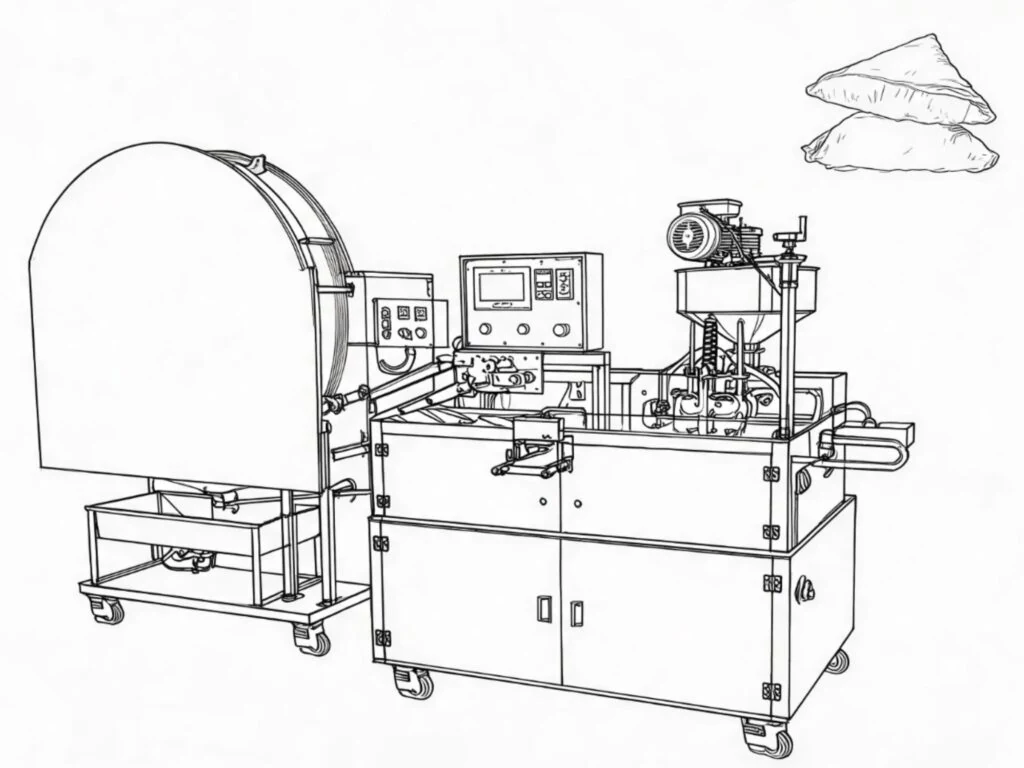
Aluminum Foil Container Making Machine
High-speed press line that converts aluminum foil jumbo rolls into finished food containers automatically.
View details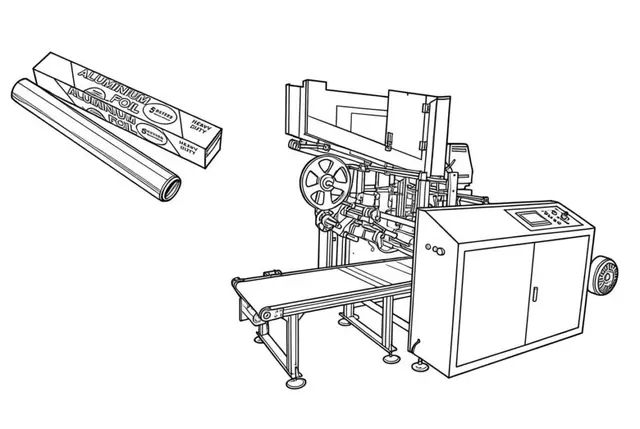
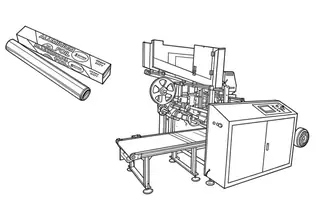
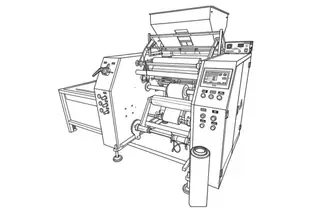
Full Automatic Rewinding Machine
Unwinds jumbo rolls, controls tension, slits, rewinds onto cores, cuts and discharges finished rolls automatically.
View details
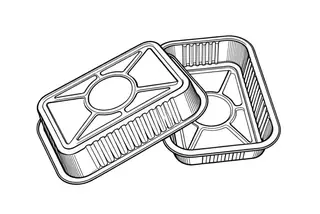
Aluminum Foil Container
Used for food storage, baking and takeaway packaging, offering heat resistance and leak-proof convenience.
View detailsTurn this into a project
Send us your target product and market. We come back with the factory shortlist and what it costs to verify them.