





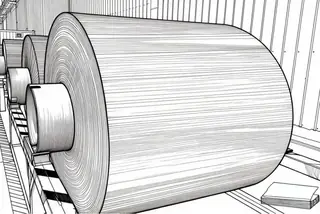
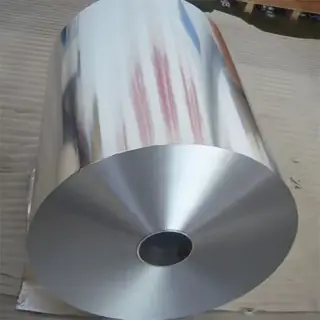
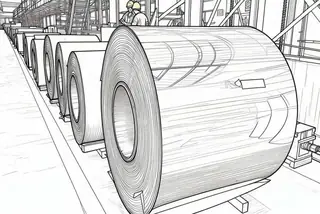









Household Aluminum Foil Roll Sizes – Common Lengths, Widths, and Core Diameters
Learn standard household aluminum foil roll sizes, including common widths, lengths, core diameters, and regional specifications for global markets.
If you've ever sourced household aluminum foil from China or compared products in different supermarkets, you've probably noticed that some rolls are only 10 meters long while others exceed 100 meters. Likewise, roll widths can range from 250 mm for household use to 450 mm for commercial kitchens. Even the paper core inside the roll comes in different diameters to match various rewinding machines.
For importers, distributors, and private label brands, understanding household aluminum foil roll sizes is more than just selecting a product specification. The right dimensions can reduce shipping costs, improve shelf presentation, meet local consumer preferences, and ensure compatibility with packaging equipment.
In this guide, we'll explain the most common household aluminum foil roll dimensions, including widths, lengths, and core diameters. We'll also explore how these specifications differ across international markets and what factors manufacturers consider when producing customized foil rolls.
What Defines the Size of a Household Aluminum Foil Roll?
1. Roll Width
The width refers to the distance across the aluminum foil after it has been slit from the jumbo roll.
Common widths include:
250 mm
300 mm
305 mm
450 mm
The width determines how convenient the foil is for wrapping food, lining baking trays, or covering containers. A wider roll is generally preferred for restaurants and catering businesses, while narrower rolls are more popular for household kitchens.
From a manufacturing perspective, roll width also affects how efficiently a jumbo roll can be divided during the slitting process. Well-planned widths help minimize material waste and improve production efficiency.
2. Roll Length
Roll length measures how much aluminum foil is wound onto the paper core.
Typical retail products include:
10 m
20 m
30 m
50 m
Commercial products may reach:
100 m
150 m
200 m
Longer rolls reduce replacement frequency and are often preferred by restaurants, hotels, and catering companies. Shorter rolls are easier for supermarkets to package, transport, and display on shelves.
One thing many first-time buyers overlook is that increasing the roll length also increases the finished roll's weight and outer diameter. This may require adjustments to the packaging box, carton size, and pallet configuration.
3. Core Diameter
Common innner core diameter are:
30mm
38mm
Customized based on your requirements
Every household aluminum foil roll is wound around a paper tube, commonly called the paper core
The core diameter affects several aspects of production, including:
rewinding machine compatibility roll stability dispenser compatibility packaging dimensions
Although consumers rarely notice the core size, manufacturers pay close attention to it because changing the core diameter often requires adjustments to production equipment.
Choosing the wrong core size can create unnecessary complications during packaging or cause compatibility issues with existing dispensers.
4. Outer Roll Diameter
The outer diameter refers to the total diameter of the finished roll after the foil has been rewound.
Unlike roll width or core diameter, the outer diameter is not fixed. It depends on several production factors, including:
foil thickness roll length core diameter
For example, two rolls with the same length can have different outer diameters if one uses thicker aluminum foil.
Outer diameter is especially important when designing retail cartons because oversized rolls may not fit inside standard packaging boxes.
Standard Household Aluminum Foil Roll Widths
Among all product specifications, roll width is one of the first parameters buyers need to decide. It directly influences how consumers use the foil and how efficiently manufacturers convert jumbo rolls into finished products.
While customized widths are always possible, several standard dimensions dominate the global market because they balance convenience, production efficiency, and packaging costs.
Roll Width
Typical Applications
Common Markets
250 mm
Small households, food wrapping, baking
Europe, Southeast Asia
300 mm
General household use
Asia, Middle East
305 mm (12″)
Retail kitchen foil
North America
450 mm (18″)
Catering, restaurants, commercial kitchens
Worldwide Food Service
These dimensions have become industry standards because they match common kitchen equipment and consumer habits.
250 mm – Compact Household Roll
The 250 mm width is widely used in European supermarkets and many Asian countries.
Its compact size makes it ideal for:
wrapping sandwiches covering bowls packing leftovers lining smaller baking trays
Because the roll is relatively narrow, it is lightweight and easy for consumers to handle. It also allows manufacturers to fit more units into shipping cartons, reducing transportation costs.
This width is particularly popular among private label supermarket brands where affordability and convenience are important selling points.
300 mm – The Most Versatile Width
The 300 mm roll is often considered the "all-purpose" household aluminum foil size.
It provides enough coverage for most everyday cooking tasks while remaining easy to store in standard kitchen drawers.
Many distributors choose this width because it appeals to a broad range of consumers and works well across different retail channels.
From our experience, this size is also one of the easiest to customize with different roll lengths, packaging styles, and private label designs.
305 mm (12 Inches) – North American Standard
If you're exporting to the United States or Canada, you'll frequently encounter 305 mm (12-inch) household foil rolls.
The dimension aligns with the imperial measurement system commonly used in North America and fits many foil dispensers designed for residential kitchens.
Although the difference between 300 mm and 305 mm seems small, using the correct specification helps products meet market expectations and avoids confusion among distributors and consumers.
Many OEM manufacturers produce both sizes using the same production line with only minor adjustments during the slitting process.
450 mm – Commercial and Catering Applications
The 450 mm width is primarily intended for professional users rather than ordinary households.
Restaurants, hotels, bakeries, airlines, and catering companies often require wider foil rolls to cover large food trays or wrap bulk ingredients efficiently.
Compared with narrower household rolls, 450 mm products usually feature longer roll lengths and heavier packaging to withstand frequent use in busy commercial kitchens.
Although production costs are slightly higher, commercial users generally value durability and efficiency more than compact packaging.
Why Different Markets Prefer Different Widths
One question many importers ask is why manufacturers don't simply produce one universal width.
The answer lies in market demand.
Consumer cooking habits, oven sizes, packaging standards, and retail preferences vary from country to country. A roll that sells well in North America may not perform as well in Europe or Southeast Asia.
For this reason, experienced aluminum foil manufacturers often recommend roll widths based on the destination market rather than applying a one-size-fits-all approach.
Common Aluminum Foil Roll Lengths
After selecting the appropriate roll width, the next important specification is roll length
This determines how much aluminum foil is wound onto each paper core and directly affects product weight, packaging size, transportation costs, and consumer convenience.
There is no universal standard for household aluminum foil roll lengths. Instead, manufacturers produce different lengths based on the target market, intended application, and customer preferences.
Standard Aluminum Foil Roll Lengths
The table below shows some of the most common roll lengths found in international markets.
Roll Length
Typical Application
Popular Markets
5 m
Trial packs, promotional products
Europe
10 m
Small households
Europe, Southeast Asia
20 m
Daily household use
Global
25 m
Family-size retail
Europe
30 m
Standard supermarket product
Asia, Middle East
50 m
Large households, frequent cooking
Worldwide
75 m
Restaurant and food preparation
Commercial
100 m
Catering and food service
Worldwide
150 m
Professional kitchens
Commercial
200 m
Industrial kitchens and catering
Commercial
Although custom lengths are available, these sizes account for the majority of global household aluminum foil products.
10–30 Meter Rolls: Designed for Everyday Household Use
Rolls between
10 and 30 meters are the most common products found in supermarkets.
They offer a balance between affordabilit
Have a project like this?
We source the machinery, audit the factory and inspect the goods before they ship.
Ask a question Email usMore on Products & Applications
Related equipment and products
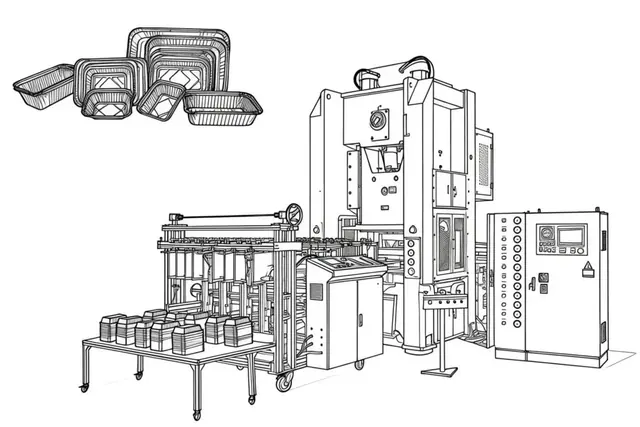
Aluminum Foil Container Making Machine
High-speed press line that converts aluminum foil jumbo rolls into finished food containers automatically.
View details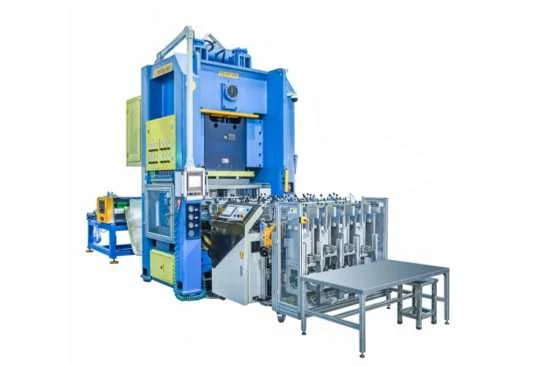
C-Frame Foil Container Machine
C-frame press configuration for aluminum foil container forming, with open access on three sides.
View details
H-Frame Foil Container Press
Closed H-frame press built for heavier, higher-tonnage aluminum foil container forming.
View detailsTurn this into a project
Send us your target product and market. We come back with the factory shortlist and what it costs to verify them.