
Continuous Pattern Tiles Explained
Continuous pattern tiles are tiles whose printed or textured design carries across the joint from one piece to the next, so a floor or wall reads as one unbroken surface rather than a grid of repeated squares. HKBM supplies interior floor and wall tiles in three continuous-pattern families: infinite chain, infinite continuous and free interlacing, alongside straight edge designs. This guide explains how each family behaves on site, which formats suit which rooms, and what to confirm before you load a container. By the end you should be able to choose a pattern type, shortlist formats, and know which details to settle per order.
What Continuous Pattern Means on A Finished Floor
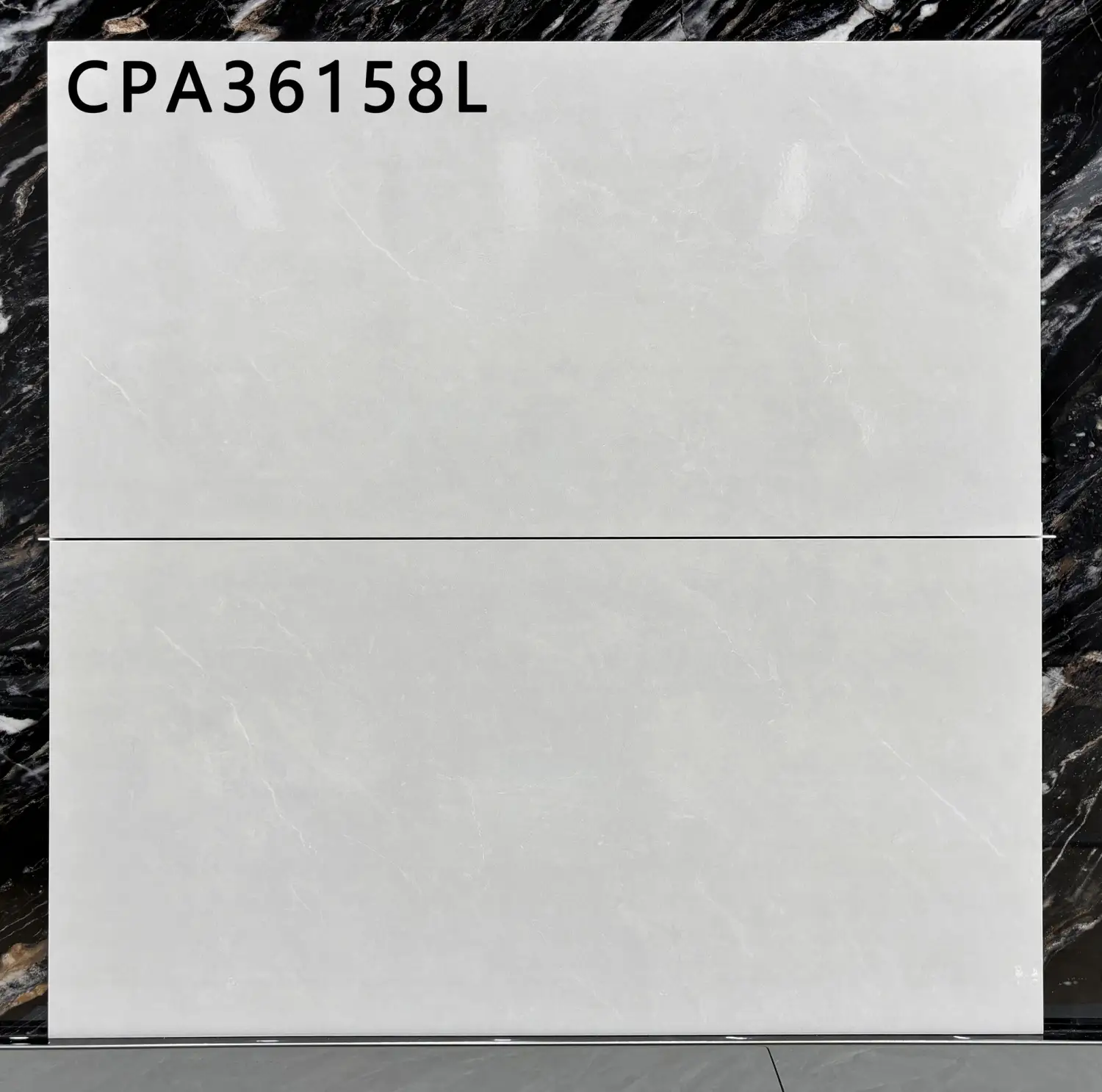
A standard printed tile repeats one image on every piece, so once the grout lines go in, the eye picks up the repeat and the surface reads as a regular grid. A continuous pattern tile is designed so the veining, grain or motif flows from one tile into the next, breaking that grid effect. The result is closer to the look of natural stone slabs or a poured surface, which is why these designs are common in lobbies, open-plan living areas and showrooms. The trade-off is that layout planning matters more, because the pattern direction must be decided before the first tile is set. HKBM lists three continuous-pattern families in its tile range, and the differences between them affect how forgiving the installation will be.
Infinite Chain Versus Infinite Continuous
Infinite chain tiles are made so that any piece can sit next to any other piece and the pattern still connects, which gives the installer freedom and reduces waste from sorting. Infinite continuous tiles follow a set sequence, so pieces are laid in a defined order or orientation to keep the design flowing across the surface. For a buyer, the practical difference is labour and risk: chain layouts are more forgiving with mixed cartons, while continuous layouts reward careful dry-laying and numbering on site. Both styles appear across the HKBM tile range in glossy and matt finishes. When you request a catalogue, ask for the laying diagram for the specific model so your installer knows which system they are working with before the container arrives.
Free Interlacing and Straight Edge Options
Free interlacing patterns allow tiles to be rotated or offset while the design still links, which suits herringbone-style or staggered layouts on feature walls and corridors. Straight edge designs sit at the other end of the spectrum: the pattern does not attempt to flow, and the grid is part of the look. Many projects mix the two, using a continuous pattern on the main floor and a simpler straight edge tile in utility areas to control cost. HKBM's range of 1460 tile models spans all four pattern types across interior floor and wall, external and wooden rustic tiles. That breadth means one container can carry a coordinated set for a whole project rather than sourcing each room from a different supplier.
Choosing Formats for Each Space
Format drives both the visual effect and the shipping plan. Large formats such as 750*1500 and 900*1800 give the strongest continuous effect on floors because fewer joints interrupt the pattern, but each piece is heavier and needs careful handling on site. Mid formats like 600*600, 600*1200 and 800*800 balance the slab look against easier cutting and laying, and they are the most common choice for apartments and villas. Wall tiles in 300*600 and 400*800 carry continuous veining well in bathrooms and kitchens, while 300*300 and 400*400 suit wet-room floors where more grout lines help drainage falls. Strip formats of 150*800, 150*900, 200*1000 and 200*1200 are typically the wooden rustic tile range, where the plank shape does the pattern work. When you plan a container, list formats room by room so cartons can be loaded and labelled by area.
Glossy or Matt Finish for Continuous Designs
Glossy finishes deepen the colour and reflection of a continuous vein, which suits low-traffic feature areas, hotel-style bathrooms and walls where cleaning is easy. Matt finishes read more like honed stone, hide smudges and footprints better, and are the safer default for main floors, kitchens and any space that sees outdoor footwear. For external tile applications, matt is the usual specification, and slip behaviour should be confirmed for the exact model rather than assumed from the finish name. Both finishes are available across the continuous-pattern families in the HKBM range. Order samples of the same design in both finishes under your project's actual lighting before committing a container to one.
What to Confirm Before You Order
Continuous pattern tiles reward buyers who pin down details early. Confirm which laying system the model uses, chain, continuous sequence or free interlacing, and get the laying diagram with the catalogue. Confirm the finish, the format mix per room, and the quantity of each model so the pattern families do not get mixed on site. Ask for carton marking by model and room so unloading and distribution inside the project is fast. Prices, lead times and order quantities are confirmed per order, and the 88 PDF catalogues across the product ranges are sent on request through Coco Qiu or Johnny Wong on WhatsApp or email. If your project also needs doors, windows or bathroom fittings in the same shipment, consolidating them with the tiles in one container is how the one-stop supply model saves freight cost.
Key Takeaways
- Pick the laying system first: infinite chain is forgiving, infinite continuous needs sequenced laying, free interlacing suits staggered layouts.
- Use 750*1500 or 900*1800 for the strongest continuous floor effect, and 600*600 or 800*800 where easier handling matters.
- Default to matt for main floors and external areas; reserve glossy for walls and low-traffic feature spaces.
- Request the PDF catalogue and laying diagram for each model, and confirm price, quantity and lead time per order before loading.
Continuous Pattern Tiles Explained FAQ
What Is the Difference Between Infinite Chain and Infinite Continuous Tiles
Infinite chain tiles connect in any orientation, so any piece can sit next to any other. Infinite continuous tiles follow a set sequence or direction, so the installer lays them in order to keep the pattern flowing.
Which Tile Formats Work Best for a Continuous Pattern Floor
Large formats such as 750*1500 and 900*1800 give the fewest joints and the strongest unbroken effect. Mid formats like 600*1200 and 800*800 are easier to handle and cut while still carrying the design well.
Are Continuous Pattern Tiles Available in Matt As Well As Glossy
Yes. The HKBM tile range offers both glossy and matt finishes across the continuous pattern families. Matt is the usual choice for main floors and external areas, glossy for walls and feature spaces.
How Do I Get Catalogues and Prices for These Tiles
PDF catalogues covering the tile families are sent on request. Contact Coco Qiu or Johnny Wong by WhatsApp or email; prices, quantities and lead times are confirmed per order.
Start With a Model List
Send the trades and quantities your project needs. We come back with one quotation covering the whole list.