
China Plus One Has Gone Mainstream
Every serious buyer we work with is running a hedging play: keep China as the primary base, develop a secondary foothold — usually Vietnam, India or Mexico. What is less commonly said is that China remains 10–15% cheaper on equivalent quality for most engineered products.
So the plus one is not about replacing China. It is about negotiating leverage. Clients who set up a secondary supplier in Vietnam or Thailand consistently get 3–8% better pricing from their Chinese factories, because the threat of volume migration is credible.
Practical takeaway: do not put all your eggs in one province, let alone one country. Even an audit-ready backup supplier gives you bargaining power you can use immediately.
Small-Batch High-Mix Production Is Now Feasible
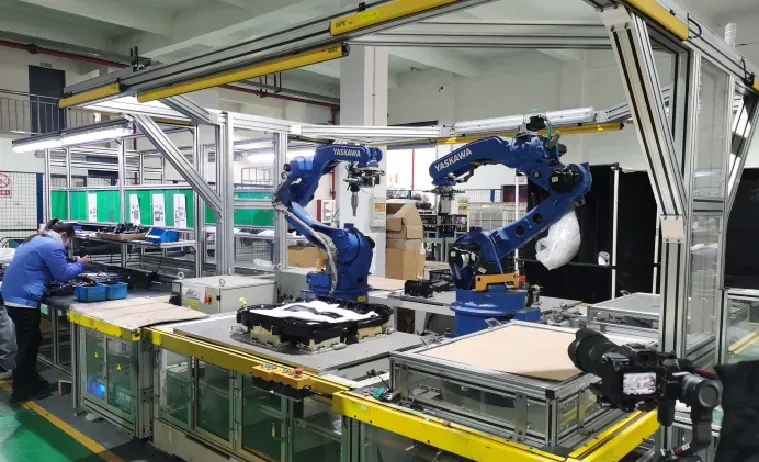
The old MOQs of 1,000–5,000 units per SKU are breaking down. Factories retrofitting production lines with modular tooling and digital workflow management can run as low as 100–300 units at only a 5–10% cost premium over full-MOQ pricing.
For importers testing new markets this changes the risk calculation entirely. You no longer need to bet $50,000 on an untested product. Run a 300-unit batch, validate the market, then scale.
Where to look: factories in the Yangtze River Delta around Ningbo, Suzhou and Wuxi have generally been faster to adopt flexible manufacturing than their Pearl River Delta counterparts.