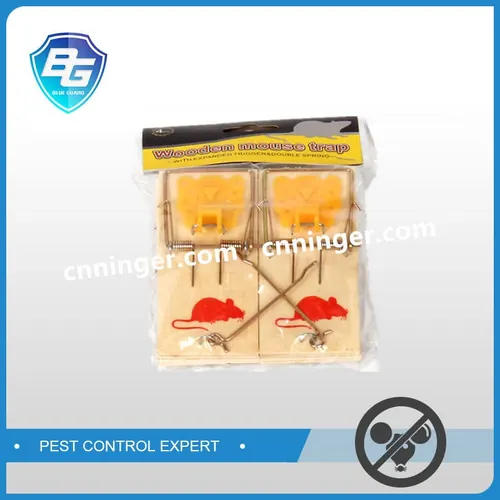
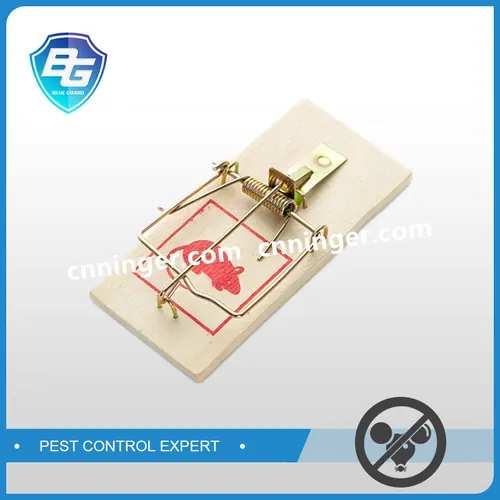
Knowledge Center · Wooden Mouse Traps
Step-by-step use of a snap trap, the safety points that matter, and how traps fit alongside other rodent control methods.
A snap trap is simple, but catch rates depend almost entirely on how it is baited, set and placed.
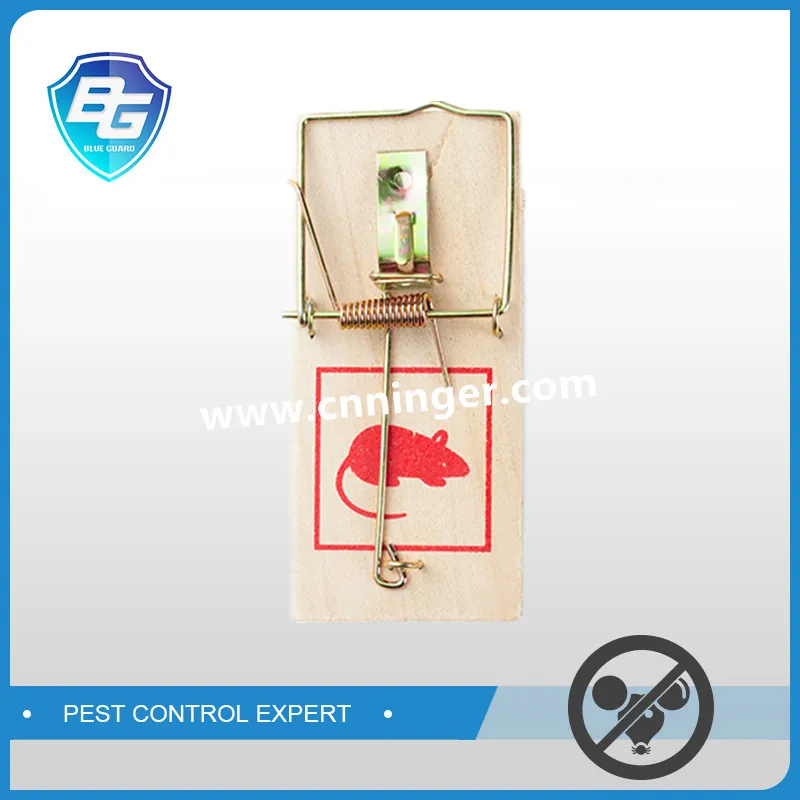
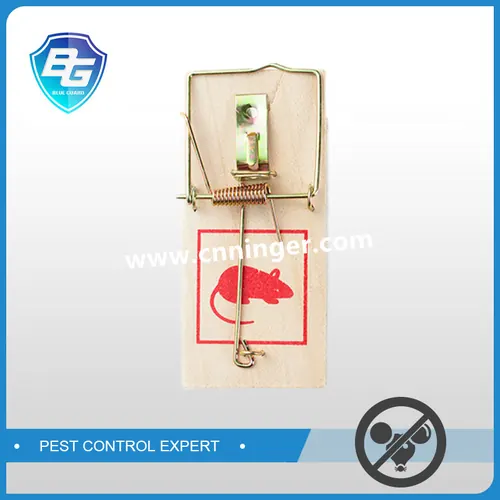
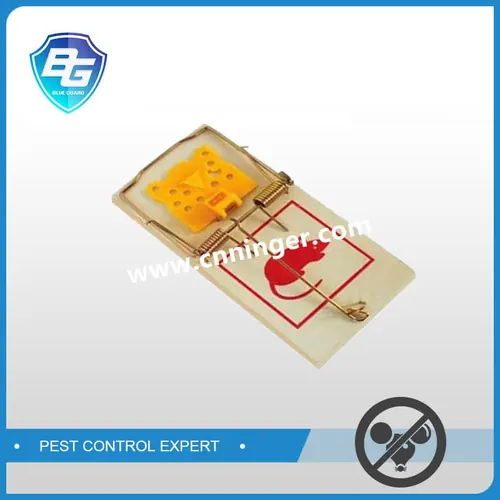
Put the bait in the bait cup first. Choose the bait according to the rodent species and the site, adjust it if catch rates fall, and keep it fresh through continuous use. Hold the spring end, press down firmly until it clicks, and the trap is set.
Place the set trap where rodents are active. Along the wall line is the general rule, because rodents travel with one side against a surface. In most locations traps are laid out at night and collected in the early morning. In low-traffic areas such as warehouses, traps can be inspected, re-baited with fresh bait and left in place.
Confirm the trap is in the released state before handling it, and never touch the treadle of a set trap by hand. Keep children away from the product at all times. Keep pets under control while traps are deployed. Store all food away during deployment so the bait is the most attractive thing in the room, which raises the catch rate.
A trap that has caught a rodent can be cleaned and used again.
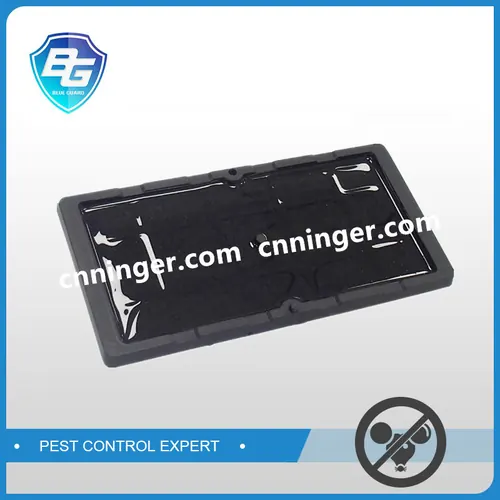
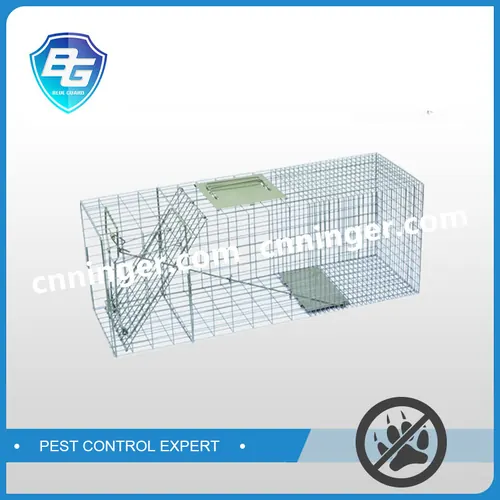
Physical control — glue boards, snap traps and cage traps — is efficient, hygienic, safe around people and leaves no residue. Chemical baiting is prepared according to season and environment. Building exclusion is the most lasting method: repair broken drainage, fit one-way valves on pipes running to open water, and keep the foundation at least 60 cm above ground, adding a 10 cm L-shaped concrete barrier to older buildings that cannot meet this.
FAQ
Describe the site and the pest pressure and we will recommend the models and placement that work.