How to Protect Large
Aluminum Panels
During Shipping and Handling
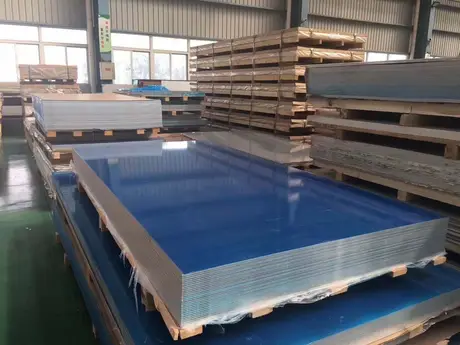
For international orders, especially those shipped by sea, aluminum panels may pass through multiple stages of loading, unloading, storage, and delivery. A well-designed packaging system can significantly reduce the risk of damage before the products arrive at the project site.
Why Do Large Aluminum Panels Need Special Protection?
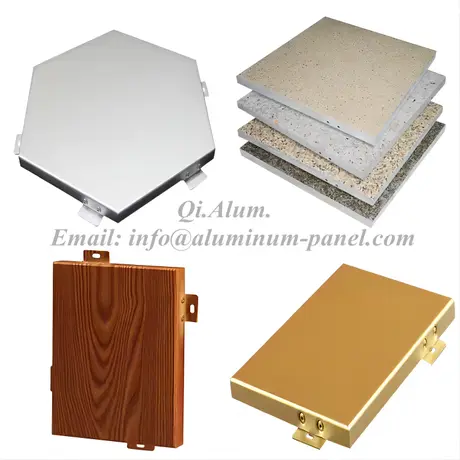
Large-format aluminum panels have a relatively large surface area, making their finished surfaces more exposed during transportation. Improper stacking, lifting, or handling may cause:
Surface scratches
Corner and edge damage
Dents caused by impact
Bending or deformation
Friction between individual panels
Damage to the coating or decorative finish
For this reason, packaging should be selected according to the panel size, shape, weight, surface finish, transportation method, and specific project requirements.
1. Protective Film for the Panel Surface
For products that require surface protection, a protective film can be applied to the finished aluminum surface before packaging.
The protective film helps reduce the risk of scratches, friction marks, and surface contamination during handling and installation.
It is particularly useful for aluminum panels with
Powder-coated finishes
PVDF coatings
Anodized surfaces
Wood grain finishes
Brushed or decorative finishes
Custom colors and patterns
The type of protective film can be selected according to the product and customer requirements.
2. Complete Bubble Wrap Protection
In addition to the protective film, aluminum panels can be completely wrapped with bubble wrap before being placed into the outer packaging.
Bubble wrap provides an additional cushioning layer between the aluminum panels and the external packaging structure. It helps absorb minor impacts and reduces friction during transportation.
For long-distance international shipping, multiple layers of packaging can provide additional protection against handling-related damage.
3. Protection for All Four Corners
The corners of large aluminum panels are particularly vulnerable to impact during loading and unloading.
Therefore, protective materials can be installed around all four corners of the panels. These corner protectors help reduce the risk of:
Corner dents
Edge scratches
Impact damage
Friction against the packaging structure
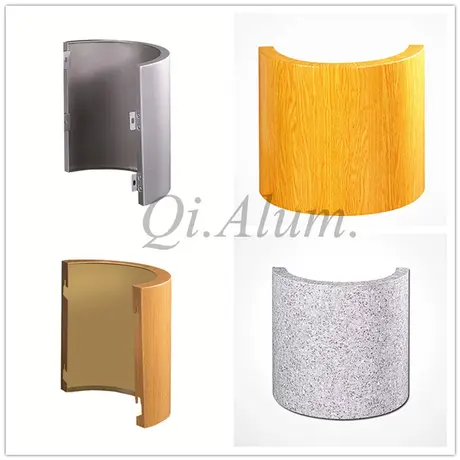
For large or specially shaped panels, additional protection can be added to exposed edges and other vulnerable areas according to the product design.
4. External Wooden Frame
After the panels are wrapped and protected, an external wooden frame can be used to secure the products.
The wooden frame provides structural support and helps keep the panels stable during transportation. It also creates a physical barrier between the packaged aluminum panels and external objects.
The design of the wooden frame can be adjusted according to:
Panel dimensions
Number of panels
Product weight
Panel shape
Loading requirements
Transportation method
For export shipments, the packaging structure is designed with the entire transportation process in mind, from factory loading to final unloading.
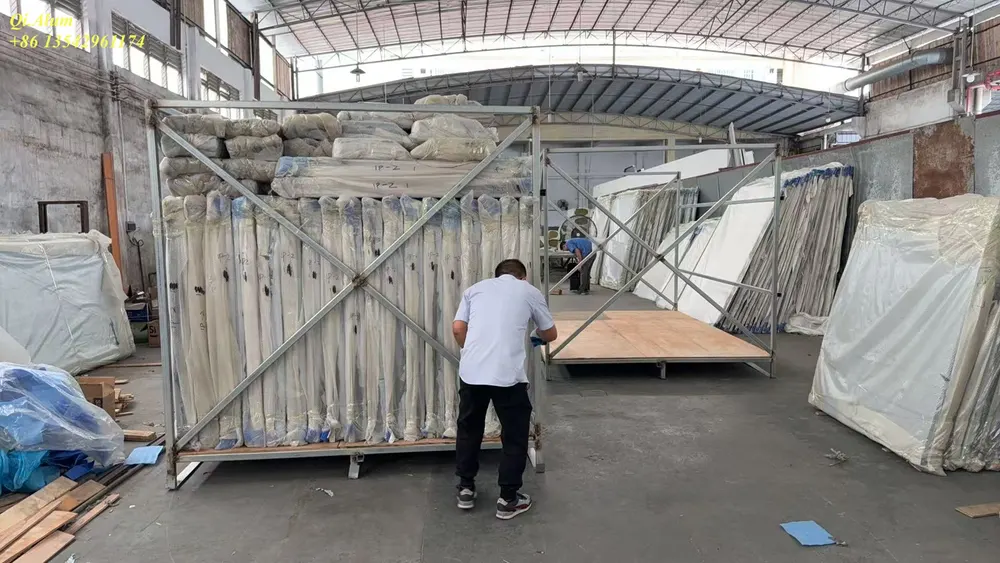
5. Iron and Wood Packaging for Special Requirements
For certain products, a standard wooden frame may not be the most suitable option.
Depending on the panel size, weight, shape, or project requirements, an
iron and wood combined packaging structure
can be used.
This type of packaging combines the structural strength of an iron frame with the cushioning and supporting functions of wooden components. It can be particularly suitable for large-format, heavy, or specially shaped aluminum panels.
The final packaging solution is selected according to the specific characteristics of the product rather than using one standard method for every order.
6. Packaging Can Be Customized According to the Product
Different aluminum products require different protection methods.
For example, standard flat panels may require protective film, bubble wrap, corner protection, and a wooden frame. Large-format or irregularly shaped panels may require additional edge protection or a stronger iron and wood packaging structure.
A typical protection system may include
This layered approach allows the packaging to be adapted to the requirements of different aluminum panel products and projects.
7. Proper Handling Is Also Important