A buyer's guide to picking solar PV modules: system voltage first, mono versus poly, degradation clauses, PID and salt resistance, mounting and cable knock-on
A module is only correct in the context of the inverter and battery it feeds. Fix the system voltage and the inverter input range first, then choose a module whose open-circuit voltage and string length fit inside that range. Choosing a panel because it has the highest wattage on the datasheet is how arrays end up outside the MPPT window.
Monocrystalline modules give more watts per square metre, so they win where roof area is the binding constraint. Polycrystalline modules cost less per watt and make sense on ground mounts where there is room to spread the array. Both are supplied in blue or black, and the electrical behaviour of the system does not change with the choice.
A twenty-five year warranty is only meaningful together with the output it guarantees at the end of that term. Check the guaranteed percentage of rated power, because that number is what determines the array size you need in year twenty, not the number on the box today.
PID resistance protects output where modules sit at high system voltage in humid conditions. Salt and ammonia resistance matters on coastal installations and near livestock buildings. On an inland domestic roof neither will change much, so do not pay for a specification the site does not need.
Module weight and frame dimensions decide the rail spacing and the clamp positions on the mounting structure. Confirm the module before the bracket is drawn, otherwise the structure has to be adapted on site with holes that were not in the design.
Every module choice implies a string current, and the string current sets the PV cable cross section. Single-core 4mm2 and 6mm2 cable covers most residential arrays, and MC4 connectors rated for the array voltage should be specified in the same order rather than sourced locally.
Give the supplier the roof or ground area, the inverter model or the system voltage you intend, the daily kWh you need and the site conditions. That is enough for a module choice and a string layout to be proposed, and it avoids two rounds of revisions.

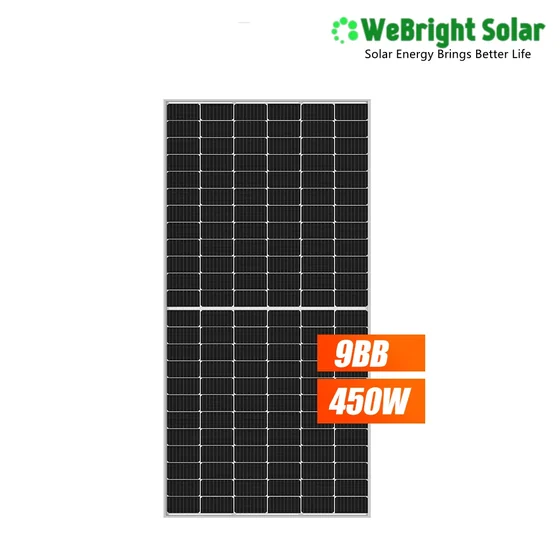
Positive Power Tolerance (0~5W) Guaranteed High module conversion efficiency (up to 20.9%) Slower power degrad
View product →
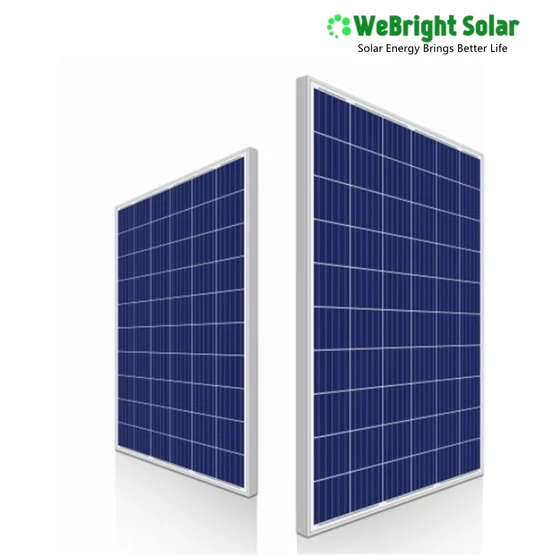
A-grade Solar Cell Poly Solar Panel 25-year warranty
View product →
Positive Power Tolerance (0~5W) Guaranteed High module conversion efficiency (up to 20.9%) Slower power degrad
View product →
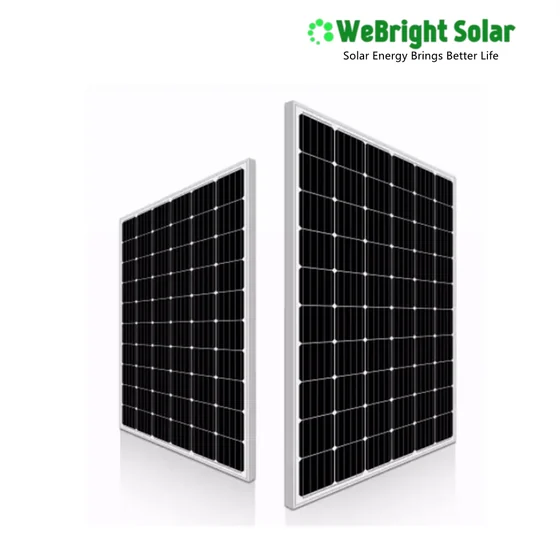
1. A-Grad Solar Cell 2. Mono Solar Panel 3. Cost-effective for Off Grid Solar System
View product →No. A higher wattage module reduces the number of panels but changes the string voltage and current, so it has to stay inside the inverter MPPT range.
Choose mono when roof area is limited and poly when there is ground space and cost per watt matters more.
They matter on high-voltage arrays in humid conditions. On a small domestic system at low system voltage the benefit is limited.
Not within a string. Different electrical characteristics in one string pull the whole string down to the weakest module.
Send your load list and site conditions and we will apply the guidance above to a configuration you can order.