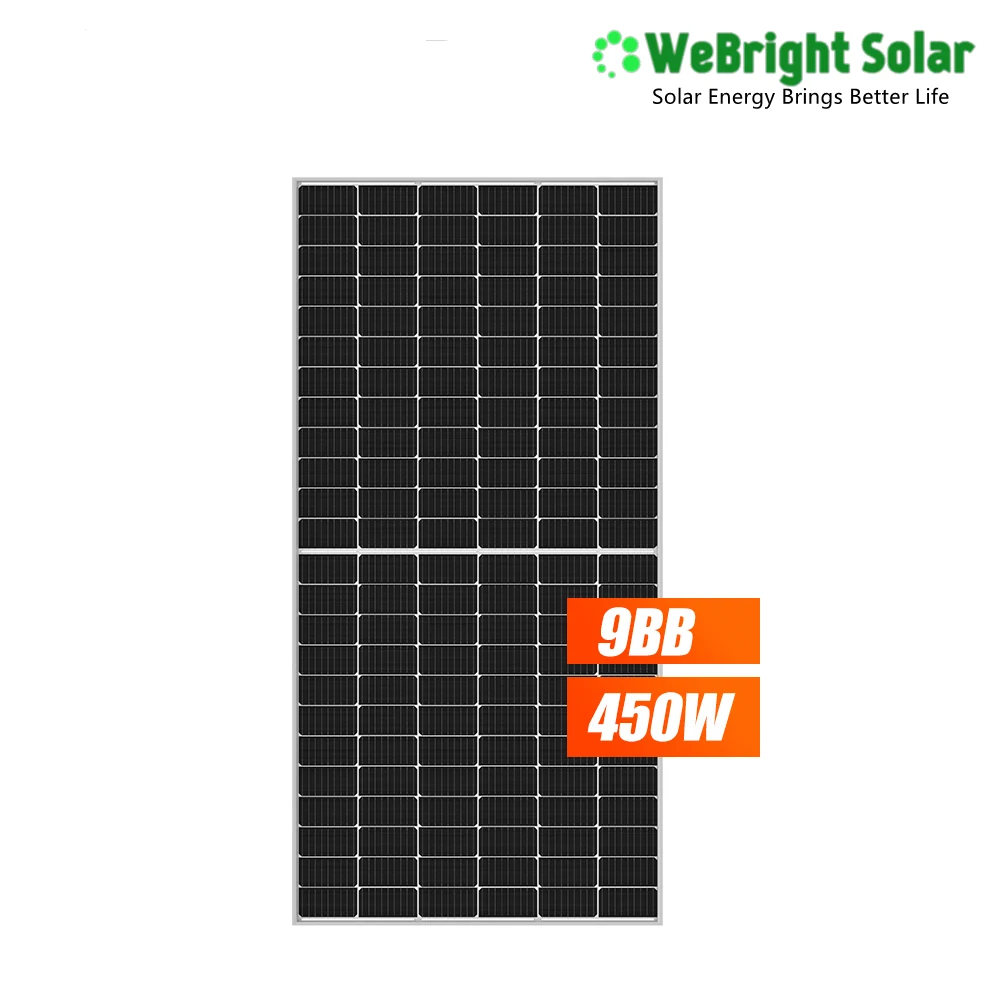
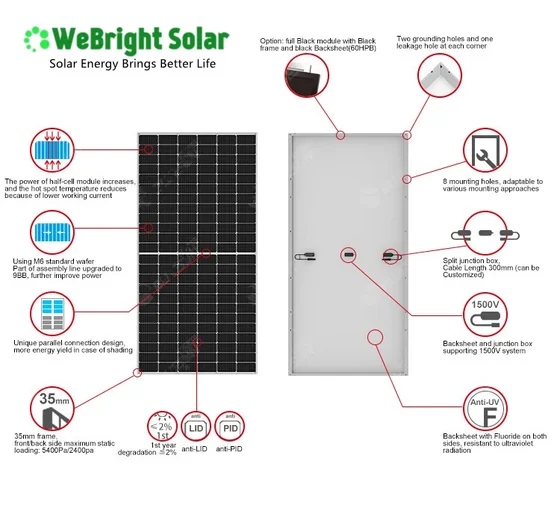
Positive Power Tolerance (0~5W) Guaranteed High module conversion efficiency (up to 20.9%) Slower power degradation enabled by Low LID mono PERC technology, first year < 2%, 0.55% for 2-25 years Solid PID resistance ensured by solar cell process optimization Reduced resistive loss with lower operating current Higher energy yield with lower operating temp.


A 420W to 460W half-cell monocrystalline solar panel with PERC technology, designed for residential and commercial solar installations. The panel uses two separate cell arrays, each with 6 shorter strings, reducing mismatch loss and improving performance under partial shading. It features a positive power tolerance of 0 to +5W, high conversion efficiency up to 20.9%, and low LID with first-year degradation under 2% and 0.55% annually from year 2 to 25. The module is built for stable long-term output with solid PID resistance and lower operating temperature.
Values below are taken from the product documentation. Anything not listed is confirmed against your order.
| Power Output | 420W to 460W |
|---|---|
| Technology | Half-cell monocrystalline PERC |
| Efficiency | Up to 20.9% |
| Power Tolerance | 0 to +5W |
| First-Year Degradation | Under 2% |
| Annual Degradation | 0.55% from year 2 to 25 |
| PID Resistance | Solid, ensured by cell process optimisation |
| Module Dimensions | L, M, S size options available |
| Frame Material | Aluminium |
| Glass Type | Tempered glass |
| Backsheet | Polyethylene terephthalate (PET) or similar |
| Standard monocrystalline panel | Half-cell design reduces mismatch loss and improves shading response, but may have higher initial cost |
|---|---|
| Full-cell PERC panel | Better partial shading performance and lower operating temperature, but same efficiency range |
| Polycrystalline panel | Higher efficiency and lower degradation, but lower performance under shading conditions |
| Standard half-cell panel without PID resistance | Superior long-term output due to optimised cell process, but requires more advanced manufacturing |
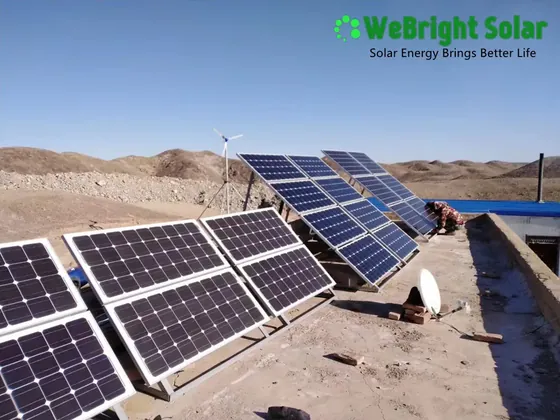
Install panels to avoid shading from nearby structures or trees
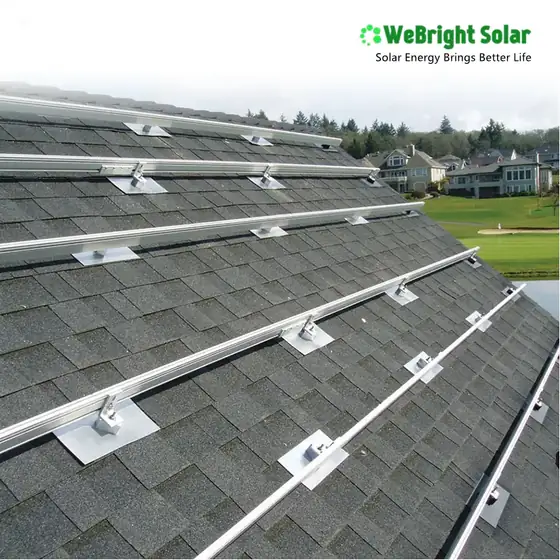
Ensure mounting system allows for proper airflow behind the panel to reduce operating temperature
Connect panels in series with matching string lengths to maintain voltage balance
Monitor system performance regularly to detect early signs of degradation
Keep the panel surface clean to maintain maximum light transmission

96V DC /192V DC Solar Panel Capacity: Up to 20kWp Off Grid Type Solar System To Charge Lithium/Gel/Lead Acid B
View product →
12V/24V/48V DC Volt Auto Work Solar Panel Capacity: Up to 5kWp Off Grid Type Solar System To Charge Lithium/Ge
View product →
12V/24V/48V DC Volt Auto Work Solar Panel Capacity: Up to 5kWp Off Grid Type Solar System To Charge Lithium/Ge
View product →
Off Grid/Stand-alone Type With Cooper Transformer inside 110V/220V Available by Setting Pure Sine Wave With MP
View product →The panels are rated from 420W to 460W, with a positive tolerance of 0 to +5W.
It splits the cell strings into two independent arrays, reducing mismatch loss and improving output under partial shading.
First-year degradation is under 2%, and annual degradation from year 2 to 25 is 0.55%.
Yes, solid PID resistance is ensured by optimised cell process and module design.
The panels are available in L, M, and S size configurations.
Yes, lower operating temperature improves performance and reliability in hot climates.
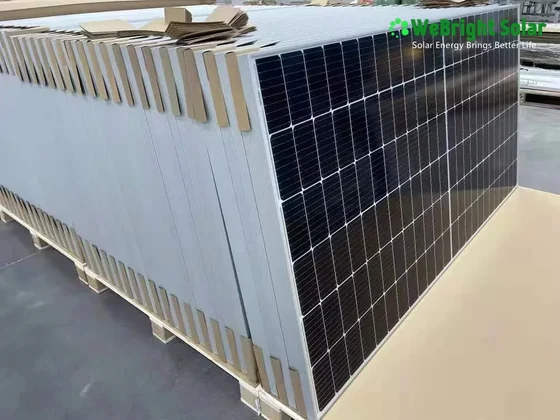
Panels are packed with protective corner guards and moisture barrier for export loading.
Send your load list or drawing on WhatsApp or by email and an engineer will reply with pricing, the configuration and the packing details.